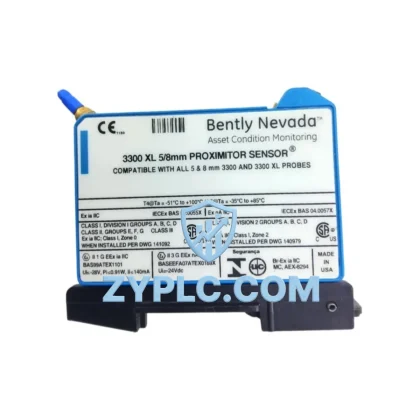
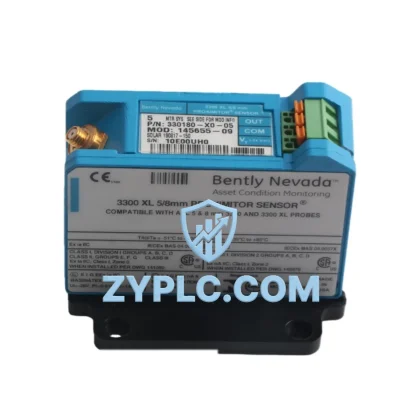
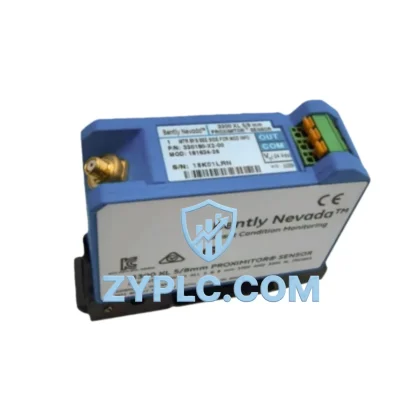
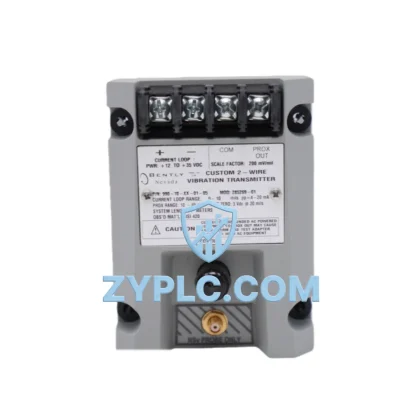
Bently Nevada 330104-00-12-10-01-00 Energy-Saving Proximity Probe for Optimized 3300 XL Automation
The Bently Nevada 330104-00-12-10-01-00 is an 8mm eddy-current proximity probe engineered for the 3300 XL machinery protection system. Designed for continuous, non-contact measurement of shaft radial vibration, axial position, and differential expansion in rotating turbomachinery, this probe delivers high-resolution displacement data that directly supports energy-efficient plant operations. By providing real-time shaft dynamics to the control system, the 330104-00-12-10-01-00 enables operators to detect mechanical inefficiencies before they escalate into unplanned downtime or energy waste.
In modern industrial facilities where energy costs represent a significant share of operating expenditure, the ability to monitor rotor behavior with micron-level precision is a critical lever for efficiency improvement. The 330104-00-12-10-01-00 integrates seamlessly into the 3300 XL monitoring architecture, feeding displacement signals to the Bently Nevada 3300/16-24-01-01-00-00 monitor and the 3300/55 proximitor/seismic monitor, enabling closed-loop feedback that keeps rotating equipment operating within its optimal efficiency band.
When paired with the Bently Nevada 330180-X1-05 proximitor sensor and the 330130-045-00-00 extension cable, the probe forms a complete eddy-current measurement chain. This chain supplies conditioned voltage signals proportional to the gap between the probe tip and the target shaft surface, allowing the 3500/42M proximitor I/O module to process and relay data to the plant DCS or SCADA platform. The result is a continuously updated picture of machine health that supports predictive maintenance scheduling and eliminates the energy penalty of running degraded equipment.
Efficiency Performance Table
| Parameter |
Specification |
| Probe Diameter |
8 mm |
| Measurement Range |
0.25 mm – 2.26 mm (linear range) |
| Sensitivity |
7.87 V/mm (200 mV/mil) |
| Operating Temperature |
-35°C to +177°C |
| Power Consumption |
Low-draw eddy-current circuit, <50 mW per channel |
| Running Efficiency |
Non-contact measurement — zero mechanical wear, zero friction loss |
| Compatible Systems |
Bently Nevada 3300 XL, 3500 Series, System 1 Software |
| Application Environment |
Steam turbines, gas turbines, compressors, pumps, gearboxes |
| Energy Saving Value |
Early fault detection reduces unplanned stops and excess energy draw from degraded bearings |
| Warranty |
12-Month Warranty — tested and verified before shipment |
Energy-Aware Automation Architecture
The 330104-00-12-10-01-00 does not operate in isolation — it is the sensing front-end of a layered energy-aware automation architecture. In a typical turbomachinery protection loop, the probe tip is positioned adjacent to the shaft journal and connected via the 330130-045-00-00 armored extension cable to the 330180-X1-05 proximitor, which conditions the raw eddy-current signal into a DC voltage output. This signal is then routed to the Bently Nevada 3500/42M proximitor I/O module housed in the 3500 rack, where it is digitized and compared against alarm and danger setpoints configured in the 3500/22M transient data interface.
At the control execution layer, the 3500 rack communicates over Modbus TCP or PROFIBUS DP to the plant PLC — commonly a GE Fanuc 90-30 series controller or an Allen-Bradley ControlLogix L7x processor — which uses the vibration data to modulate process variables such as steam admission valves or variable-speed drive setpoints. When shaft vibration rises above a configurable threshold, the PLC can command the associated ABB ACS880 variable frequency drive to reduce motor speed, cutting energy consumption and mechanical stress simultaneously.
For facilities running Bently Nevada System 1 asset performance management software, the 330104-00-12-10-01-00 data stream feeds directly into trend analysis and efficiency dashboards. System 1 correlates vibration amplitude with power draw data sourced from Yokogawa WT5000 power analyzers or Schneider Electric PowerLogic ION9000 power meters, giving energy managers a direct view of how mechanical condition affects electrical consumption. This integration transforms the proximity probe from a simple safety device into an active component of the plant’s energy optimization strategy.
On the I/O and communications layer, the Bently Nevada 3500/92 communication gateway bridges the 3500 rack to Ethernet-based plant networks, enabling the vibration data to be consumed by Emerson DeltaV DCS or Honeywell Experion PKS platforms for integrated process and energy control. The combination of high-resolution proximity measurement, fast rack processing, and open protocol communication makes the 330104-00-12-10-01-00 a foundational element of any energy-conscious rotating machinery management system.
Power Optimization in Real Production Lines
In petrochemical and power generation facilities, undetected rotor imbalance or bearing wear forces rotating equipment to draw significantly more current than its design rating — a phenomenon that inflates energy bills and accelerates component degradation. The Bently Nevada 330104-00-12-10-01-00 addresses this directly by providing the continuous, high-bandwidth vibration signal needed to catch these conditions in their earliest stages.
Consider a steam turbine driving a boiler feed pump. Without accurate shaft position monitoring, a developing rub between the rotor and labyrinth seal may go undetected for weeks, during which the turbine operates with elevated internal losses and increased steam consumption. With the 330104-00-12-10-01-00 installed and connected to the 3300 XL monitoring system, the gradual increase in 1X vibration amplitude is captured in real time. The operations team can schedule a corrective maintenance window during a planned outage rather than responding to an emergency trip, avoiding the energy and production losses associated with an uncontrolled shutdown and restart cycle.
On compressor trains, the probe’s axial position measurement capability is equally valuable for energy optimization. Axial thrust changes indicate shifts in the aerodynamic loading of impeller stages, which directly affect compressor efficiency. By trending axial position data from the 330104-00-12-10-01-00 alongside process flow and pressure data in System 1, engineers can identify operating points where the compressor is running away from its best efficiency point and adjust suction throttling or recycle valve position accordingly — reducing shaft power demand without sacrificing throughput.
From a maintenance cost perspective, the non-contact measurement principle of the eddy-current probe eliminates the sensor wear and recalibration burden associated with contact-type transducers. The 330104-00-12-10-01-00 has no moving parts, no consumable elements, and no lubrication requirements. Its stainless steel housing and armored cable connection provide robust performance in high-temperature, high-vibration environments without degradation of measurement accuracy. Combined with the 12-month warranty and pre-shipment functional testing performed at our facility, the total cost of ownership over a typical turbomachinery overhaul cycle is substantially lower than alternative sensing technologies.
Inventory availability is maintained to support both planned maintenance outages and emergency replacement requirements. Each unit is tested against Bently Nevada factory specifications before dispatch, ensuring that the replacement probe integrates into the existing 3300 XL or 3500 system without the need for re-ranging or recalibration of the monitoring rack.
Energy Optimization FAQ
Q1: How does the 330104-00-12-10-01-00 contribute to measurable energy savings on a turbomachinery train?
By delivering continuous, high-resolution shaft vibration and position data to the 3300 XL or 3500 monitoring system, the probe enables early detection of mechanical faults — such as rotor imbalance, misalignment, and bearing wear — that cause rotating equipment to draw excess current. Addressing these faults proactively, rather than after a trip event, keeps the machine operating at its design efficiency point and avoids the energy-intensive restart cycles associated with unplanned shutdowns.
Q2: Is the 330104-00-12-10-01-00 compatible with both the 3300 XL and 3500 Series monitoring systems?
Yes. The 330104-00-12-10-01-00 is designed for the 3300 XL system and is also compatible with the Bently Nevada 3500 Series rack when used with the appropriate proximitor and I/O module. The probe’s 200 mV/mil sensitivity and standard TNC connector interface are consistent across both platforms, allowing it to be used as a direct replacement in existing installations without modification to the monitoring rack configuration.
Q3: What is the recommended replacement and testing procedure for this probe?
Prior to installation, verify the probe tip-to-target gap using a calibrated gap voltage table for the 330180-X1-05 proximitor. Set the initial gap to the midpoint of the linear range (approximately 1.27 mm / 50 mil) and confirm the output voltage matches the expected value (approximately −10 VDC). After installation, perform a slow-roll vibration check to establish a baseline before returning the machine to full-speed operation. Each 330104-00-12-10-01-00 supplied by ZYPLC is functionally tested before shipment and covered by a 12-month warranty from the date of delivery.
Q4: Can this probe be integrated into a predictive maintenance program linked to energy monitoring?
Yes. When the 330104-00-12-10-01-00 is connected to a Bently Nevada 3500 rack with the 3500/92 communication gateway, vibration data can be transmitted over Modbus TCP or OPC-UA to plant-level energy management systems. Integration with platforms such as Emerson System 1 or third-party CMMS tools allows vibration trends to be correlated with power consumption data, enabling maintenance teams to schedule interventions at the point of maximum energy and cost benefit rather than on a fixed calendar basis.
© 2026 ZYPLC. All rights reserved.
Original Source: https://zyplc.com
Contact: +86 19859288691 | [email protected]