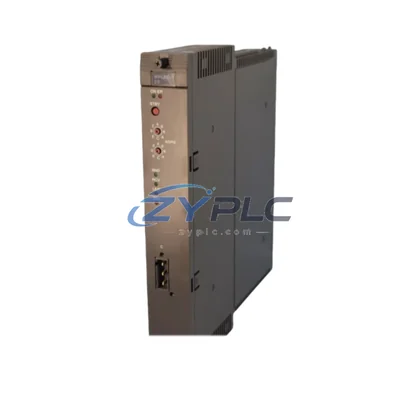
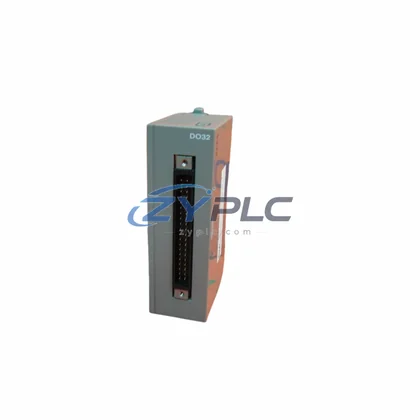
Delta Tau 603625-104 Motion CPU for UMAC Turbo: Compatibility and Replacement Notes
The Delta Tau 603625-104 is a high-performance Motion Controller CPU Module engineered for deployment within the UMAC Turbo (Universal Motion and Automation Controller) platform developed by Delta Tau Data Systems. Rather than functioning as a standalone component, this CPU module serves as the computational core of a layered, multi-axis motion control architecture — coordinating signal flow, trajectory planning, real-time servo execution, and inter-module communication across the full control hierarchy.
In modern industrial automation environments — spanning CNC machining centers, semiconductor handling equipment, robotics integration cells, precision packaging lines, and multi-axis test rigs — the 603625-104 occupies the control layer apex of the UMAC Turbo system. It interfaces directly with the UMAC-CPCI backplane, enabling high-speed data exchange with I/O expansion modules, encoder feedback cards, and communication gateway modules mounted within the same rack. This tight architectural integration eliminates latency bottlenecks that commonly arise in distributed control topologies, ensuring deterministic servo loop closure at rates consistent with demanding motion profiles.
The CPU module’s role extends beyond raw computation. It manages the real-time operating environment for the PMAC2 Turbo firmware, which governs multi-axis interpolation, PLC ladder logic execution, and user program management simultaneously. Engineers integrating the 603625-104 into a new or retrofit system benefit from its compatibility with the broader Delta Tau UMAC ecosystem, including the ACC-24E2 analog servo amplifier interface cards, ACC-65E digital I/O expansion boards, and ACC-14E Ethernet communication modules — all of which mount within the same UMAC-CPCI chassis and communicate over the high-speed JMACH and JOPT bus interfaces.
Product Specification Table
| Parameter |
Specification |
| System Role |
Motion Controller CPU — UMAC Turbo Control Layer |
| Part Number |
603625-104 |
| Internal SKU |
NNA1E222.1 |
| Platform |
Delta Tau UMAC-CPCI / PMAC2 Turbo |
| Firmware Base |
PMAC2 Turbo Real-Time OS |
| Supported Axes |
Up to 32 axes (system-dependent, with expansion) |
| Bus Interface |
JMACH, JOPT high-speed backplane bus |
| Communication Capability |
Ethernet (via ACC-14E), RS-232/RS-422 serial |
| Electrical Supply |
5 VDC via UMAC-CPCI backplane (internal regulation) |
| Operating Temperature |
0°C to 60°C (standard industrial range) |
| Mounting |
UMAC-CPCI CompactPCI rack, standard card slot |
| Country of Origin |
United States |
| Warranty |
(ZYPLC) |
System Compatibility Notes
The 603625-104 achieves its full architectural value only when considered within the complete UMAC Turbo system stack. At the power layer, the UMAC-CPCI Power Supply Module provides regulated 5 VDC and 12 VDC rails to the backplane, ensuring stable operation of the CPU and all co-resident cards under variable load conditions. Power integrity at this layer directly affects servo loop stability and communication reliability — making the power module selection a critical upstream dependency of the 603625-104’s performance envelope.
At the I/O layer, the ACC-65E Digital I/O Expansion Board connects to the CPU via the JOPT interface, providing 32 channels of optically isolated digital I/O for limit switches, home sensors, E-stop circuits, and auxiliary machine signals. For analog servo applications, the ACC-24E2 Analog Servo Interface Card translates the CPU’s digital command outputs into ±10 V analog velocity or torque references compatible with third-party servo drives. In systems requiring encoder feedback from linear scales or rotary encoders, the ACC-51E Encoder Expansion Module extends the CPU’s feedback capacity beyond the base channel count, supporting high-resolution position measurement across additional axes.
Network connectivity is established through the ACC-14E Ethernet Communication Module, which mounts in an adjacent UMAC-CPCI slot and provides a 100 Mbps Ethernet interface for PMAC Executive Pro software communication, remote diagnostics, and SCADA integration. For facilities operating on Profibus or DeviceNet fieldbus backbones, the ACC-56E Fieldbus Gateway Module bridges the UMAC Turbo platform to plant-level networks without requiring CPU-level protocol handling, preserving real-time servo performance. At the human-machine interface layer, Delta Tau’s PMAC Executive Pro software running on an industrial PC communicates with the 603625-104 over Ethernet, providing motion program upload, real-time variable monitoring, tuning tools, and diagnostic capture — forming the engineering interface layer of the complete system.
In redundancy-critical applications, system architects pair the 603625-104 with a secondary UMAC Turbo chassis in a hot-standby configuration, with state synchronization managed through the Ethernet communication layer. This architecture is particularly relevant in semiconductor fabrication, aerospace test, and continuous process control environments where downtime carries significant production cost.
Industrial Application Notes
In CNC machining and precision manufacturing environments, the 603625-104 serves as the motion brain of multi-axis machining centers, coordinating simultaneous interpolation across X, Y, Z, A, and B axes while managing spindle speed override, tool change sequencing, and in-position verification through the digital I/O layer. Its PMAC2 Turbo firmware supports G-code motion programs natively, enabling direct integration with CAM post-processors without intermediate translation layers.
In semiconductor wafer handling and flat panel display manufacturing, the CPU module’s deterministic servo loop execution — with sub-millisecond cycle times — meets the positioning repeatability requirements of wafer transfer robots, stage positioning systems, and inspection gantries. The UMAC Turbo platform’s support for linear motor commutation and piezoelectric actuator control extends the 603625-104’s applicability into ultra-precision motion domains.
In power generation and energy infrastructure applications, the 603625-104 has been deployed in turbine blade grinding machines, generator winding equipment, and valve actuator test rigs, where its robust real-time OS and hardware watchdog functions ensure safe operation under continuous-duty cycles. The module’s compatibility with industrial-grade servo drives from multiple manufacturers — via the ACC-24E2 analog interface — provides system integrators with drive selection flexibility without compromising motion controller performance.
In packaging and material handling automation, the 603625-104 coordinates electronic gearing and cam profiling across multiple servo axes, synchronizing conveyor drives, pick-and-place actuators, and sealing mechanisms to product flow rates. Its PLC ladder logic execution capability allows machine safety interlocks and sequence control to run on the same CPU as the motion programs, reducing system component count and simplifying cabinet wiring.
For long-term maintenance and lifecycle management, the 603625-104’s established position in the Delta Tau UMAC Turbo product family ensures continued firmware support, spare parts availability, and engineering documentation access. ZYPLC maintains tested, verified inventory of the 603625-104 with full functional validation prior to shipment, backed by a covering manufacturing defects and operational failures under normal industrial service conditions.
Product Compatibility FAQ
Q1: Is the Delta Tau 603625-104 compatible with all UMAC-CPCI chassis configurations, and can it be used as a drop-in replacement for earlier PMAC2 Turbo CPU revisions?
The 603625-104 is designed for the UMAC-CPCI CompactPCI backplane and is firmware-compatible with the PMAC2 Turbo software environment. As a revision-104 module, it incorporates hardware updates relative to earlier 603625-series revisions; however, it maintains backward compatibility with existing UMAC Turbo I/O cards, communication modules, and servo interface boards within the same chassis. Engineers replacing an earlier CPU revision should verify firmware version alignment using PMAC Executive Pro before commissioning, and confirm that any custom motion programs or PLC routines are re-validated on the replacement hardware. ZYPLC provides pre-shipment functional testing and can supply firmware documentation to support the transition.
Q2: How does the 603625-104 support system redundancy, and what architecture is recommended for high-availability motion control applications?
The 603625-104 supports high-availability architectures through its Ethernet communication interface, which enables state monitoring and synchronization between a primary and standby UMAC Turbo chassis. In a recommended redundancy configuration, the primary CPU executes live motion programs while the standby system maintains a synchronized copy of axis positions, program states, and I/O status via the ACC-14E Ethernet module. Switchover logic is typically implemented at the supervisory PLC or SCADA layer, with the UMAC Turbo’s hardware watchdog providing fault detection at the CPU level. For applications requiring sub-second failover, system architects should evaluate the communication latency of the Ethernet synchronization path and size the standby chassis with identical I/O and servo interface cards to ensure seamless axis handover.
Q3: What does the from ZYPLC cover, and what is the support process for a 603625-104 that develops a fault during the warranty period?
can cover manufacturing defects, component failures, and operational malfunctions arising under normal industrial service conditions for a period of twelve months from the date of shipment. The warranty does not cover damage resulting from incorrect installation, overvoltage events, mechanical impact, or unauthorized modification. In the event of a fault, customers should contact ZYPLC at plc.sales@zyplc.com or +86 19859288691 to initiate a return merchandise authorization (RMA). ZYPLC will perform diagnostic evaluation and, upon confirmation of a warranty-covered defect, will provide a tested replacement unit or repair service. system integration support — including system configuration review and re-commissioning guidance — is available as part of the warranty service process to minimize system downtime.