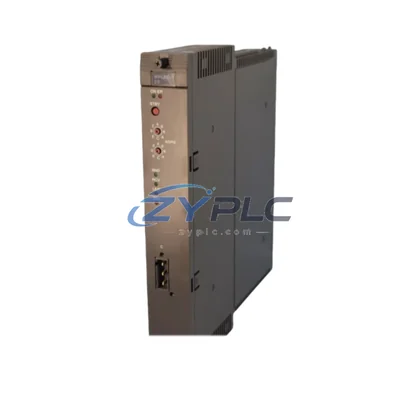
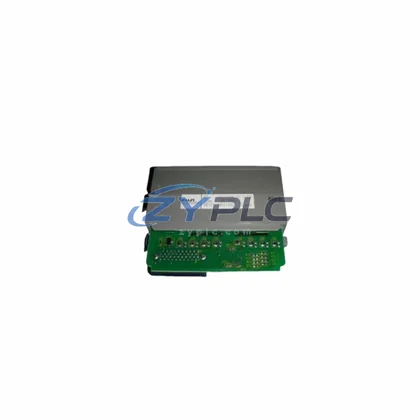
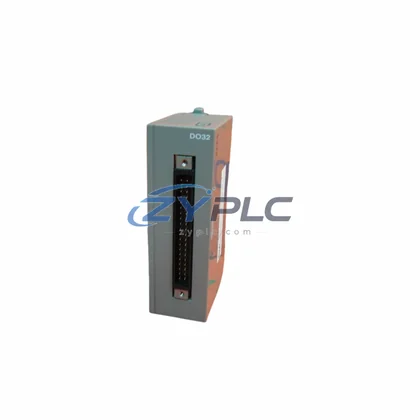
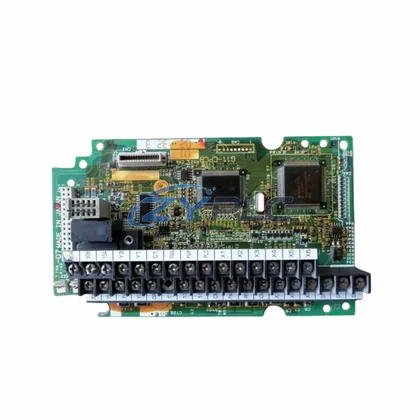
The Emerson 1C31205G01 is a high-efficiency Remote Node Controller designed for the WDPF (Westinghouse Distributed Processing Family) distributed control system architecture. In modern industrial facilities where energy accountability is no longer optional, this module plays a central role in reducing unnecessary power draw across field instrumentation networks, tightening control loop response times, and enabling predictive maintenance strategies that eliminate unplanned downtime. Whether deployed in power generation, chemical processing, or heavy manufacturing, the 1C31205G01 delivers the node-level intelligence that transforms raw field data into actionable maintenance planning decisions.
Unlike generic I/O expansion modules, the 1C31205G01 is engineered to serve as a distributed intelligence point within the WDPF architecture. It manages communication between field devices and the central DCS processor, ensuring that control signals are transmitted with minimal latency and that energy-consuming actuators — including motor starters, control valves, and variable frequency drives — receive precisely timed commands. This precision directly reduces the unplanned downtimed in over-actuation cycles, a common source of hidden power loss in aging DCS installations.
Product Specification Table
| Parameter |
Specification / Value |
| Part Number / SKU |
1C31205G01 |
| Brand / Series |
Emerson / WDPF |
| Module Type |
Remote Node Controller |
| Operating Voltage |
24 VDC (typical WDPF bus supply) |
| Power Consumption |
Low-draw node design; optimized for continuous 24/7 operation |
| Communication Protocol |
WDPF proprietary highway; supports peer-to-peer node messaging |
| Compatible Systems |
Emerson WDPF DCS, Ovation legacy integration environments |
| Application Environment |
Power plants, refineries, chemical plants, pulp & paper mills |
| Maintenance Value |
Reduces control loop latency → minimizes actuator over-cycling → lowers unplanned downtime |
| Operating Temperature |
0°C to 60°C (standard industrial enclosure) |
| Origin |
United States |
| Warranty |
warranty terms confirmed during quotation — tested before shipment |
System Compatibility and Application
The 1C31205G01 does not operate in isolation — its maintenance planning value is fully realized when integrated within a well-designed WDPF automation architecture. At the field level, process variables such as motor current, valve position, and flow rate are captured by instruments wired into Emerson WDPF I/O modules (including the 1C31197G01 analog input card and 1C31166G01 digital output module), which feed real-time data upstream to the node controller. The 1C31205G01 aggregates this data and relays it to the WDPF highway with deterministic timing, ensuring that the Emerson Ovation DCS operator station receives accurate process snapshots without polling delays that would otherwise cause control algorithms to overcorrect — a direct source of energy inefficiency.
On the drive side, the node controller’s output signals are used to command variable frequency drives (VFDs) such as those in the Emerson Control Techniques or third-party Siemens SINAMICS G120 series, adjusting motor speed in real time based on actual process demand rather than fixed setpoints. This demand-responsive motor control is one of the highest-impact operational-efficiency strategies available in process industries, and the 1C31205G01 is the communication backbone that makes it possible at the node level.
For power quality monitoring, the node controller works alongside Emerson power monitoring modules and compatible energy meters to track consumption at the sub-panel level. When integrated with the WDPF Workstation historian and trending tools, operators gain visibility into operating load patterns across individual production cells — enabling targeted interventions rather than blanket load shedding. The 1C31107G01 WDPF communication interface module further extends this capability by bridging legacy node data into modern SCADA or MES platforms via Modbus or OPC-DA gateways.
At the HMI layer, operators interact with energy dashboards built on Emerson DeltaV SIS or legacy WDPF Workstation displays, where the node controller’s real-time status — including communication health, I/O scan rates, and fault flags — is presented alongside energy KPIs. This closed-loop visibility allows shift engineers to identify underperforming nodes, schedule predictive maintenance before failures occur, and validate that operational-efficiency setpoint changes are producing measurable results on the production floor.
Maintenance and Replacement Notes
In a typical coal-fired power plant running a WDPF-based boiler control system, multiple 1C31205G01 remote node controllers are distributed across the turbine hall, fuel handling area, and auxiliary systems. Each node manages a cluster of field instruments and final control elements. Without properly functioning node controllers, the DCS must rely on slower, less deterministic communication paths — increasing scan cycle times, degrading PID loop performance, and causing control valves and dampers to hunt rather than hold steady. Valve hunting alone can increase fuel consumption by 1–3% in combustion control applications, a significant cost at industrial scale.
In chemical batch processing environments, the 1C31205G01 enables tighter synchronization between reactor temperature control loops and the variable-speed agitator drives. By ensuring that temperature setpoint changes are communicated to the drive system within the required scan window, the node controller prevents the thermal overshoot that forces cooling systems to work harder — consuming additional chilled water energy that would otherwise be unnecessary. Plants that have restored degraded WDPF node controllers report measurable reductions in batch cycle time variability, directly improving equipment utilization rates (OEE) without adding capital equipment.
From a maintenance cost perspective, the 1C31205G01 supports predictive maintenance workflows by providing continuous node health diagnostics to the WDPF system. Communication error counters, watchdog timeout events, and I/O fault registers are all accessible through the WDPF diagnostic tools, allowing maintenance teams to identify deteriorating modules before they cause process upsets. Each avoided unplanned shutdown in a mid-size process plant typically saves between USD 50,000 and USD 500,000 in lost production, restart energy costs, and emergency maintenance labor — making the investment in a tested, warranted replacement module highly cost-effective.
All units supplied by ZYPLC are fully tested prior to shipment, with functional verification performed on WDPF-compatible test benches. Inventory is maintained availability confirmed by RFQ for rapid dispatch, supporting both planned maintenance outages and emergency replacement scenarios. Every 1C31205G01 ships with a warranty terms confirmed during quotation, giving procurement and reliability engineers the confidence to specify refurbished modules without compromising plant availability commitments.
Product Sourcing FAQ
Q1: How does the Emerson 1C31205G01 contribute to measurable operational stability in a WDPF system?
The 1C31205G01 reduces unplanned downtime primarily by maintaining deterministic, low-latency communication between field devices and the DCS processor. When node controllers are degraded or failing, control loops slow down and final control elements — valves, dampers, and motor-driven equipment — begin to over-cycle or hunt. Restoring a healthy node controller tightens loop performance, reduces actuator wear, and eliminates the excess energy consumed by poorly controlled process equipment. In combustion and HVAC-heavy applications, this can translate to fuel and electricity savings of 1–5% per affected control loop cluster.
Q2: Is the 1C31205G01 compatible with both legacy WDPF and Emerson Ovation migration environments?
Yes. The 1C31205G01 is a native WDPF module and operates within the original WDPF highway architecture. For plants undergoing phased migration to Emerson Ovation, the module can continue to serve in the legacy WDPF nodes during the transition period, allowing facilities to maintain production continuity without a full cutover. Compatibility should be verified against your specific WDPF system revision and Ovation gateway configuration before installation.
Q3: What is the recommended replacement process, and how quickly can a unit be shipped?
ZYPLC maintains ready stock of the 1C31205G01 to support both planned and emergency replacement scenarios. Units are tested on WDPF-compatible benches before dispatch. For standard orders, shipment is typically arranged within 1–2 business days. For urgent plant outage situations, expedited shipping options are available. Contact our sales team at plc.sales@zyplc.com or +86 19859288691 to confirm current stock and lead time.
Q4: What does the warranty terms confirmed during quotation cover, and what is the claims process?
The warranty terms confirmed during quotation covers functional defects identified under normal operating conditions consistent with the WDPF system specifications. If a module fails within the warranty period, ZYPLC will arrange for replacement or repair at no additional cost. Warranty claims are initiated by contacting our support team with the order reference and a description of the fault. We recommend retaining the original packaging and test documentation provided at shipment to facilitate any warranty claim process.