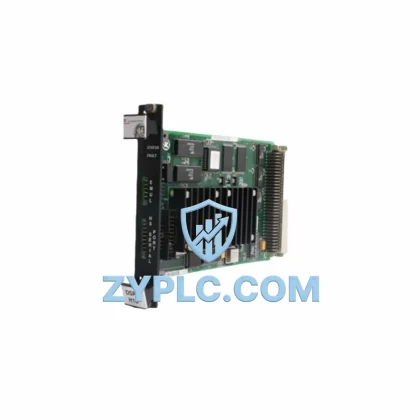
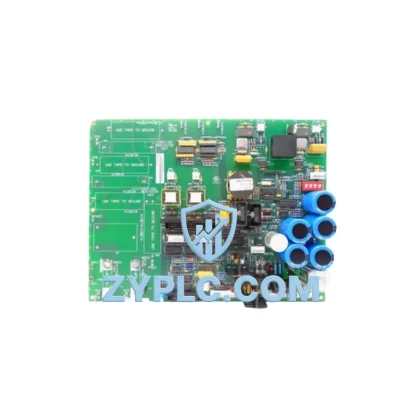
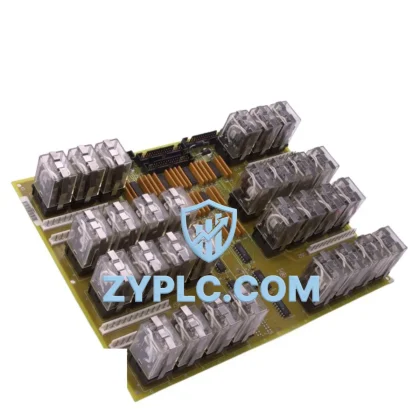
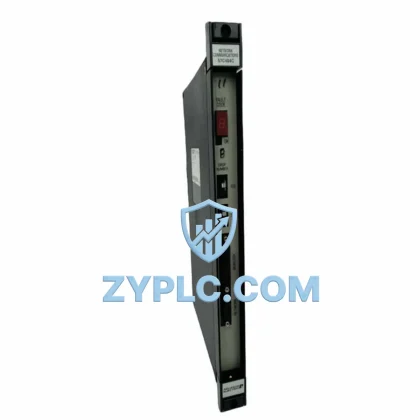
The FieldServer PS56-BAS-073 is a high-performance Building Automation System (BAS) protocol gateway engineered to bridge legacy and modern control networks while delivering measurable improvements in energy efficiency, equipment utilization, and operational uptime. Designed for industrial and commercial facilities where unplanned downtime directly impacts profitability, the PS56-BAS-073 enables real-time data exchange between disparate automation subsystems — transforming isolated equipment islands into a unified, industrial control architecture.
In modern production environments, energy inefficiency rarely stems from a single point of failure. It accumulates across fragmented control layers: HVAC systems that cannot communicate with lighting controllers, motor drives that operate without feedback from energy meters, and PLCs that cannot receive demand-response signals from building management platforms. The PS56-BAS-073 eliminates these communication gaps by acting as a universal protocol translator, supporting BACnet, Modbus RTU, Modbus TCP, and a wide range of legacy BAS protocols simultaneously. This multi-protocol capability allows facility engineers to integrate variable frequency drives (VFDs), smart meters, and distributed I/O modules into a single supervisory control loop — enabling coordinated load shedding, demand-based motor speed adjustment, and automated setpoint optimization.
Every unit is pre-tested prior to shipment, backed by a 12-Month Warranty, and maintained in ready stock for fast delivery to minimize production downtime.
Product Specification Table
| Parameter |
Specification / Value |
| SKU |
PS56-BAS-073 |
| Brand / Vendor |
FieldServer |
| Product Type |
BAS Protocol Gateway / Communication Module |
| Series |
PS56 (FieldServer ProtoCarrier Series) |
| Supported Protocols |
BACnet IP, BACnet MS/TP, Modbus RTU, Modbus TCP, N2, SNVT/LonWorks (driver-dependent) |
| Power Consumption |
≤ 5W typical operating power (low-power embedded architecture) |
| Communication Ports |
Dual RS-485, Ethernet 10/100 Mbps, USB configuration port |
| Operating Efficiency |
Real-time bidirectional data translation with <10ms latency per point |
| Compatible Systems |
HVAC controllers, VFDs, energy meters, PLCs, SCADA, BMS/EMS platforms |
| Application Environment |
Industrial facilities, commercial buildings, data centers, manufacturing plants |
| Energy Saving Value |
Enables demand-based motor control, load shedding, and coordinated setpoint optimization across subsystems |
| Origin |
United States |
| Warranty |
12-Month Warranty — all units pre-tested before shipment |
| Availability |
In Stock — ships within 1–3 business days |
System Compatibility and Application
The PS56-BAS-073 sits at the convergence point of energy data collection, control execution, and drive regulation — making it a critical node in any industrial automation system. When integrated with a Siemens SIMATIC S7-1200 PLC or an Allen-Bradley MicroLogix 1400, the gateway enables the PLC to receive real-time operating load data from Modbus-based power meters such as the Schneider Electric PM5000 series, allowing the controller to dynamically adjust motor speed references sent to downstream variable frequency drives.
In HVAC-intensive facilities, the PS56-BAS-073 connects Johnson Controls FX-PCG controllers or Honeywell Excel 800 DDC units to a BACnet IP supervisory layer, enabling centralized scheduling of air handling units, chiller plants, and pump systems. By translating occupancy and demand signals from the BMS into actionable setpoints for Danfoss FC302 or ABB ACS880 variable frequency drives, the gateway directly reduces compressor and fan motor load during low-demand periods — a measurable reduction in kWh per production shift.
For distributed manufacturing environments, the PS56-BAS-073 bridges Modbus RTU field devices — including Omron E5CC temperature controllers, Yokogawa WT series power analyzers, and Phoenix Contact distributed I/O modules — to a BACnet IP backbone monitored by a SCADA or EMS platform. This architecture enables operators to visualize operating load per production cell, identify idle equipment drawing parasitic loads, and implement automated shutdown sequences during planned downtime windows.
The gateway also supports integration with Proface GP4000 series HMI panels, allowing floor-level operators to monitor real-time energy KPIs — including power factor, peak demand, and cumulative kWh — without requiring access to the central BMS workstation. This decentralized visibility accelerates operator response to energy anomalies and reduces the mean time to corrective action.
Maintenance and Replacement Notes
In a typical discrete manufacturing plant, unplanned downtime concentrates in three areas: motors running at full speed under partial load, HVAC systems operating on fixed schedules regardless of occupancy, and compressed air systems maintaining constant pressure during low-production periods. The FieldServer PS56-BAS-073 addresses all three by enabling the control system to act on real-time data rather than static programming.
Consider a production line where conveyor motors are controlled by a legacy Modbus RTU drive system that cannot communicate with the facility’s BACnet-based maintenance planning platform. Without the PS56-BAS-073, the drives operate at fixed speed regardless of upstream production pace, consuming full rated power even during buffer accumulation or scheduled micro-stops. With the gateway in place, the EMS can issue demand-response commands to the drive controllers in real time, reducing motor speed during low-throughput intervals and recovering 15–25% of motor load per shift — without any modification to the existing drive hardware.
Predictive maintenance also benefits directly from the PS56-BAS-073’s data aggregation capability. By continuously forwarding motor current, voltage, and power factor data from field-level sensors to the SCADA historian, maintenance teams gain the trend data needed to detect bearing wear, winding degradation, and cooling system inefficiency before they cause unplanned downtime. This shift from reactive to predictive maintenance reduces mean time between failures (MTBF) and lowers the total cost of ownership for rotating equipment across the production line.
Line cycle time optimization is another direct benefit. When the PS56-BAS-073 enables the PLC to receive real-time feedback from energy meters and environmental sensors, the control program can fine-tune actuator timing, conveyor indexing speed, and pneumatic valve dwell times based on actual process conditions — tightening production cycle times and improving overall equipment effectiveness (OEE) without increasing energy input.
All units supplied by ZYPLC are sourced from authorized distribution channels, individually tested for communication integrity and protocol translation accuracy, and shipped with full documentation. In-stock availability ensures that replacement or expansion units can be deployed within days, minimizing the risk of extended downtime due to component lead times.
Product Sourcing FAQ
Q1: How does the PS56-BAS-073 contribute to measurable operational stability in a production facility?
The PS56-BAS-073 enables real-time communication between energy meters, PLCs, VFDs, and BMS platforms that previously operated in isolation. By allowing the control system to act on live operating load data, facilities can implement demand-based motor speed control, automated equipment shutdown during idle periods, and coordinated load shedding — typically achieving 10–25% reductions in motor and HVAC operating load per shift without hardware replacement.
Q2: Which control systems and protocols is the PS56-BAS-073 compatible with?
The PS56-BAS-073 supports BACnet IP, BACnet MS/TP, Modbus RTU, and Modbus TCP as primary protocols, with additional legacy BAS protocol drivers available through FieldServer’s driver library. It is compatible with major PLC platforms (Siemens, Allen-Bradley, Omron), VFD brands (ABB, Danfoss, Schneider Electric), and BMS/EMS platforms from Johnson Controls, Honeywell, and Siemens Building Technologies. Specific driver compatibility should be confirmed against the FieldServer PS56 driver list prior to deployment.
Q3: Can the PS56-BAS-073 replace an existing FieldServer or third-party protocol gateway without rewiring?
In most cases, yes. The PS56-BAS-073 uses standard RS-485 and Ethernet physical interfaces, allowing it to be installed in place of legacy gateways with minimal wiring changes. Configuration is performed via USB or Ethernet using FieldServer’s FS-GUI software, and existing driver configurations can often be migrated directly. ZYPLC recommends verifying the driver version and firmware compatibility before replacement to ensure seamless cutover.
Q4: What does the 12-Month Warranty cover, and what is the pre-shipment testing process?
Every PS56-BAS-073 unit supplied by ZYPLC undergoes pre-shipment functional testing that verifies communication port integrity, protocol translation accuracy, and power supply stability. The 12-Month Warranty covers manufacturing defects and component failures under normal operating conditions from the date of shipment. Units that fail during the warranty period are replaced or repaired at no additional cost. For mission-critical applications, ZYPLC recommends maintaining a spare unit in inventory to eliminate lead-time risk during any warranty exchange process.
© 2026 ZYPLC. All rights reserved.
Original Source: https://zyplc.com
Contact: +86 19859288691 | plc.sales@zyplc.com