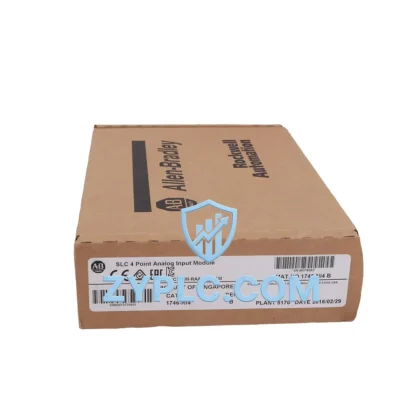
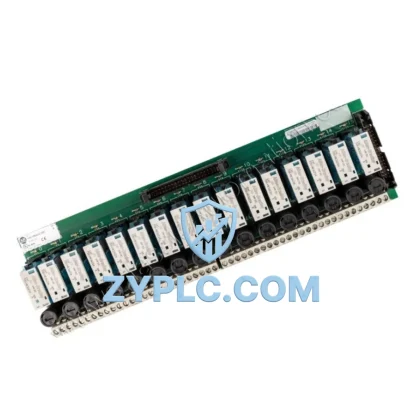
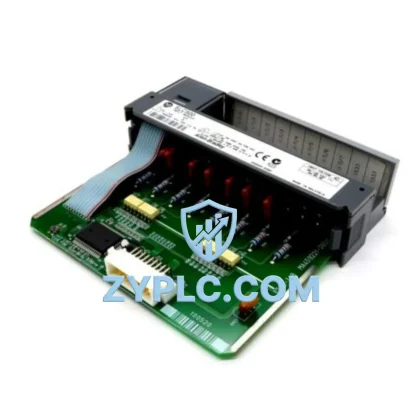
Foxboro FBM216B P0927AJ System-Ready HART Input for FBM200 Control System Architecture
The Foxboro FBM216B (part number P0927AJ) is a HART-enabled analog input module engineered for seamless integration within the Foxboro FBM200 Distributed Control System (DCS) architecture. Rather than functioning as a standalone component, the FBM216B is designed to operate as a coordinated node within a multi-layer automation hierarchy — connecting field instrumentation at the I/O layer to the control layer, communication backbone, and human-machine interface in a unified, deterministic control environment.
In modern process automation, the reliability of signal acquisition at the I/O layer directly determines the integrity of the entire control loop. The FBM216B addresses this requirement by supporting HART protocol communication over standard 4–20 mA analog wiring, enabling simultaneous process variable transmission and digital device diagnostics without additional field wiring infrastructure. This dual-channel capability reduces installation complexity while enhancing the diagnostic depth available to control engineers during commissioning and long-term maintenance cycles.
Within the FBM200 system architecture, the FBM216B occupies a critical position between field transmitters — such as pressure, temperature, and flow instruments — and the Foxboro CP270 or CP280 control processors that execute regulatory and advanced control strategies. The module’s HART pass-through capability allows asset management software to communicate directly with field devices through the DCS backplane, eliminating the need for separate HART multiplexers and reducing overall system complexity.
System architects integrating the FBM216B into redundant control architectures will find it compatible with the FBM200 redundancy framework, where paired I/O modules operate in hot-standby configurations. This redundancy model, supported by the FBM200 baseplate and associated field termination assemblies (FTAs), ensures that a single module failure does not interrupt process measurement continuity — a critical requirement in refinery, petrochemical, and power generation applications where unplanned shutdowns carry significant operational and safety consequences.
The FBM216B integrates directly with Foxboro’s MESH control network, which provides deterministic, high-speed communication between I/O modules, control processors, and the Foxboro I/A Series or Foxboro Evo DCS workstations. This network layer ensures that analog input data acquired by the FBM216B is delivered to the CP270 or CP280 processor with minimal latency, supporting fast-loop control strategies in applications such as compressor surge control, boiler drum level regulation, and distillation column pressure management.
From a system expansion perspective, the FBM216B’s compatibility with the FBM200 baseplate ecosystem allows engineers to scale I/O capacity incrementally without redesigning the control architecture. Additional FBM200-series modules — including digital input modules, digital output modules, analog output modules, and thermocouple input modules — can be added to the same baseplate, sharing the common power supply and communication infrastructure. This modular expansion model reduces both capital expenditure and engineering time when process requirements evolve.
Power distribution within the FBM200 cabinet is managed through dedicated power supply modules that provide regulated DC voltage to the baseplate and all installed I/O modules. The FBM216B operates within the standard FBM200 power envelope, ensuring compatibility with existing cabinet power budgets without requiring supplemental power conditioning equipment.
For system integrators and maintenance engineers, the FBM216B’s field termination assembly (FTA) interface simplifies wiring and module replacement. The FTA remains connected to field wiring during module swap operations, reducing maintenance downtime and eliminating the risk of wiring errors during hot-swap procedures. This design philosophy aligns with Foxboro’s broader commitment to maintainability in continuous-process environments where scheduled maintenance windows are limited.
Architecture Specification Table
| Parameter |
Specification |
| System Role |
HART Analog Input Module — FBM200 I/O Layer |
| Part Number |
FBM216B / P0927AJ |
| Brand |
Foxboro (Schneider Electric) |
| Compatible Series |
Foxboro FBM200, I/A Series, Foxboro Evo DCS |
| Protocol Support |
HART (Highway Addressable Remote Transducer), 4–20 mA analog |
| Input Type |
Analog Input with HART pass-through |
| Control Processor Compatibility |
CP270, CP280 |
| Communication Network |
Foxboro MESH Control Network |
| Redundancy Support |
Hot-standby redundancy via FBM200 baseplate |
| Installation Environment |
DCS control cabinet, 19-inch rack or FBM200 baseplate mount |
| Operating Temperature |
0°C to 60°C (standard industrial environment) |
| Power Supply |
Supplied via FBM200 baseplate power distribution |
| Warranty |
12-Month Warranty — all units tested prior to shipment |
| Condition |
New / Refurbished — tested and verified |
Coordinated Control System Design
The FBM216B achieves its full operational value when deployed as part of a coordinated FBM200 system architecture rather than as an isolated I/O module. A complete FBM200-based control system typically integrates the following components in a layered configuration:
At the control layer, the Foxboro CP270 or CP280 control processor executes the regulatory control strategies — PID loops, cascade control, and feedforward algorithms — that rely on accurate analog input data from the FBM216B. The processor communicates with the I/O layer through the FBM200 baseplate’s internal bus, ensuring deterministic data exchange with scan rates appropriate for process control applications.
At the I/O layer, the FBM216B operates alongside complementary modules such as the FBM201 (analog input), FBM202 (analog output), FBM204 (digital input), and FBM207 (digital output), all mounted on the same FBM200 baseplate. This co-location of I/O modules within a single baseplate minimizes inter-module communication latency and simplifies cabinet layout in space-constrained installations.
At the network layer, the Foxboro MESH control network connects the FBM200 baseplate to the plant-wide DCS infrastructure, including redundant network switches and fiber-optic communication links that maintain system integrity in electrically noisy industrial environments such as substations and heavy manufacturing facilities.
At the power layer, dedicated FBM200 power supply modules provide regulated power to the baseplate, with optional redundant power supply configurations ensuring continuous operation during single power supply failures — a standard requirement in critical process industries.
At the human-machine interface layer, Foxboro Evo workstations or I/A Series operator consoles display real-time process data acquired by the FBM216B, enabling operators to monitor HART device diagnostics, configure alarm thresholds, and execute control strategy modifications without interrupting process operations.
At the field termination layer, Foxboro FTA (Field Termination Assembly) modules provide the physical interface between the FBM216B and field instrument wiring, supporting both individually fused and group-fused termination configurations depending on the safety and maintenance requirements of the application.
Application in Layered Automation Systems
The FBM216B is deployed across a broad range of process industries where HART-enabled analog input acquisition is required within a Foxboro DCS architecture:
In oil refinery and petrochemical applications, the FBM216B acquires analog signals from HART-enabled pressure transmitters, flow meters, and level instruments installed in distillation units, heat exchangers, and reactor systems. The HART pass-through capability allows refinery engineers to perform remote device calibration and diagnostics through the DCS without dispatching field technicians to hazardous areas.
In power generation facilities — including coal-fired, gas turbine, and combined-cycle plants — the FBM216B supports boiler control, turbine monitoring, and balance-of-plant automation. Its compatibility with the FBM200 redundancy framework ensures that critical analog measurements remain available during module maintenance activities.
In water and wastewater treatment plants, the FBM216B integrates with HART-enabled analytical instruments measuring pH, dissolved oxygen, turbidity, and chlorine residual. The module’s ability to transmit both the primary process variable and secondary HART variables — such as sensor temperature and diagnostic status — provides operators with enhanced visibility into instrument health without additional wiring infrastructure.
In mining and minerals processing operations, the FBM216B supports analog input acquisition from instruments installed in crushing, grinding, flotation, and thickening circuits. The module’s robust design and compatibility with the FBM200 cabinet environment ensures reliable operation in the high-vibration, high-dust conditions characteristic of mineral processing facilities.
In pharmaceutical and food processing applications, the FBM216B supports FDA-compliant process control architectures where instrument calibration traceability and audit trail documentation are regulatory requirements. The HART diagnostic capability facilitates calibration verification without removing instruments from service, reducing validation burden and production downtime.
Architecture Engineering FAQ
Q1: Is the FBM216B P0927AJ compatible with both the Foxboro I/A Series and Foxboro Evo DCS platforms?
Yes. The FBM216B is designed for the FBM200 I/O subsystem, which is supported by both the legacy Foxboro I/A Series DCS and the current Foxboro Evo platform. System integrators migrating from I/A Series to Foxboro Evo can retain existing FBM200 I/O infrastructure, including FBM216B modules, reducing migration costs and preserving field wiring investments. Compatibility should be verified against the specific software revision of the target DCS platform prior to installation.
Q2: Can the FBM216B be replaced in a live system without interrupting process control?
Yes, when deployed in a redundant FBM200 configuration with a paired standby module. The FBM200 redundancy architecture supports bumpless module replacement: the standby module assumes I/O responsibility while the primary module is removed and replaced. In non-redundant configurations, module replacement requires a brief interruption of the associated control loops, which should be managed through appropriate control strategy hold or manual override procedures. The FTA (Field Termination Assembly) interface allows module removal without disturbing field wiring, minimizing replacement time and the risk of wiring errors.
Q3: What does the 12-Month Warranty cover, and what support is available for system integration?
All FBM216B P0927AJ units supplied by ZYPLC are tested and verified prior to shipment and covered by a 12-Month Warranty against manufacturing defects and functional failures. The warranty covers module replacement or repair for failures occurring under normal operating conditions within the FBM200 system environment. ZYPLC’s technical team provides pre-sales architecture consultation to assist engineers in verifying module compatibility, baseplate configuration, and FTA selection. Post-sales support includes commissioning guidance and long-term spare parts supply to support the operational lifecycle of FBM200-based control systems.
© 2026 ZYPLC. All rights reserved.
Original Source: https://zyplc.com
Contact: +86 19859288691 | plc.sales@zyplc.com