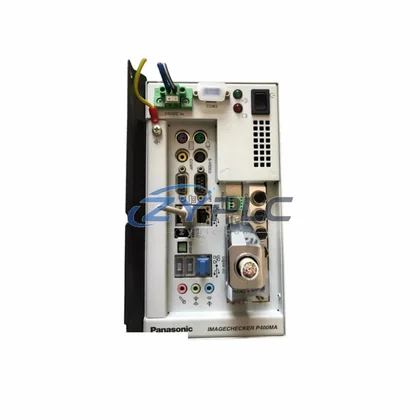
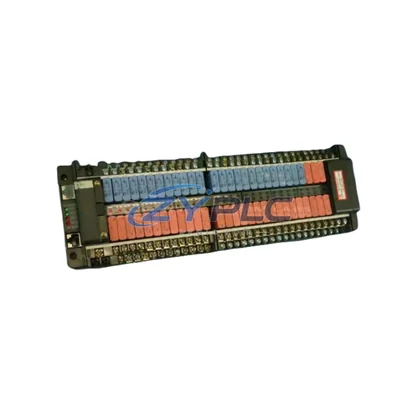
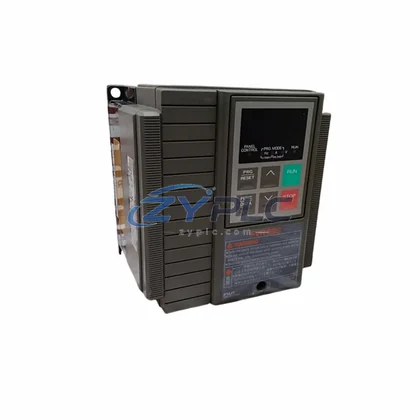
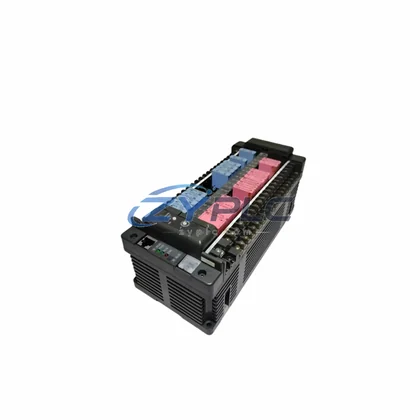
Fuji Electric NR1TY-16T05DT Transistor Output for NR1
The Fuji Electric NR1TY-16T05DT is a 16-point transistor output module engineered for seamless integration within the NR1 Series modular PLC architecture. Designed to operate as a precision output layer within distributed control systems, this module delivers reliable digital signal switching across demanding industrial environments including manufacturing automation, power distribution, petrochemical processing, water treatment, metallurgy, and packaging lines. Its role within the NR1 control platform extends beyond simple I/O switching — it functions as a critical node in the signal flow chain that connects the CPU layer to field-level actuators, drives, and relay interfaces.
In a fully configured NR1 system, the NR1TY-16T05DT occupies the output tier of the I/O layer, receiving command signals from the NR1CP central processing unit and translating them into transistor-switched outputs that drive solenoid valves, motor starters, indicator lamps, and variable frequency drives. This architecture ensures deterministic output response times, which is essential in high-speed packaging lines and precision motion control applications where millisecond-level timing directly affects product quality and throughput consistency.
The module mounts directly onto the NR1BP backplane, sharing the internal bus with other I/O modules such as the NR1RX-16R digital input module and the NR1SX-16T high-speed transistor output module. This shared backplane architecture eliminates the need for external wiring between I/O modules and the CPU, reducing installation complexity and improving signal integrity across the entire control cabinet. Engineers integrating the NR1TY-16T05DT into a new or existing NR1 system benefit from the platform’s standardized module footprint, which allows hot-swap replacement without full system shutdown in supported configurations.
Power distribution within the NR1 rack is managed by the NR1PS power supply module, which provides regulated 5 VDC bus power to all installed modules including the NR1TY-16T05DT. The module’s transistor outputs are sourced from a separate 24 VDC field power supply, isolating control logic from field-side voltage fluctuations and protecting the CPU and backplane from transient surges originating in the actuator circuit. This two-domain power architecture is a fundamental design principle of the NR1 platform and contributes directly to system longevity and fault containment.
For applications requiring redundant output capability, the NR1TY-16T05DT can be paired with the NR1EH expansion head module to extend the I/O rack across multiple physical enclosures. This is particularly relevant in large-scale process control installations where field devices are distributed across wide physical areas, such as water treatment plants or substation automation systems. The NR1PH panel interface module further supports remote I/O configurations, enabling the NR1TY-16T05DT to function as part of a distributed I/O node connected to the main CPU via the NR1 communication bus.
Communication transparency is maintained through the NR1 platform’s integrated network layer. When the system includes a communication gateway such as the NR1RY-16R relay output module or a dedicated Ethernet/IP or PROFIBUS adapter, the NR1TY-16T05DT’s output status is continuously reflected in the CPU’s I/O image table and accessible to SCADA systems and HMI terminals. This real-time status visibility supports predictive maintenance workflows, allowing operators to monitor output switching frequency, detect abnormal load conditions, and schedule preventive maintenance before field device failures occur.
HMI integration is a key consideration in NR1 system design. Operators interfacing with the system through a connected HMI panel can monitor the live status of each NR1TY-16T05DT output channel, issue manual override commands during commissioning, and review historical switching logs for fault analysis. The NR1TY-08T, a compact 8-point variant in the same transistor output family, is often deployed alongside the NR1TY-16T05DT in mixed-density I/O configurations where cabinet space is constrained but output channel count must be maintained.
From a long-term maintenance perspective, the NR1TY-16T05DT’s modular design significantly reduces mean time to repair. Field technicians can replace a faulty output module without disturbing adjacent I/O modules or disconnecting field wiring from the terminal block assembly. This design philosophy aligns with the NR1 platform’s emphasis on minimizing unplanned downtime in continuous process industries. Spare module inventory management is simplified by the module’s compatibility across multiple NR1 rack configurations, allowing a single spare unit to serve as a replacement across different system installations within the same facility.
All NR1TY-16T05DT modules supplied by ZYPLC are covered by a warranty terms confirmed during quotation, ensuring that every unit performs to Fuji Electric’s published specifications from the date of delivery. Our technical team provides pre-sales architecture consultation, commissioning support, and post-delivery technical assistance to ensure that the NR1TY-16T05DT integrates correctly into your specific control system architecture.
Product Specification Table
| Parameter |
Specification |
| System Role |
16-Point Transistor Output Module — NR1 I/O Layer |
| Output Points |
16 points (transistor, NPN/PNP configurable) |
| Output Voltage |
5–24 VDC (field side) |
| Output Current |
0.5 A per point (max) |
| Response Time |
≤1 ms (ON/OFF) |
| Isolation |
Photocoupler isolation between logic and field side |
| Bus Interface |
NR1 internal backplane bus (NR1BP compatible) |
| Communication |
NR1 platform bus; SCADA/HMI accessible via CPU image table |
| Power Supply |
5 VDC from NR1PS backplane; 24 VDC field power (external) |
| Operating Temperature |
0°C to +55°C |
| Humidity |
5% to 95% RH (non-condensing) |
| Mounting |
NR1BP backplane slot (DIN rail compatible) |
| Country of Origin |
Japan |
| Warranty |
warranty terms confirmed during quotation (ZYPLC) |
System Compatibility Notes
The NR1TY-16T05DT achieves its full performance potential when deployed as part of a coordinated NR1 system architecture. A typical NR1 control cabinet integrates the following components in a layered configuration:
At the CPU layer, the NR1CP central processing unit executes the control program and manages the I/O image table, issuing output commands to the NR1TY-16T05DT at each scan cycle. The NR1PS power supply module provides stable 5 VDC bus power to the entire rack, ensuring consistent module operation under varying load conditions. At the input layer, the NR1RX-16R digital input module collects field signals from sensors, limit switches, and proximity detectors, feeding real-time process data to the CPU for output decision logic.
The NR1SX-16T high-speed transistor output module complements the NR1TY-16T05DT in applications requiring pulse output or high-frequency switching, such as stepper motor positioning or encoder-driven conveyor control. For relay output requirements — such as driving contactors or alarm annunciators — the NR1RY-16R relay output module is installed alongside the NR1TY-16T05DT on the same NR1BP backplane, providing a mixed output architecture that covers both transistor-switched and relay-switched field devices within a single rack.
Rack expansion is handled by the NR1EH expansion head module, which extends the I/O bus to a secondary rack when the primary rack’s slot capacity is exhausted. The NR1PH panel interface module enables remote I/O configurations, connecting distributed NR1 racks to the main CPU over the NR1 communication bus. The compact NR1TY-08T 8-point transistor output module is used in space-constrained secondary racks where full 16-point density is not required, maintaining architectural consistency across all NR1 nodes in the system.
Industrial Application Notes
In manufacturing automation, the NR1TY-16T05DT controls solenoid valves, pneumatic actuators, and conveyor drive enable signals in assembly line PLC panels. Its fast transistor switching response supports high-cycle-rate operations typical of automotive parts assembly and electronics manufacturing.
In power distribution and substation automation, the module drives relay coil circuits and indicator panel outputs, providing the output interface between the NR1 PLC and protection relay systems. Its photocoupler isolation ensures that high-voltage transients on the field side do not propagate into the NR1 backplane or CPU.
In petrochemical and process control applications, the NR1TY-16T05DT interfaces with motor control centers and valve actuators in continuous process loops. Its integration with the NR1CP CPU and SCADA communication layer enables remote output monitoring and emergency shutdown command execution from the control room.
In water treatment and municipal infrastructure systems, the module controls pump start/stop circuits, chemical dosing valve outputs, and alarm relay drivers. Its wide operating temperature range and humidity tolerance make it suitable for installation in outdoor control enclosures and pump station panels.
In mining and metallurgy, the NR1TY-16T05DT is deployed in conveyor control panels, crusher drive enable circuits, and ventilation fan control systems, where reliable output switching under dusty, high-vibration conditions is essential for continuous operation.
Product Compatibility FAQ
Q1: Is the NR1TY-16T05DT compatible with all NR1 Series backplanes, and can it be mixed with relay output modules in the same rack?
A: Yes. The NR1TY-16T05DT is fully compatible with the NR1BP backplane and can be installed in any available I/O slot alongside other NR1 Series modules including the NR1RY-16R relay output module, NR1RX-16R input module, and NR1SX-16T high-speed output module. The NR1 platform’s modular architecture supports mixed I/O type configurations within a single rack, allowing engineers to optimize output type selection per field device requirement without architectural constraints.
Q2: What commissioning steps are required when integrating the NR1TY-16T05DT into an existing NR1 system, and how does it affect the CPU’s I/O configuration?
A: When adding the NR1TY-16T05DT to an existing NR1 rack, the module must be registered in the NR1CP CPU’s I/O configuration table using the Fuji Electric programming software. The CPU automatically assigns output addresses based on the module’s slot position on the NR1BP backplane. No additional hardware configuration is required beyond physical installation and field wiring to the module’s terminal block. ZYPLC’s technical team provides commissioning guidance to ensure correct address mapping and output logic verification during system startup.
Q3: What does the warranty terms confirmed during quotation cover, and what is the process for warranty claims on the NR1TY-16T05DT?
A: The warranty terms confirmed during quotation provided by ZYPLC covers manufacturing defects, premature component failure, and performance deviations from Fuji Electric’s published specifications under normal operating conditions. The warranty period begins from the date of delivery. To initiate a warranty claim, contact ZYPLC at plc.sales@zyplc.com or +86 19859288691 with the order reference and a description of the fault. ZYPLC will arrange module inspection, repair, or replacement as appropriate within the warranty terms.