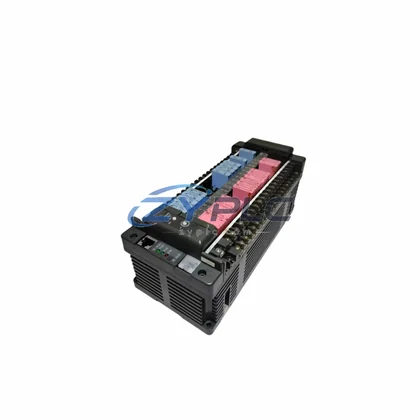
Fuji NB1-E40X-AC Industrial Network Interface for NB1 Systems: Bridging the Industrial Data Link
In modern smart factory environments, seamless data flow between field devices and upper-level control systems is no longer optional — it is the foundation of operational efficiency. The Fuji NB1-E40X-AC Expansion I/O Unit is engineered to serve as a critical node in the industrial data chain, extending the I/O capacity of the Fuji NB1 Series PLC platform while maintaining the high-speed, deterministic communication that demanding automation applications require. With 40 discrete I/O points and AC power input, this module integrates directly into NB1-series control architectures, enabling engineers to scale their systems without compromising network integrity or real-time performance.
At ZYPLC, we supply the NB1-E40X-AC from verified inventory channels, backed by a warranty terms confirmed during quotation and pre-shipment functional testing. Whether you are expanding an existing NB1 control panel or commissioning a new production line, this unit delivers the connectivity and reliability that industrial environments demand.
Compatibility & Integration Notes
| Parameter |
Specification |
| SKU / Model |
NB1-E40X-AC |
| Brand / Manufacturer |
Fuji Electric |
| Series |
NB1 Series |
| Product Type |
Expansion I/O Unit |
| I/O Points |
40 Points (Discrete I/O) |
| Power Supply |
AC Input |
| Communication Protocol |
NB1 Series Expansion Bus / Proprietary Fuji I/O Link |
| Interface Type |
Expansion Bus Connector (NB1 Series Compatible) |
| Network Compatibility |
NB1 Series PLC Backplane / Expansion Rack |
| System Application |
PLC I/O Expansion, SCADA Integration, Remote I/O, Factory Automation |
| Origin |
Japan |
| Warranty |
warranty terms confirmed during quotation (ZYPLC) |
| Availability |
RFQ Available — export shipping options available |
Connected Automation Data Flow
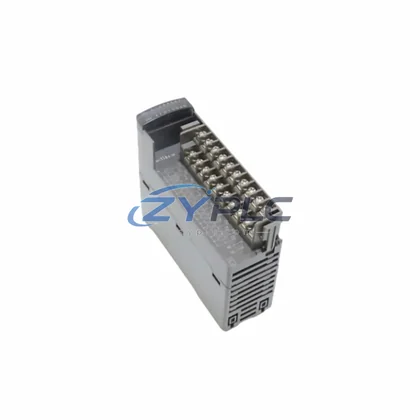
The NB1-E40X-AC does not operate in isolation. Its true value emerges when viewed as part of a broader industrial communication architecture. In a typical NB1-based control system, the Fuji NB1-CPU32 CPU module serves as the central processing unit, coordinating logic execution and data exchange across the expansion rack. The NB1-E40X-AC connects directly to this CPU via the NB1 expansion bus, delivering real-time discrete I/O data with minimal scan-cycle latency.
On the field device side, sensors — including proximity switches, photoelectric sensors, and pressure transmitters — feed their signals into the NB1-E40X-AC input channels. These signals are processed and passed upstream to the CPU, where they inform control decisions and trigger output commands to actuators, solenoid valves, and motor starters connected to the output channels.
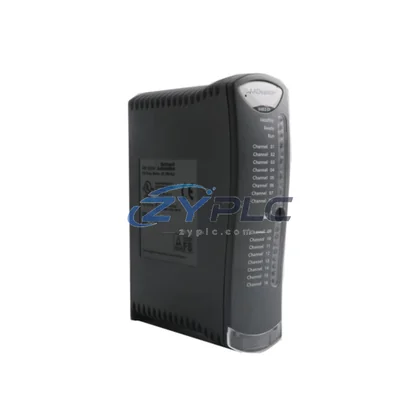
For facilities running Fuji MICREX-SX Series or legacy Fuji FLEX-PC N Series PLCs alongside NB1 systems, gateway modules and protocol converters bridge the communication gap, ensuring that data from older platforms can be aggregated into a unified SCADA or MES layer. The Fuji NB1-RS4 serial communication module extends this capability further, enabling Modbus RTU or RS-485 communication with third-party devices such as variable frequency drives, smart meters, and remote I/O stations.
At the network layer, managed industrial Ethernet switches — such as those in the Fuji FRENIC series inverter ecosystem — provide the backbone for real-time data transport between PLCs, HMI panels, and SCADA servers. Fuji V9 Series HMI terminals connect to the NB1 CPU via Ethernet or serial links, providing operators with live process visualization, alarm management, and trend logging. This HMI-to-PLC data path is critical for maintaining production transparency and enabling rapid response to process deviations.
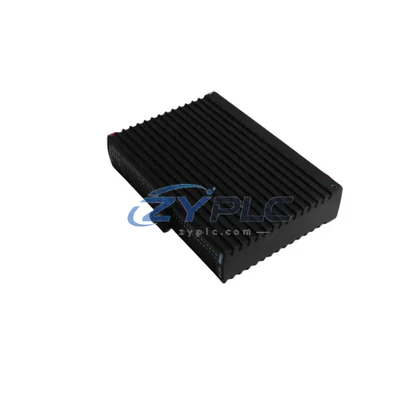
For remote monitoring and diagnostics, edge gateway devices aggregate data from the NB1 system and transmit it to cloud-based SCADA platforms or on-premise historians via OPC-UA or MQTT protocols. The Fuji NB1-E40X-AC, as the I/O expansion node, ensures that all field-level signals are accurately captured and made available to these upper-level systems without data loss or communication bottlenecks. Paired with Fuji NB1-PA3 power supply modules, the expansion rack maintains stable operation even under fluctuating AC input conditions, protecting data integrity across the entire signal chain.
Solving Data Isolation in Industrial Sites
One of the most persistent challenges in industrial automation is data isolation — the condition where field devices, PLCs, and upper-level systems operate in silos, unable to share information efficiently. The NB1-E40X-AC directly addresses this challenge by expanding the I/O capacity of the NB1 platform, allowing more field devices to be integrated into a single, cohesive control network.
In facilities where multiple communication protocols coexist — such as Modbus RTU on legacy equipment, PROFIBUS on mid-generation drives, and Ethernet/IP on newer controllers — the NB1 system’s modular architecture supports the addition of protocol-specific communication modules, effectively eliminating protocol barriers without requiring wholesale equipment replacement. This approach reduces integration costs and accelerates commissioning timelines.
Remote monitoring is another area where the NB1-E40X-AC delivers measurable value. By ensuring that all 40 I/O points are reliably connected to the NB1 CPU, engineers can implement remote diagnostic routines that monitor signal states, detect wiring faults, and generate predictive maintenance alerts — all without dispatching technicians to the field. This capability is especially valuable in geographically distributed facilities or hazardous environments where physical access is restricted.
Production line transparency — the ability to visualize real-time process data across every stage of manufacturing — is achieved when I/O expansion modules like the NB1-E40X-AC are properly integrated into the SCADA and MES data flow. With accurate, low-latency I/O data feeding into the control system, production managers gain the visibility they need to identify bottlenecks, optimize throughput, and respond to quality deviations before they escalate into costly downtime events.
System scalability is built into the NB1 architecture. As production requirements grow, additional NB1-E40X-AC units can be added to the expansion rack, incrementally increasing I/O capacity without disrupting existing control logic or network configurations. This modular scalability protects capital investment and simplifies future upgrades.
Industrial Connectivity FAQ
Q1: What communication protocol does the NB1-E40X-AC use to connect to the NB1 CPU?
The NB1-E40X-AC communicates with the NB1 Series CPU module via the proprietary Fuji NB1 expansion bus. This high-speed backplane connection ensures deterministic, low-latency data exchange between the expansion I/O unit and the central processor, with no additional network configuration required.
Q2: Is the NB1-E40X-AC compatible with third-party SCADA systems?
Yes. While the NB1-E40X-AC connects directly to the NB1 CPU via the expansion bus, the NB1 CPU supports communication with third-party SCADA systems through Ethernet, serial (RS-232/RS-485), and optional protocol modules. Data from the NB1-E40X-AC I/O points is accessible to SCADA platforms via OPC-DA, OPC-UA, or Modbus TCP, depending on the communication modules installed.
Q3: How does ZYPLC ensure network stability and product quality before shipment?
Every NB1-E40X-AC unit supplied by ZYPLC undergoes pre-shipment functional testing to verify I/O point integrity, power supply performance, and bus communication stability. Units are sourced from verified supply channels and are covered by a warranty terms confirmed during quotation, ensuring that customers receive reliable, tested hardware ready for immediate deployment.
Q4: Can the NB1-E40X-AC be used to expand systems beyond the initial I/O count, and what are the expansion limits?
The NB1 Series architecture supports multiple expansion I/O units on a single expansion rack, subject to the maximum I/O point count and power budget defined by the NB1 CPU specification. Engineers should consult the NB1 Series hardware manual to confirm the maximum number of expansion modules supported per CPU and ensure that the total I/O count and power consumption remain within system limits.