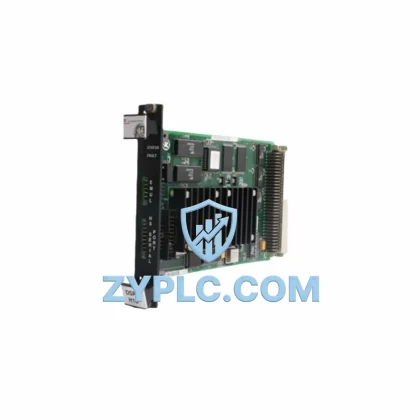
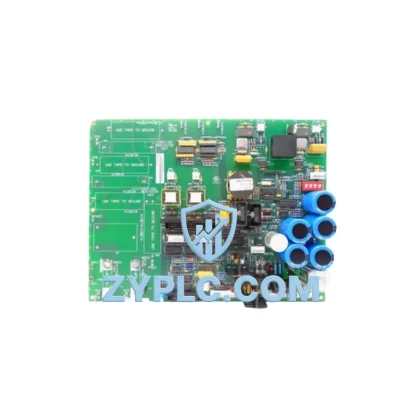
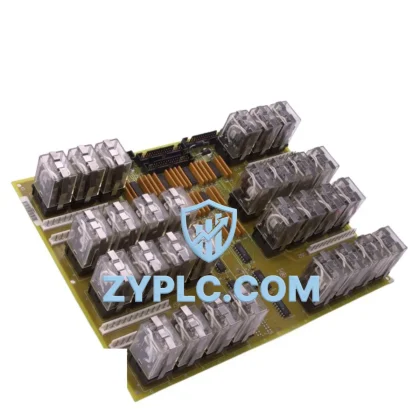
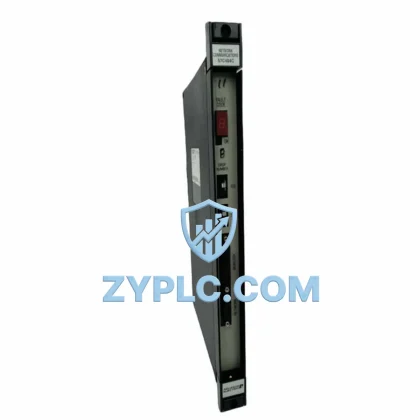
GE DS200QTBAG1ADC Turbine Control Termination Board: Control System and system integration for Mark VI
The GE DS200QTBAG1ADC is a dedicated turbine control termination board engineered for seamless integration within the GE Mark VI distributed control system architecture. Rather than functioning as a standalone component, this board occupies a critical position in the signal termination layer — bridging field instrumentation, actuators, and the core I/O processing modules of the Mark VI platform. Its design reflects GE’s commitment to system-level consistency, enabling engineers to maintain signal integrity, reduce wiring complexity, and support long-term maintainability across turbine control installations in power generation, oil and gas, and industrial process environments.
Product Specification Table
| Parameter |
Specification |
| System Role |
Signal Termination Board — Mark VI Control Architecture |
| Compatible Platform |
GE Mark VI Turbine Control System |
| Series |
DS200 / Mark VI |
| Product Type |
Turbine Control Termination Board |
| Signal Interface |
Field I/O termination for analog and discrete signals |
| Electrical Parameters |
Compatible with Mark VI standard I/O voltage levels (24VDC logic, 4–20mA analog) |
| Communication Capability |
Interfaces with Mark VI I/O modules via backplane and ribbon connectors |
| Installation Environment |
Control cabinet / Mark VI panel enclosure; DIN rail or panel mount |
| Operating Temperature |
0°C to 60°C (standard industrial range) |
| Origin |
United States |
| Warranty |
12-Month Warranty — covered by ZYPLC quality assurance program |
| Availability |
In stock — global shipping supported |
System Compatibility Notes
The DS200QTBAG1ADC does not operate in isolation. Its value is fully realized when considered within the broader Mark VI control system architecture, where multiple hardware layers must communicate reliably under demanding operational conditions. At the control layer, the GE IS215UCVEH2A Mark VI UCVE Controller Board serves as the central processing unit, executing turbine sequencing logic and managing system-wide I/O polling. The DS200QTBAG1ADC connects downstream from this controller, providing the physical termination points that translate field signals into data the controller can process.
On the I/O layer, modules such as the GE DS200IIBDG1A Analog Input Board and the GE DS200DSPCH1A Digital Signal Processor Board work in conjunction with the termination board to condition and route signals from thermocouples, pressure transmitters, speed sensors, and valve position feedback devices. The termination board’s role is to ensure that these signals arrive at the I/O modules cleanly, without ground loops or impedance mismatches that could compromise measurement accuracy or trigger nuisance trips.
Power distribution within the Mark VI cabinet is managed by components such as the GE DS200PCCAG1A Power Supply Board, which provides regulated DC power to the I/O and termination layers. The DS200QTBAG1ADC is designed to operate within the power envelope defined by this supply architecture, ensuring that field wiring loads do not introduce instability into the control power bus. In redundant configurations, dual power supply arrangements — supported by boards like the GE DS200TCQAG1A Terminal Board — allow the system to maintain continuous operation even during a single power supply failure.
At the network and communication layer, the Mark VI system relies on the GE IS420ESWAH1A Ethernet Switch Module and dedicated communication processors to exchange data between the turbine control system and plant-level SCADA or DCS platforms. The termination board supports this architecture by ensuring that field-side signal quality is maintained, reducing the likelihood of communication errors caused by noisy or improperly terminated analog inputs. In installations where the Mark VI interfaces with a broader plant control network via Modbus TCP or PROFIBUS DP gateways, clean signal termination at the DS200QTBAG1ADC level is essential for data fidelity across protocol boundaries.
For human-machine interface integration, operators monitoring turbine performance through GE Cimplicity HMI workstations or third-party SCADA systems depend on accurate, low-latency data from the field. The DS200QTBAG1ADC contributes to this data quality by providing stable, well-terminated signal paths that minimize measurement drift and reduce the need for software-side filtering or compensation. This is particularly important in applications where turbine speed, exhaust temperature, and vibration data must be displayed and acted upon in real time.
In redundant control architectures — common in combined-cycle power plants and critical process facilities — the Mark VI system may deploy dual or triple modular redundancy (TMR) configurations. In these setups, multiple DS200-series termination and I/O boards are installed in parallel, with voting logic at the controller level determining the authoritative signal value. The DS200QTBAG1ADC is compatible with these redundancy schemes, allowing engineers to design systems that meet SIL 2 or SIL 3 safety integrity requirements without compromising signal termination quality.
Industrial Application Notes
The DS200QTBAG1ADC finds application across a wide range of industrial sectors where GE Mark VI turbine control systems are deployed. In power generation facilities — including gas turbine, steam turbine, and combined-cycle plants — the board serves as the termination interface for critical measurement and control signals, including fuel valve position, compressor inlet guide vane feedback, and exhaust temperature arrays. Its robust construction ensures reliable performance in the high-vibration, high-temperature environments typical of turbine control rooms.
In oil and gas processing facilities, the Mark VI system is frequently used to control gas compression trains, pipeline booster stations, and LNG liquefaction turbines. The DS200QTBAG1ADC supports these applications by providing a standardized termination interface that simplifies field wiring, reduces commissioning time, and facilitates future modifications or expansions without requiring changes to the core control architecture.
For petrochemical and refinery applications, where process continuity is paramount, the board’s compatibility with redundant Mark VI configurations ensures that turbine-driven compressors and pumps can be controlled with the high availability required by continuous process operations. Maintenance teams benefit from the board’s modular design, which allows for hot-swap replacement during scheduled outages without disturbing adjacent wiring or control logic.
In water treatment and municipal utility installations, the Mark VI platform — with the DS200QTBAG1ADC as part of its termination layer — provides the reliability and long service life required for infrastructure-critical applications. The board’s compatibility with standard industrial signal types (4–20mA, discrete 24VDC) ensures straightforward integration with field instruments from multiple manufacturers, supporting the mixed-vendor environments common in utility control systems.
For mining and metallurgical operations, where turbine-driven equipment operates under heavy load cycles and demanding environmental conditions, the DS200QTBAG1ADC’s industrial-grade construction and GE’s proven Mark VI platform provide the durability and diagnostic capability needed to minimize unplanned downtime and support predictive maintenance programs.
Product Compatibility FAQ
Q1: Is the DS200QTBAG1ADC compatible with both simplex and TMR Mark VI configurations?
Yes. The DS200QTBAG1ADC is designed to operate within the GE Mark VI platform in both simplex and triple modular redundancy (TMR) configurations. In TMR systems, multiple termination boards are installed in parallel, with the Mark VI controller’s voting logic managing signal selection. Engineers should verify the specific I/O module pairing (e.g., DS200IIBDG1A or equivalent) to ensure full compatibility with the intended redundancy architecture. ZYPLC’s technical team can assist with configuration verification prior to procurement.
Q2: What is the installation and commissioning process for the DS200QTBAG1ADC in an existing Mark VI cabinet?
Installation follows GE’s standard Mark VI panel wiring guidelines. The board mounts within the designated termination bay of the Mark VI enclosure and connects to the corresponding I/O module via the system’s internal ribbon or backplane connectors. Field wiring is terminated at the board’s screw terminal blocks, following the signal assignment defined in the turbine’s I/O list. Commissioning involves loop checking each signal path, verifying termination resistance, and confirming signal values at the controller level using GE’s Toolbox software. ZYPLC provides documentation support and pre-shipment testing to reduce on-site commissioning time.
Q3: What does the 12-Month Warranty cover, and what support is available for long-term maintenance?
ZYPLC’s 12-Month Warranty covers the DS200QTBAG1ADC against manufacturing defects and functional failures under normal operating conditions. Warranty claims are processed through ZYPLC’s dedicated after-sales team, with replacement units dispatched from stock to minimize system downtime. For long-term maintenance, ZYPLC maintains inventory of DS200-series boards and related Mark VI components, supporting customers with spare parts planning, obsolescence management, and technical consultation. Customers are encouraged to contact ZYPLC’s engineering team for multi-year supply agreements and system-level spare parts recommendations.
© 2026 ZYPLC. All rights reserved.
Original Source: https://zyplc.com
Contact: +86 19859288691 | plc.sales@zyplc.com