GE DS200RTBAG2A Energy-Saving Relay Terminal Board for Optimized Mark V Automation
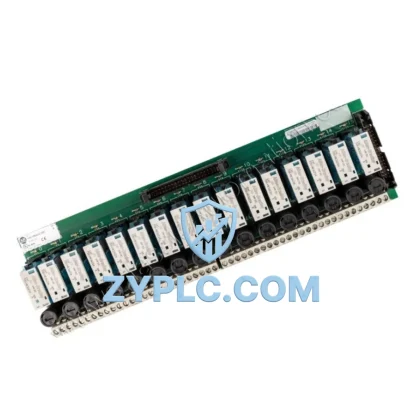
The GE DS200RTBAG2A is a high-performance Relay Terminal Board engineered for the GE Mark V Turbine Control System, one of the most widely deployed industrial control platforms in power generation and heavy process industries. Designed to interface relay output signals between the Mark V controller and field actuators, the DS200RTBAG2A plays a critical role in reducing unnecessary switching losses, minimizing relay chatter, and ensuring that control commands are executed with precision — all of which directly contribute to measurable reductions in plant energy consumption and unplanned downtime.
In modern industrial facilities where energy efficiency is a board-level KPI, every component in the control loop matters. The DS200RTBAG2A is not simply a passive terminal board — it is an active participant in the energy optimization chain. By providing clean, low-resistance relay contact paths for the Mark V’s output signals, it ensures that motor starters, solenoid valves, and actuator drives receive accurate switching commands without signal degradation. This translates directly into fewer false trips, reduced motor restart cycles, and lower peak demand charges on the facility’s energy bill.
Efficiency Performance Table
| Parameter |
Specification / Value |
| SKU / Part Number |
DS200RTBAG2A |
| Compatible System |
GE Mark V Turbine Control System |
| Module Function |
Relay Terminal Board — Output Signal Interface |
| Relay Contact Rating |
Typically 5A / 250VAC (per GE Mark V design standard) |
| Operating Voltage |
24VDC Logic / Field-side per relay spec |
| Power Consumption |
Low standby draw; optimized for continuous 24/7 industrial operation |
| Operating Temperature |
0°C to 60°C (industrial panel environment) |
| Application Environment |
Power Generation, Oil & Gas, Petrochemical, Heavy Industry |
| Energy Optimization Value |
Reduces false trips, motor restart cycles, and switching losses |
| Compatibility |
GE Mark V TCCA, TCCB, TCQC, TCQD, TCPS boards and associated I/O racks |
| Warranty |
12-Month Warranty — Tested before shipment |
| Availability |
In Stock — Ready to Ship |
Energy-Aware Automation Architecture
The DS200RTBAG2A operates within a tightly integrated control architecture where every board contributes to system-wide energy efficiency. In a typical Mark V installation, the relay terminal board works in concert with the GE DS200TCQAG1A Quad Core Processor Board, which handles the primary control logic and issues switching commands based on real-time turbine state data. The processor’s decisions flow through the DS200TCDAG1A I/O Terminal Board, which aggregates digital and analog field signals before routing them to the DS200RTBAG2A for relay-level execution.
On the drive side, the Mark V system frequently interfaces with GE EX2100 Excitation Controllers and GE Speedtronic Mark V LCI (Load Commutated Inverter) systems for gas turbine starting sequences. The DS200RTBAG2A’s relay outputs directly control permissive signals to these drive systems, meaning that a degraded or intermittent relay contact can cause unnecessary drive restarts — each of which consumes a significant energy spike. A properly functioning DS200RTBAG2A eliminates this waste.
For power monitoring and energy data acquisition, the Mark V system integrates with GE EnerVista software platforms and field-level GE Multilin power meters (such as the Multilin 735 or 750 series), which capture real-time kW, kVAR, and power factor data from the turbine-generator set. The relay outputs managed by the DS200RTBAG2A serve as the physical switching layer that connects these monitoring systems to protective relay logic, ensuring that energy anomalies trigger the correct load-shedding or isolation sequences without delay.
Communication between the Mark V controller and plant-level SCADA or DCS platforms — often via Modbus RTU or GE’s proprietary ARCNET protocol — depends on the integrity of the I/O and relay boards. The DS200RTBAG2A ensures that relay status feedback is accurately reflected in the communication layer, enabling operators to make informed energy dispatch decisions from the control room. In facilities running GE iFIX SCADA or integrating with OSIsoft PI historians, this real-time relay state data feeds directly into energy performance dashboards and predictive maintenance models.
The board also plays a role in coordinating with GE DS200TCPSG1A Power Supply Boards, which regulate the 28VDC and 5VDC rails that power the Mark V’s logic circuitry. Stable power delivery to the relay board ensures consistent coil energization and prevents the micro-interruptions that can cause relay contact bounce — a known source of spurious trips and unnecessary equipment cycling in high-availability turbine applications.
Power Optimization in Real Production Lines
In combined-cycle power plants and cogeneration facilities, the GE Mark V system — and by extension the DS200RTBAG2A — is responsible for managing turbine start/stop sequences, load following, and protective shutdown logic. Each of these functions has a direct energy cost. An unreliable relay terminal board introduces latency and uncertainty into the control loop, forcing operators to run turbines at conservative, sub-optimal load points to avoid trips. Replacing a degraded DS200RTBAG2A with a tested, fully functional unit allows operators to push turbines closer to their rated efficiency curve, recovering percentage points of heat rate performance that translate into thousands of dollars of fuel savings per operating hour.
In oil and gas compression stations, the Mark V controls gas turbine-driven compressors where uptime is directly tied to pipeline throughput and revenue. A relay board failure that causes an unplanned compressor shutdown triggers not only a restart energy spike but also a production loss event. Proactive replacement of the DS200RTBAG2A — supported by a 12-month warranty and pre-shipment functional testing — is a standard practice in reliability-centered maintenance programs at these facilities.
For plant maintenance teams operating under predictive maintenance frameworks, having a verified spare DS200RTBAG2A in inventory is a low-cost insurance policy against high-consequence failures. The board’s role in the relay output chain means that its failure mode is typically sudden and complete — there is no graceful degradation. Stocking a tested replacement unit eliminates the mean-time-to-repair (MTTR) contribution from procurement lead time, which in legacy Mark V installations can otherwise stretch to weeks if sourced through OEM channels.
From a production line rhythm (takt time) perspective, turbine control reliability directly affects the availability of steam or power to downstream processes. In petrochemical plants where the Mark V governs steam turbine-driven pumps or compressors, a relay board fault can cascade into process upsets that require hours of stabilization. The DS200RTBAG2A, when maintained in good working order, is a foundational element of the plant’s overall equipment effectiveness (OEE) score.
Energy Optimization FAQ
Q1: How does the DS200RTBAG2A contribute to energy savings in a Mark V turbine control system?
The DS200RTBAG2A provides the relay switching interface between the Mark V controller and field devices such as motor starters, solenoid valves, and drive permissives. Clean, low-resistance relay contacts reduce switching losses, eliminate false trips, and prevent unnecessary motor restart cycles — each of which carries a measurable energy cost. A properly functioning relay terminal board allows the turbine to operate at optimal load points rather than conservative, energy-inefficient setpoints.
Q2: Is the DS200RTBAG2A compatible with all Mark V configurations, and can it replace other relay board variants?
The DS200RTBAG2A is designed for the GE Mark V Turbine Control System and is compatible with standard Mark V I/O rack configurations including those using TCCA, TCCB, TCQC, and TCQD processor boards. Cross-compatibility with specific Mark V sub-variants (Mark V LM, Mark V TMR) should be verified against the plant’s original Bill of Materials. Our technical team can assist with cross-reference verification prior to shipment.
Q3: What testing is performed on the DS200RTBAG2A before shipment, and what does the 12-month warranty cover?
Every DS200RTBAG2A unit undergoes functional testing prior to shipment, including relay coil continuity verification, contact resistance measurement, and logic-level signal integrity checks. The 12-month warranty covers defects in materials and workmanship under normal industrial operating conditions. Units that fail within the warranty period are replaced or repaired at no additional cost, with priority processing to minimize plant downtime.
Q4: What is the recommended replacement strategy for the DS200RTBAG2A in a predictive maintenance program?
Best practice in reliability-centered maintenance (RCM) programs is to maintain at least one tested spare DS200RTBAG2A in local inventory, particularly for Mark V systems that are no longer supported under active OEM service contracts. Given the board’s critical role in relay output switching and the potential for sudden failure without prior degradation signals, a condition-based replacement triggered by relay contact resistance trending (measured via the Mark V’s diagnostic routines) is recommended. Replacement during planned outage windows eliminates unplanned downtime risk entirely.
—
© 2026 ZYPLC. All rights reserved.
Original Source: https://zyplc.com
Contact: +86 19859288691 | [email protected]