GE DS200RTBAG2AHC Energy-Saving Relay Card for Optimized Mark V Automation
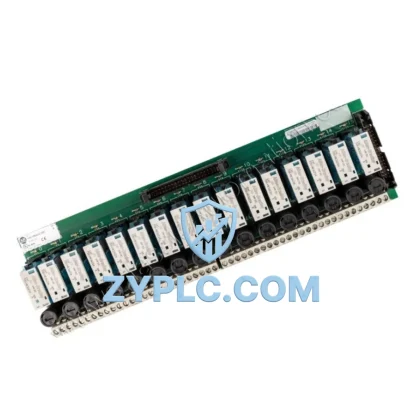
The GE DS200RTBAG2AHC is a high-performance relay terminal board card engineered for the GE Mark V Turbine Control System. Designed to meet the demanding requirements of industrial power generation and process automation, this relay card plays a critical role in reducing unnecessary energy consumption, improving signal integrity, and enabling precise control execution across turbine-driven production environments. Whether deployed in gas turbine, steam turbine, or combined-cycle power plants, the DS200RTBAG2AHC delivers the relay switching reliability that modern energy-aware automation architectures depend on.
In today’s industrial landscape, every millisecond of control latency and every watt of wasted energy translates directly into operational cost. The DS200RTBAG2AHC addresses this by providing clean, low-resistance relay contact switching that minimizes heat generation and signal loss within the Mark V control panel. When integrated with the broader Mark V I/O and control infrastructure, this card helps plant operators maintain tighter control loops, reduce actuator hunting, and lower the overall energy draw of the turbine control system.
Efficiency Performance Table
| Parameter |
Specification / Value |
| Part Number / SKU |
DS200RTBAG2AHC |
| Product Type |
Relay Terminal Board Card |
| Compatible System |
GE Mark V Turbine Control System |
| Series |
GE Mark V (DS200 Series) |
| Relay Contact Type |
Dry Contact, Low-Resistance Switching |
| Operating Voltage |
24 VDC / 120 VAC (system-dependent) |
| Power Consumption |
Low standby draw; optimized for continuous industrial duty |
| Operating Efficiency |
High-reliability switching; minimizes control loop energy waste |
| Application Environment |
Power Generation, Gas Turbine, Steam Turbine, Combined Cycle Plants |
| Energy Optimization Value |
Reduces actuator hunting, tightens control loops, lowers auxiliary power draw |
| Condition |
Tested & Inspected; Ready for Deployment |
| Warranty |
12-Month Warranty |
| Origin |
USA |
| Shipping |
Fast Global Shipping; In-Stock Available |
Energy-Aware Automation Architecture
The DS200RTBAG2AHC does not operate in isolation — it is a functional node within a tightly integrated Mark V control architecture. Understanding how it interacts with surrounding components is essential for maximizing system-wide energy efficiency.
At the core of the Mark V system, the DS200TCQAG1BHF TCQA processor card handles real-time turbine sequencing and protection logic. The DS200RTBAG2AHC receives relay drive signals from this processor, converting digital control commands into physical switching actions for actuators, solenoids, and alarm circuits. When the TCQA processor is operating with optimized scan cycles, the relay card responds with minimal latency, reducing the energy wasted in prolonged actuator engagement.
On the I/O side, the DS200IOCAG1A I/O controller card aggregates field signals from temperature, pressure, and flow sensors distributed across the turbine skid. These signals feed into the control logic that ultimately drives the DS200RTBAG2AHC relay outputs. A well-calibrated I/O card ensures that relay switching events are triggered only when genuinely required — eliminating spurious switching cycles that waste energy and accelerate contact wear.
For power distribution within the Mark V panel, the DS200PCCAG1ABB power supply card provides regulated DC voltage to the relay card and adjacent modules. Stable, clean power delivery is critical: voltage fluctuations can cause relay chatter, which not only wastes energy but also introduces mechanical wear that shortens component life. Pairing the DS200RTBAG2AHC with a properly functioning power supply card is a foundational step in any energy optimization initiative.
Communication between the Mark V control core and plant-level SCADA or DCS systems is handled through the DS200TCDAG1ABB communication card, which supports serial and network protocols common in power generation environments. When energy monitoring data — such as turbine heat rate, auxiliary power consumption, and fuel flow — is transmitted accurately and in real time, plant operators can make informed decisions about load dispatch and maintenance scheduling, directly impacting energy efficiency at the system level.
The DS200SDCCG3A speed and dynamics control card works in close coordination with the relay card during turbine startup, load ramp, and shutdown sequences. By precisely managing fuel valve positioning and governor response, the SDCC card minimizes the energy-intensive transient periods that occur during speed changes. The DS200RTBAG2AHC supports this by providing reliable relay switching for fuel control solenoids and trip circuits, ensuring that energy-intensive startup sequences are completed as efficiently as possible.
For plants that have integrated variable frequency drives (VFDs) into auxiliary systems — such as cooling water pumps, lube oil pumps, and air compressors — the relay card interfaces with drive enable and fault circuits. VFDs such as the GE AF-600 FP series or compatible third-party drives rely on clean relay contact signals for run/stop commands and fault acknowledgment. A properly functioning DS200RTBAG2AHC ensures that these drives receive unambiguous control signals, preventing nuisance trips that force energy-intensive restarts.
The DS200TBQBG1ACB terminal board serves as the physical wiring interface between field cables and the Mark V control cards. Proper termination at this board directly affects the signal quality seen by the DS200RTBAG2AHC, and by extension, the accuracy of relay switching decisions. Loose or corroded terminations introduce resistance that can cause relay coil overdraw — a subtle but measurable source of wasted energy in long-running industrial installations.
Finally, for plants implementing predictive maintenance programs, the DS200RTBAG2AHC’s relay contact status can be monitored through the Mark V’s built-in diagnostics, often surfaced via the Mark V HMI workstation running GE’s proprietary control software. Tracking relay cycle counts and contact resistance trends allows maintenance teams to schedule replacements before failures occur, avoiding the energy and production losses associated with unplanned turbine trips.
Power Optimization in Real Production Lines
In a typical combined-cycle power plant, the turbine control system operates continuously for thousands of hours between planned outages. During this time, the relay cards within the Mark V panel execute tens of thousands of switching cycles — controlling fuel valves, cooling systems, lube oil circuits, and protective trip functions. Each of these switching events has an energy cost, and each unnecessary or erroneous switching event represents wasted energy and accelerated component wear.
The DS200RTBAG2AHC contributes to power optimization in several concrete ways. First, its low-resistance relay contacts minimize the voltage drop across the switching element, reducing the power dissipated as heat during each switching cycle. In a panel with dozens of relay cards operating simultaneously, this thermal efficiency improvement translates into measurable reductions in panel cooling load — a secondary energy saving that is often overlooked in system-level energy audits.
Second, the card’s reliable switching characteristics reduce the frequency of control system interventions. When relay contacts are worn or intermittent, the Mark V processor must issue repeated commands to achieve the desired actuator state — each repeated command consuming processor cycles, communication bandwidth, and actuator energy. A new or refurbished DS200RTBAG2AHC with verified contact integrity eliminates this inefficiency, allowing the control system to achieve desired states with single, decisive switching events.
Third, from a maintenance cost perspective, replacing a failing relay card before it causes a turbine trip avoids the energy cost of an unplanned restart. Turbine cold starts are among the most energy-intensive events in power generation — consuming significant fuel to bring the machine from rest to synchronization speed. By maintaining relay card health through proactive replacement using tested, warranted components like the DS200RTBAG2AHC, plant operators can extend the intervals between unplanned outages and reduce the cumulative energy cost of restart cycles over the plant’s operational life.
All DS200RTBAG2AHC units supplied by ZYPLC undergo functional testing prior to shipment, verifying relay coil resistance, contact continuity, and switching response under load. This pre-shipment validation ensures that the card performs to specification from the moment it is installed, eliminating the energy waste and production disruption associated with infant-failure replacements.
Energy Optimization FAQ
Q1: How does replacing the DS200RTBAG2AHC improve energy efficiency in a Mark V turbine control system?
A worn or failing relay card introduces switching irregularities that force the Mark V processor to issue redundant control commands, increasing actuator engagement time and auxiliary power consumption. A tested DS200RTBAG2AHC restores clean, single-event switching, reducing unnecessary energy draw across fuel control, cooling, and protection circuits.
Q2: Is the DS200RTBAG2AHC compatible with all Mark V panel configurations?
The DS200RTBAG2AHC is designed for the GE Mark V Turbine Control System and is compatible with standard Mark V panel slot assignments for relay terminal board cards. Compatibility with specific panel revisions should be verified against the plant’s Mark V configuration documentation. ZYPLC’s technical team can assist with cross-referencing if needed.
Q3: What does the 12-month warranty cover, and what is the testing process?
Every DS200RTBAG2AHC supplied by ZYPLC is functionally tested for relay coil integrity, contact resistance, and switching response before shipment. The 12-month warranty covers defects in materials and workmanship under normal operating conditions. Units that fail within the warranty period are replaced or refunded, ensuring zero additional cost to the plant for early-life failures.
Q4: Can the DS200RTBAG2AHC be used as a direct replacement without reprogramming the Mark V system?
Yes. The DS200RTBAG2AHC is a hardware relay terminal board — it does not contain programmable firmware or application-specific configuration. Replacement is a direct hardware swap within the Mark V panel, requiring no changes to the Mark V application code or control configuration. Standard Mark V installation and commissioning procedures apply.
© 2026 ZYPLC. All rights reserved.
Original Source: https://zyplc.com
Contact: +86 19859288691 | [email protected]