GE DS200RTBAG3AEB Energy-Saving Relay Board for Mark V Turbine Control
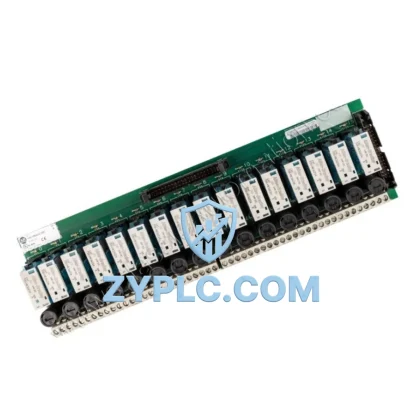
The GE DS200RTBAG3AEB is a high-efficiency relay output board engineered for the GE Mark V Turbine Control System. Designed to deliver precise switching control across critical turbine automation circuits, this board plays a central role in reducing unnecessary energy consumption, minimizing relay chatter, and ensuring that actuator commands are executed with maximum accuracy and minimal power overhead. In industrial power generation and heavy process environments, the DS200RTBAG3AEB directly contributes to measurable improvements in equipment utilization rates, production line rhythm, and overall energy efficiency.
Efficiency Performance Table
| Parameter |
Specification / Value |
| SKU / Part Number |
DS200RTBAG3AEB |
| Brand / Series |
GE (General Electric) / Mark V |
| Product Category |
Relay Output Board – Turbine Control |
| Operating Voltage |
24 VDC (typical Mark V backplane supply) |
| Relay Output Channels |
Multiple isolated relay contacts for discrete control |
| Power Consumption |
Low-standby design; minimizes parasitic draw on control bus |
| Running Efficiency |
Optimized contact switching reduces inrush and heat generation |
| Compatible Systems |
GE Mark V Turbine Control (TMR / Simplex configurations) |
| Application Environment |
Power generation, oil & gas, petrochemical, heavy industry |
| Energy-Saving Value |
Eliminates relay bounce losses; supports load-shedding logic |
| Origin |
USA (GE Speedtronic platform) |
| Warranty |
12-Month Warranty – tested and verified before shipment |
| Stock Status |
In Stock – ready to ship |
Energy-Aware Automation Architecture
The DS200RTBAG3AEB does not operate in isolation — it is one node in a tightly integrated energy-aware control architecture. Within the GE Mark V platform, the relay board interfaces directly with the DS200TCQAG1BHF Turbine Control Card, which manages sequencing logic and issues discrete output commands. These commands pass through the DS200RTBAG3AEB’s relay contacts to drive field devices such as solenoid valves, motor starters, and trip circuits — all of which have direct energy implications when switching is imprecise or delayed.
On the power monitoring side, the Mark V system relies on boards such as the DS200VPBLG1AEE Power Supply Board to maintain stable backplane voltage. Voltage instability is a leading cause of relay contact wear and spurious switching events, both of which increase energy waste and maintenance frequency. The DS200RTBAG3AEB’s robust contact design tolerates minor supply fluctuations without false triggering, preserving the integrity of the control loop.
For motor-driven auxiliaries — such as lube oil pumps, cooling fans, and fuel forwarding pumps — the relay outputs from the DS200RTBAG3AEB are often used to command GE AF-600 FP series variable frequency drives (VFDs) or equivalent drive systems. By enabling precise start/stop and speed-reference switching, the board supports demand-based motor operation rather than continuous full-load running, which is one of the most impactful energy-saving strategies in rotating equipment management.
Communication between the Mark V controller and plant-level SCADA or DCS systems is handled through serial and Ethernet gateway modules such as the DS200TCDAG1AAA Communication Board. This connectivity allows energy consumption data — including relay switching frequency, load cycle counts, and trip event logs — to be transmitted upstream for analysis and optimization. When integrated with a plant historian or energy management system, this data enables predictive maintenance scheduling that prevents energy-wasting degradation before it occurs.
The DS200IOCAG1A I/O Controller Board works alongside the relay board to aggregate discrete input signals from field sensors, including temperature switches, pressure transmitters, and vibration monitors. This closed-loop feedback ensures that relay outputs are only energized when process conditions genuinely require it — eliminating the phantom loads and unnecessary actuator cycling that inflate energy bills in poorly tuned systems.
For HMI-level visibility, operators using GE Cimplicity SCADA or the Mark V operator interface panel can monitor relay output states in real time, correlating switching events with energy consumption trends. This visibility is essential for identifying inefficient control sequences — such as rapid cycling of high-inrush loads — and retuning setpoints to reduce energy peaks.
Additional boards commonly deployed alongside the DS200RTBAG3AEB in Mark V cabinets include the DS200SDCCG1A Speed and Dynamics Control Card, which governs turbine speed ramp rates and load pickup sequences, and the DS200EXPSG1ADA Expander Board, which extends the relay output capacity of the control panel for larger installations. Together, these components form a cohesive energy management backbone for gas turbine, steam turbine, and combined-cycle power plant applications.
Power Optimization in Real Production Lines
In a typical combined-cycle power plant, the GE Mark V system controls dozens of auxiliary systems simultaneously — fuel gas control valves, inlet guide vane actuators, cooling water pumps, and exhaust damper drives. Each of these systems draws energy proportional to its duty cycle and switching efficiency. The DS200RTBAG3AEB directly influences this energy profile by ensuring that relay contacts close cleanly, hold reliably, and open without arcing — all of which reduce resistive losses and contact erosion that would otherwise require more frequent board replacement and unplanned shutdowns.
Unplanned downtime in power generation is extraordinarily expensive — not only in lost generation revenue but in the energy cost of restart sequences, which involve high-inrush motor starts, purge cycles, and fuel system pressurization. A single relay board failure can trigger a full turbine trip, requiring a cold or warm restart that consumes significant auxiliary power before the unit returns to synchronization. By maintaining a tested, in-stock DS200RTBAG3AEB as a critical spare, plant operators can reduce mean time to repair (MTTR) from days to hours, dramatically cutting the energy and financial cost of unplanned outages.
From a production line rhythm perspective, the relay board’s role in sequencing auxiliary starts — such as staggering lube oil pump starts to avoid simultaneous inrush peaks — directly reduces demand charges on the facility’s electricity bill. Modern energy tariffs penalize peak demand heavily, and a well-tuned Mark V relay output sequence can shave kilowatts off the demand peak during turbine startup, yielding measurable cost savings over thousands of operating hours.
Predictive maintenance integration is another key energy optimization lever. By logging relay switching counts and correlating them with vibration and temperature data from field sensors, maintenance teams can identify contacts approaching end-of-life before they fail. Replacing a relay board on a planned maintenance window — rather than during an emergency — eliminates the energy waste of emergency restart sequences and allows the turbine to be returned to optimal efficiency settings rather than conservative post-trip operating modes.
Every DS200RTBAG3AEB unit supplied by ZYPLC undergoes full functional testing prior to shipment, including contact resistance measurement, insulation verification, and operational cycling under simulated Mark V backplane conditions. This pre-shipment validation ensures that the board performs to GE specification from the moment it is installed, with no burn-in period energy waste or commissioning delays.
Energy Optimization FAQ
Q1: How does the DS200RTBAG3AEB contribute to energy savings in a Mark V turbine system?
The board ensures precise, low-loss relay switching for auxiliary motor and actuator control. By eliminating contact bounce, reducing arcing, and enabling demand-based load sequencing, it directly reduces parasitic energy consumption in turbine auxiliary systems. When integrated with VFD command circuits, it also enables variable-speed motor operation, which is the single largest source of energy savings in rotating equipment.
Q2: Is the DS200RTBAG3AEB compatible with both TMR and Simplex Mark V configurations?
Yes. The DS200RTBAG3AEB is designed for use across GE Mark V platform variants, including Triple Modular Redundant (TMR) and Simplex configurations. It interfaces with the standard Mark V backplane and is compatible with the associated I/O and communication boards used in both architectures. Always verify the specific revision level against your system’s BOM before installation.
Q3: What is the recommended replacement and testing process for this relay board?
ZYPLC recommends a like-for-like replacement using a tested unit. Each DS200RTBAG3AEB supplied by ZYPLC has been functionally tested under simulated operating conditions, including contact cycling, insulation resistance, and backplane compatibility checks. Upon receipt, verify the board revision matches your system requirements, perform a visual inspection, and follow GE Mark V commissioning procedures for relay output verification before returning the turbine to service.
Q4: What warranty and support does ZYPLC provide for the DS200RTBAG3AEB?
All DS200RTBAG3AEB units are covered by a 12-month warranty from the date of shipment. This covers manufacturing defects and functional failures under normal operating conditions. ZYPLC maintains in-stock inventory of this board to support rapid deployment for emergency replacements, minimizing turbine downtime and the associated energy and revenue losses.
© 2026 ZYPLC. All rights reserved.
Original Source: https://zyplc.com
Contact: +86 19859288691 | plc.sales@zyplc.com