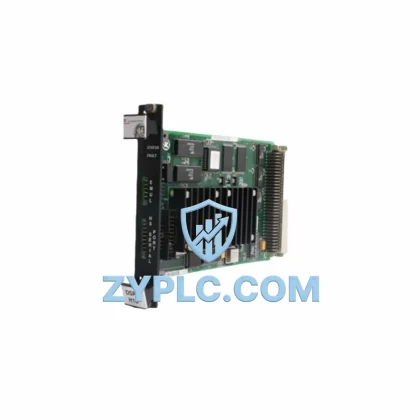
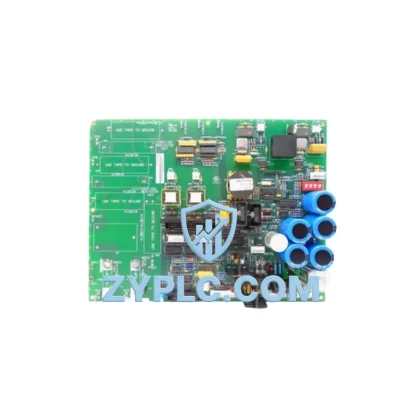
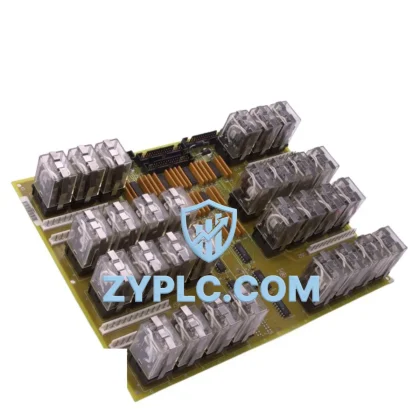
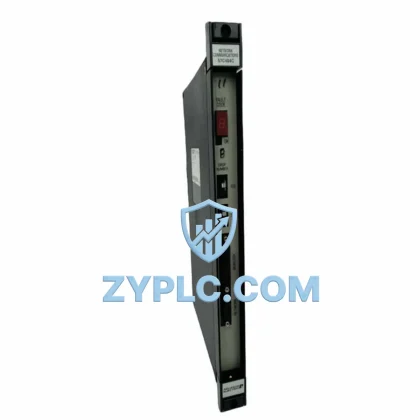
The GE DS200SDCCG5A is a high-performance turbine control module designed for the GE Mark VI turbine control system — one of the most widely deployed distributed control architectures in power generation and heavy industrial environments. As energy costs continue to rise and plant operators face increasing pressure to reduce carbon footprint and improve equipment utilization, the DS200SDCCG5A plays a central role in enabling intelligent, data-driven turbine management that directly translates into measurable operational stability and reduced operational downtime.
Unlike generic replacement modules, the DS200SDCCG5A is engineered to integrate seamlessly within the Mark VI control platform, enabling real-time feedback loops between the turbine’s mechanical state and the control system’s command layer. This tight integration allows the system to continuously adjust fuel flow, valve positioning, and load distribution — minimizing unplanned downtime at every stage of the turbine cycle.
Product Specification Table
| Parameter |
Specification / Value |
| SKU / Part Number |
DS200SDCCG5A |
| Brand / Manufacturer |
GE (General Electric) |
| Compatible Control System |
GE Mark VI Turbine Control |
| Module Series |
DS200 Series |
| Product Type |
Turbine Control Module (SDCC) |
| Operating Voltage |
24 VDC (nominal, Mark VI backplane) |
| Power Consumption |
Low-draw design; optimized for continuous 24/7 operation |
| Drive Efficiency Support |
Closed-loop turbine speed and load control |
| Compatible Application Environments |
Gas turbine, steam turbine, combined-cycle power plants |
| Communication Protocol |
Mark VI internal I/O bus; compatible with GE ARCNET and Ethernet-based HMI |
| Maintenance Value |
Reduces fuel overconsumption via precise governor control; minimizes auxiliary power draw |
| Condition |
Tested, fully functional |
| Warranty |
warranty and condition confirmed before quote |
| Origin |
USA |
| RFQ Status |
RFQ Available — Shipment arranged after confirmation |
System Compatibility and Application
The DS200SDCCG5A functions as the Sequence and Drive Control Card (SDCC) within the Mark VI system, acting as the primary execution layer for turbine sequencing, protection logic, and drive coordination. In a fully configured Mark VI cabinet, this module works in concert with the DS200IOCAG1A I/O controller to gather real-time field signals — including exhaust temperature, compressor inlet pressure, and rotor speed — and translate them into precise actuator commands.
On the drive side, the DS200SDCCG5A interfaces with the turbine’s fuel control valves and inlet guide vane actuators, effectively functioning as the bridge between the control logic and the physical drive elements. In plants where GE’s EX2100 excitation system is deployed alongside the Mark VI, the SDCC module coordinates generator excitation levels to maintain power factor efficiency — a critical factor in reducing reactive power losses on the plant’s internal grid.
For facilities running combined-cycle configurations, the DS200SDCCG5A integrates with the DS200TCQCG1A turbine control card and the DS200DSPCH1A digital signal processor to enable coordinated heat recovery steam generator (HRSG) sequencing. This coordination ensures that steam turbine startup and shutdown cycles are timed to maximize thermal energy recovery, directly reducing fuel consumption per megawatt-hour generated.
On the monitoring and feedback side, the module communicates with the DS200SLCCG3A servo and load control card to maintain closed-loop governor response. When load demand fluctuates — as is common in grid-connected generation — the SDCC and SLCC work together to prevent fuel over-injection, a common source of unnecessary energy expenditure in older, open-loop turbine systems.
For HMI integration, the Mark VI system typically pairs with GE Cimplicity SCADA or the ToolboxST configuration platform, both of which rely on accurate, low-latency data from the DS200SDCCG5A to display real-time turbine efficiency metrics, alarm states, and operating load trends. Operators can use this data to identify inefficient operating windows and schedule maintenance before performance degradation leads to increased fuel burn.
In facilities where power quality monitoring is a priority, the DS200SDCCG5A can be integrated with GE Power Management relays and Multilin series power monitors to provide a complete picture of energy flow from the turbine shaft to the switchyard — enabling plant engineers to pinpoint losses at every conversion stage.
Maintenance and Replacement Notes
In gas turbine power plants, one of the most significant sources of unplanned downtime is imprecise governor control during load transitions. When a turbine accelerates or decelerates in response to grid demand, an improperly functioning SDCC module can cause fuel over-injection — burning excess fuel without a corresponding increase in electrical output. The DS200SDCCG5A eliminates this inefficiency by executing high-speed, closed-loop governor algorithms that adjust fuel valve position within milliseconds of detecting a speed deviation.
In combined-cycle plants, the DS200SDCCG5A’s sequencing logic directly controls the timing of gas turbine startup and shutdown relative to the HRSG and steam turbine. Poorly timed sequences result in thermal energy being vented rather than recovered — a direct energy loss. With the DS200SDCCG5A operating correctly, startup sequences are optimized to maximize heat recovery from the first moment of combustion, improving overall plant heat rate by several percentage points.
From a maintenance perspective, the DS200SDCCG5A contributes to predictive maintenance strategies by continuously monitoring internal diagnostic registers and flagging anomalies in actuator response times, I/O signal integrity, and control loop stability. Early detection of degrading valve actuators or failing I/O channels allows maintenance teams to schedule interventions during planned outages rather than responding to unplanned trips — each of which can cost a plant tens of thousands of dollars in lost generation and restart fuel consumption.
Equipment utilization is also improved through the module’s protection logic. By accurately detecting over-temperature, over-speed, and flame-out conditions, the DS200SDCCG5A prevents catastrophic failures that would take a turbine offline for weeks. Keeping turbines running at high availability directly reduces the need for backup generation — which is typically less efficient and more carbon-intensive than the primary turbine fleet.
All units supplied by ZYPLC are fully tested prior to shipment, with functional verification performed under simulated Mark VI backplane conditions. Each DS200SDCCG5A is shipped with a warranty and condition confirmed before quote, ensuring that your plant’s maintenance planning investment is protected from day one of installation.
Product Sourcing FAQ
Q1: How does the DS200SDCCG5A contribute to measurable operational stability in a gas turbine plant?
The DS200SDCCG5A executes the turbine’s governor and sequencing logic, which directly controls fuel valve positioning and load ramp rates. By maintaining tight closed-loop control over these parameters, the module prevents fuel over-injection during load transitions and optimizes combustion timing — resulting in a lower heat rate (fuel consumed per kWh generated). Plants that replace a degraded SDCC module typically report immediate improvements in turbine response accuracy and a reduction in fuel consumption during partial-load operation.
Q2: Is the DS200SDCCG5A compatible with all Mark VI system configurations, including TMR (Triple Modular Redundant) setups?
Yes. The DS200SDCCG5A is designed for use within the GE Mark VI platform and is compatible with both simplex and TMR configurations. In TMR setups, three SDCC modules operate in parallel with voting logic to ensure that no single module failure causes a turbine trip — maximizing availability and preventing the unplanned downtime associated with unplanned shutdowns. Always verify the specific revision level (G5A in this case) against your Mark VI system’s hardware compatibility list before installation.
Q3: What is the recommended replacement and testing process for the DS200SDCCG5A?
Replacement should be performed during a planned outage window. Prior to installation, the module should be visually inspected for physical damage and verified against the system’s I/O configuration using ToolboxST. ZYPLC supplies each DS200SDCCG5A pre-tested under simulated backplane conditions, with a full functional test report available upon request. After installation, a cold-start sequence should be performed to verify governor response and I/O signal integrity before returning the turbine to service.
Q4: What warranty coverage is provided, and what does it include?
Every DS200SDCCG5A supplied by ZYPLC is covered by a warranty and condition confirmed before quote from the date of shipment. This warranty covers functional failure under normal operating conditions and includes technical support for installation and commissioning questions. In the event of a warranty claim, ZYPLC will provide a replacement unit or repair service, ensuring minimal disruption to your plant’s maintenance planning program.
© 2026 ZYPLC. All rights reserved.
Contact: +86 19859288691 | plc.sales@zyplc.com