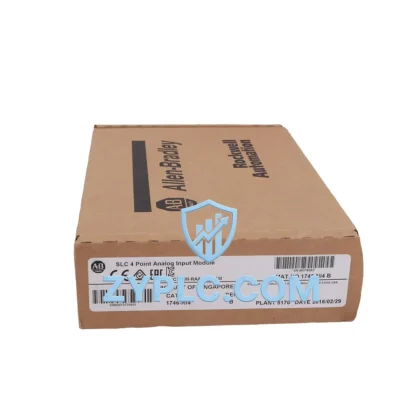
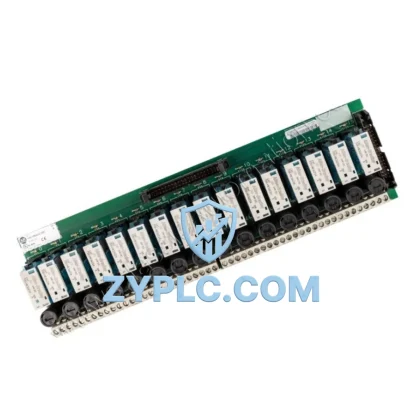
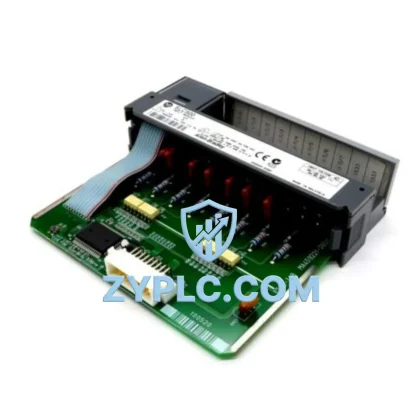
GE DS200TCQAG1BGE System-Ready Analog I/O Board for Mark V DS200 Architecture
The GE DS200TCQAG1BGE is a precision analog input/output board engineered for deployment within the GE Mark V turbine control system architecture. As a core signal-conditioning component in the DS200 series backplane ecosystem, this board occupies a critical position in the I/O layer of layered automation systems — bridging field-level instrumentation with the supervisory control and data acquisition (SCADA) layer above. Its role extends beyond simple signal conversion: the DS200TCQAG1BGE actively contributes to system consistency, redundancy integrity, and long-term maintainability across complex industrial control environments.
In a fully integrated Mark V control architecture, the DS200TCQAG1BGE works in close coordination with the DS200 backplane chassis, the TCCA (turbine control core assembly), and adjacent I/O boards such as the DS200TCDAG1A (digital I/O board) and DS200TCEAG1B (excitation control board). The analog signals it processes — including thermocouple inputs, RTD readings, 4–20 mA process loops, and voltage feedback channels — are routed through the Mark V’s internal VME-style communication bus to the main processor card, typically the DS200TCPSG1A or equivalent CPU module. This tight integration ensures that signal latency is minimized and that the control loop remains deterministic under varying load conditions.
System architects specifying the DS200TCQAG1BGE for new installations or retrofit projects benefit from its compatibility with the broader DS200 module family. When paired with the DS200TCQCG1B (analog output board) and the DS200TCTSG1A (terminal board), the complete analog signal chain from field sensor to control output can be maintained within a single vendor ecosystem — reducing integration risk and simplifying calibration workflows during commissioning. The DS200TCQAG1BGE also supports the Mark V’s built-in self-diagnostics, enabling fault isolation at the board level without requiring full system shutdown, a feature that significantly reduces mean time to repair (MTTR) in production-critical environments.
From a network and communications perspective, the DS200TCQAG1BGE operates within the Mark V’s proprietary IONet architecture, which provides deterministic, high-speed data exchange between I/O boards and the central processor. This architecture supports the Mark V’s redundancy model — including dual and triple modular redundancy (TMR) configurations — where the DS200TCQAG1BGE can be deployed in parallel with redundant counterparts to ensure continuous operation even in the event of a single-board failure. The redundancy handshake is managed transparently by the Mark V’s voting logic, requiring no manual intervention during switchover.
For power layer integration, the DS200TCQAG1BGE draws regulated DC power from the DS200 backplane, which is supplied by the Mark V power supply module (typically the DS200TCPSG1A power conditioner or equivalent). Proper power sequencing and grounding are essential during installation; the board’s analog circuitry is sensitive to common-mode noise, and the Mark V’s shielded backplane design mitigates this risk when installation guidelines are followed. Engineers performing system upgrades should verify backplane slot compatibility and firmware revision alignment between the DS200TCQAG1BGE and the resident CPU module to ensure seamless Contextual Integration within the existing control architecture.
Long-term maintenance planning for the DS200TCQAG1BGE is straightforward due to GE’s standardized module form factor across the DS200 series. Spare board management is simplified when the DS200TCQAG1BGE is stocked alongside complementary modules such as the DS200TCDAG1A, DS200TCEAG1B, and DS200TCQCG1B, enabling rapid board-swap maintenance without extended downtime. All units supplied by ZYPLC undergo functional testing prior to shipment and are covered by a 12-Month Warranty, providing assurance for both planned maintenance cycles and emergency replacement scenarios.
Architecture Specification Table
| Parameter |
Specification |
| System Role |
Analog I/O Board — I/O Layer, Mark V DS200 Architecture |
| Compatible Platform |
GE Mark V Turbine Control System (DS200 Series) |
| Backplane Interface |
DS200 VME-style backplane bus |
| Analog Input Channels |
Multiple thermocouple, RTD, and 4–20 mA process inputs (per GE Mark V specification) |
| Analog Output Channels |
Voltage and current output channels for actuator and positioner control |
| Communication Architecture |
GE IONet (proprietary deterministic I/O network) |
| Redundancy Support |
Compatible with Mark V TMR (Triple Modular Redundancy) and dual-redundant configurations |
| Power Supply |
Regulated DC via DS200 backplane (supplied by Mark V power conditioner module) |
| Operating Temperature |
0°C to 60°C (standard industrial enclosure environment) |
| Installation Environment |
Control cabinet / Mark V panel enclosure; DIN rail or backplane slot mount |
| Diagnostics |
On-board self-diagnostics with fault reporting to Mark V CPU |
| Warranty |
12-Month Warranty (ZYPLC — functional test verified prior to shipment) |
| Origin |
United States (GE OEM) |
Coordinated Control System Design
The DS200TCQAG1BGE achieves its full performance potential when deployed as part of a coordinated Mark V control system rather than as a standalone replacement board. In a typical turbine control panel, the board occupies one of the DS200 backplane’s analog I/O slots, working in parallel with the DS200TCDAG1A digital I/O board to provide complete signal coverage across both discrete and continuous process variables. The DS200TCEAG1B excitation control board interfaces with the generator excitation system, and its feedback signals are processed through the same IONet bus that carries data from the DS200TCQAG1BGE — ensuring that the CPU receives a synchronized, coherent picture of the turbine’s operating state.
At the processor level, the DS200TCPSG1A CPU module executes the Mark V’s control algorithms using the analog data supplied by the DS200TCQAG1BGE. In TMR configurations, three independent processor boards vote on control outputs, and the analog I/O boards — including the DS200TCQAG1BGE — are replicated across all three control paths. The DS200TCQCG1B analog output board translates the CPU’s computed setpoints into physical 4–20 mA or voltage signals for valve positioners, speed governors, and other final control elements. Terminal connectivity is managed through the DS200TCTSG1A terminal board, which provides the physical wiring interface between field cables and the DS200 backplane modules.
For human-machine interface integration, the Mark V system communicates with operator workstations via the Mark V HMI (typically running GE’s Cimplicity or equivalent SCADA platform), which displays real-time analog values sourced from the DS200TCQAG1BGE’s input channels. Power distribution within the control panel is managed by the DS200 power supply module, which conditions incoming AC or DC plant power into the regulated voltages required by the backplane. In applications requiring communication with external DCS or SCADA systems, the DS200TCNSG1A network interface module provides Ethernet or serial gateway functionality, enabling the Mark V to participate in plant-wide data historian and alarm management architectures.
Application in Layered Automation Systems
The DS200TCQAG1BGE is deployed across a wide range of heavy industrial applications where the GE Mark V platform provides turbine, compressor, or generator control. In power generation facilities — including gas turbine, steam turbine, and combined-cycle plants — the board processes critical analog signals such as exhaust gas temperatures, inlet guide vane positions, fuel flow rates, and generator terminal voltages. Its high-resolution analog input channels ensure that the Mark V’s control algorithms receive accurate process data, enabling precise load control and emissions compliance.
In oil and gas applications, the DS200TCQAG1BGE supports compressor train control systems where analog signals from pressure transmitters, flow meters, and vibration sensors must be processed with high fidelity. The board’s compatibility with the Mark V’s TMR architecture is particularly valued in these safety-critical environments, where single-point failures cannot be tolerated. Petrochemical and refinery operators also deploy the DS200TCQAG1BGE in process heater and boiler control systems, where it interfaces with thermocouple arrays and RTD networks to maintain precise temperature control across multiple heating zones.
In water treatment and pumping station applications, the Mark V platform — equipped with the DS200TCQAG1BGE — provides reliable analog signal processing for pump speed feedback, flow measurement, and pressure regulation. Mining and metallurgical facilities use the board in mill drive control and smelter process control systems, where robust analog I/O performance under electrically noisy conditions is essential. Across all these applications, the DS200TCQAG1BGE’s integration within the Mark V’s self-diagnostic framework enables condition-based maintenance strategies, reducing unplanned downtime and extending the operational life of the overall control system.
Architecture Engineering FAQ
Q1: Is the DS200TCQAG1BGE compatible with both Mark V TMR and simplex control configurations?
Yes. The DS200TCQAG1BGE is designed for use in the GE Mark V DS200 backplane and is compatible with simplex, dual-redundant, and TMR (Triple Modular Redundancy) configurations. In TMR systems, three boards are installed — one per control path — and the Mark V’s voting logic manages redundancy transparently. No hardware modification is required; the configuration is determined by the Mark V’s system software and backplane slot assignment. Engineers should verify that the firmware revision of the DS200TCQAG1BGE matches the requirements of the installed Mark V software version to ensure full Contextual Integration.
Q2: What commissioning steps are required when replacing a DS200TCQAG1BGE in an operating plant?
Board replacement in an operating Mark V system should follow GE’s standard hot-swap or cold-swap procedure depending on the redundancy configuration. In TMR systems, a single board can typically be replaced without shutting down the turbine, provided the remaining two control paths are healthy. After physical installation, the Mark V will automatically detect the new board and perform a self-test sequence. Engineers should verify analog channel calibration against known reference signals and confirm that all diagnostic alarms have cleared before returning the system to automatic control. ZYPLC recommends retaining the replaced board for failure analysis and maintaining at least one spare DS200TCQAG1BGE in the plant’s critical spares inventory.
Q3: What does the 12-Month Warranty cover, and what support is available for long-term maintenance?
All DS200TCQAG1BGE units supplied by ZYPLC are covered by a 12-Month Warranty from the date of shipment. Each board undergoes functional testing prior to dispatch to verify analog channel performance, backplane interface integrity, and on-board diagnostic operation. The warranty covers defects in materials and workmanship under normal operating conditions. For long-term maintenance planning, ZYPLC maintains stock of the DS200TCQAG1BGE and complementary DS200 series modules, enabling rapid fulfillment for both scheduled maintenance and emergency replacement requirements. Contact our technical team at plc.sales@zyplc.com or +86 19859288691 for system compatibility verification and multi-unit procurement support.
© 2026 ZYPLC. All rights reserved.
Original Source: https://zyplc.com
Contact: +86 19859288691 | plc.sales@zyplc.com