GE DS200TCQCG1A System-Ready Relay Output Board for Mark V Architecture: Control System Architecture and Upstream–Downstream Coordination
The GE DS200TCQCG1A is a relay output board engineered specifically for deployment within the General Electric Mark V Turbine Control System — one of the most widely adopted distributed control platforms in power generation, oil & gas, and heavy industrial automation. Rather than functioning as a standalone component, the DS200TCQCG1A occupies a critical position within the Mark V’s layered I/O architecture, serving as the primary interface between the control processor and field-level actuators, contactors, solenoids, and protective relay circuits. Understanding its role demands a system-level perspective that spans the control layer, I/O layer, power distribution layer, communications backbone, and human-machine interface.
In a fully configured Mark V panel, the DS200TCQCG1A relay output board is typically installed within the TCQC I/O rack, where it receives discrete command signals from the DS200TCQAG1A or DS200TCDAG1A processor boards via the internal VME-style backplane. These processor boards execute the turbine sequencing logic — start permissives, trip logic, load control, and protective interlocks — and rely on the DS200TCQCG1A to translate those digital commands into physical relay closures that drive field devices. Each relay channel on the board is independently addressable, allowing the control system to manage multiple output circuits with precise timing and sequencing coordination.
The board’s integration with the DS200TCPSG1A power supply module is equally important. The Mark V architecture distributes 28 VDC and 5 VDC logic power across the backplane, and the DS200TCQCG1A draws regulated power from this supply to maintain relay coil energization and board-level logic. Any instability in the power supply layer — whether from aging capacitors in the TCPSG1A or from upstream AC input fluctuations — can manifest as spurious relay chatter or missed output commands, making the power layer a critical dependency for reliable DS200TCQCG1A operation.
From a communications and diagnostics perspective, the DS200TCQCG1A participates in the Mark V’s internal IONet data highway, which links I/O boards to the TCCA (Communication Controller) and ultimately to the operator interface running on GE Cimplicity HMI or the legacy Mark V LCC (Local Control Console). This connectivity allows maintenance engineers to monitor relay output states in real time, log switching events, and correlate output behavior with upstream process variables — a capability that is essential for root-cause analysis during turbine trips or protective shutdowns.
Redundancy is a defining characteristic of the Mark V architecture, and the DS200TCQCG1A is designed to support TMR (Triple Modular Redundancy) configurations where three independent control paths — designated R, S, and T — each drive their own relay output boards. In TMR mode, the system uses a two-out-of-three voting logic to determine the final output state, ensuring that a single board failure does not result in an uncontrolled turbine trip or a failure to trip when required. This architecture makes the DS200TCQCG1A a safety-critical component whose condition directly affects plant availability and personnel safety.
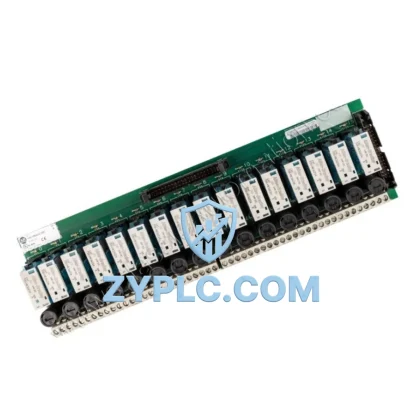
For facilities managing aging Mark V installations, the DS200TCQCG1A also interacts with the DS200TCRAG1A relay output termination board, which provides the physical terminal blocks where field wiring connects to the relay contacts. Maintaining both the TCQCG1A and its associated termination board in good condition is essential for preserving contact integrity, especially in high-cycle applications where relay contacts are subject to mechanical wear. Engineers performing preventive maintenance should inspect both boards together, checking for contact oxidation, coil resistance drift, and PCB contamination from industrial environments.
In layered automation systems, the DS200TCQCG1A also coordinates with upstream DS200TCQCG1B variants and downstream field devices including motorized valve actuators, fuel control solenoids, lube oil pump starters, and generator excitation contactors. The board’s output relay ratings — typically rated for 2A at 120 VAC or 28 VDC — must be matched to the inductive load characteristics of these field devices to prevent premature contact failure. System integrators should verify load compatibility during commissioning and document relay assignments in the Mark V I/O configuration database.
Architecture Specification Table
| Parameter |
Specification |
| Part Number |
DS200TCQCG1A |
| Manufacturer |
General Electric (GE) |
| Product Series |
Mark V Turbine Control System |
| System Role |
Relay Output Board — Discrete I/O Layer |
| Board Type |
Relay Output / Digital Output Module |
| Output Type |
Dry Contact Relay Outputs |
| Relay Contact Rating |
2A @ 120 VAC / 28 VDC (resistive load) |
| Logic Supply Voltage |
5 VDC / 28 VDC via Mark V backplane |
| Communication Interface |
Mark V IONet internal data highway |
| Redundancy Support |
TMR (Triple Modular Redundancy) — R/S/T paths |
| Compatible Processor Boards |
DS200TCQAG1A, DS200TCDAG1A |
| Associated Termination Board |
DS200TCRAG1A |
| Installation Environment |
Mark V TCQC I/O Rack, Panel-Mounted Enclosure |
| Operating Temperature |
0°C to 60°C (standard industrial range) |
| Contextual Integration |
Full Contextual Integration with Mark V control architecture |
| Warranty |
12-Month Warranty — Tested, Inspected, Ready to Deploy |
Coordinated Control System Design
A complete Mark V turbine control panel integrating the DS200TCQCG1A typically includes the following coordinated components across multiple system layers:
At the control processor layer, the DS200TCQAG1A executes the primary turbine control algorithms, including speed governing, load sharing, and protective trip logic. Its outputs are routed through the backplane to the DS200TCQCG1A, which converts digital commands into relay closures. In TMR configurations, the DS200TCDAG1A serves as the diagnostic and voting processor, continuously comparing R, S, and T path outputs to detect discrepancies before they affect plant operation.
At the power supply layer, the DS200TCPSG1A provides regulated DC power to all boards in the TCQC rack. Alongside it, the DS200TCEAG1A (I/O termination board) and associated power distribution modules ensure that relay coil power is available even during partial panel faults. Engineers should verify power supply output voltages during commissioning and schedule periodic load testing as part of the preventive maintenance program.
At the communications layer, the DS200TCCA communication controller manages data exchange between the Mark V I/O boards and the operator interface. This board aggregates relay output status from the DS200TCQCG1A and other I/O modules, making real-time output states visible on the GE Cimplicity HMI or the Mark V LCC panel. For facilities integrating the Mark V with modern DCS or SCADA systems, the TCCA also supports Modbus RTU and other legacy communication protocols.
At the I/O termination layer, the DS200TCRAG1A relay output termination board provides the physical wiring interface for field devices connected to the DS200TCQCG1A relay contacts. Proper torque on terminal screws, correct wire gauge selection, and periodic inspection of contact surfaces are essential maintenance practices that directly affect the reliability of the relay output layer.
Application in Layered Automation Systems
The DS200TCQCG1A finds its primary application in power generation facilities operating GE Frame 5, Frame 6, Frame 7, and Frame 9 gas turbines, where it controls fuel valve solenoids, inlet guide vane actuators, lube oil pump starters, and generator breaker trip coils. In these environments, relay output reliability is directly linked to unit availability and revenue generation, making the quality and warranty coverage of replacement boards a critical procurement consideration.
In combined cycle power plants, the DS200TCQCG1A may also appear in heat recovery steam generator (HRSG) control panels, where it manages steam bypass valve actuators, feedwater pump starters, and duct burner ignition circuits. The board’s compatibility with the Mark V TMR architecture ensures that these safety-critical outputs remain available even in the event of a single board failure.
In oil & gas upstream and midstream facilities, Mark V systems equipped with DS200TCQCG1A boards control compressor anti-surge valves, emergency shutdown (ESD) solenoids, and flare system igniters. The board’s dry contact relay outputs are well-suited to these applications because they provide galvanic isolation between the control system and high-voltage field circuits, reducing the risk of electrical noise interference and ground loop currents that can cause spurious trips.
For petrochemical and refinery applications, the DS200TCQCG1A supports process control systems where turbine-driven pumps and compressors must be started, stopped, and protected in coordination with process safety systems. Integration with Safety Instrumented Systems (SIS) requires careful verification of relay contact ratings and response times to ensure compliance with IEC 61511 functional safety requirements.
In mining and metals processing facilities operating large rotating equipment driven by GE turbines, the DS200TCQCG1A provides the discrete output capability needed to control ore crusher drives, conveyor system interlocks, and ventilation fan starters. The board’s robust industrial design and Mark V’s proven track record in harsh environments make it a reliable choice for these demanding applications.
Architecture Engineering FAQ
Q1: Is the DS200TCQCG1A compatible with both simplex and TMR Mark V configurations?
Yes. The DS200TCQCG1A is designed to operate in both simplex (single-path) and TMR (Triple Modular Redundancy) Mark V configurations. In simplex systems, a single board handles all relay output functions. In TMR systems, three DS200TCQCG1A boards are installed in the R, S, and T I/O racks respectively, with the DS200TCDAG1A voting processor determining the final output state based on two-out-of-three logic. When replacing a board in a TMR system, it is important to verify that the replacement board’s firmware revision and hardware configuration match the existing boards to maintain voting consistency. Our supplied units are tested and verified for Contextual Integration with both simplex and TMR Mark V architectures, and are covered by a 12-Month Warranty.
Q2: What commissioning steps are required when installing a replacement DS200TCQCG1A in an operating Mark V panel?
Installing a replacement DS200TCQCG1A requires the following key steps: (1) De-energize the affected I/O rack and verify absence of voltage on the backplane connectors. (2) Document the existing relay output assignments from the Mark V I/O configuration database before removing the faulty board. (3) Install the replacement board and verify that all backplane connector pins are fully seated. (4) Re-energize the rack and use the Mark V diagnostic software to verify that all relay output channels are recognized and responding correctly. (5) Perform a functional test of each relay output channel by commanding outputs from the HMI and verifying field device response. (6) Update the maintenance log with the replacement board’s serial number and installation date. Our technical team can provide commissioning support documentation for all boards supplied under our 12-Month Warranty program.
Q3: How does the 12-Month Warranty apply to the DS200TCQCG1A, and what does long-term maintenance planning look like for Mark V relay output boards?
Every DS200TCQCG1A supplied by ZYPLC is covered by a 12-Month Warranty that includes functional testing, burn-in verification, and full replacement in the event of board failure under normal operating conditions. For long-term maintenance planning, we recommend maintaining at least one spare DS200TCQCG1A per Mark V panel in critical applications, given that relay output boards are subject to mechanical wear from relay switching cycles and may require replacement every 5–10 years depending on switching frequency and environmental conditions. ZYPLC maintains in-stock inventory of DS200TCQCG1A and related Mark V components including DS200TCRAG1A termination boards and DS200TCPSG1A power supply modules, ensuring rapid delivery to minimize turbine downtime. Contact our technical sales team to discuss long-term supply agreements and preventive maintenance stocking programs.
© 2026 ZYPLC. All rights reserved.
Original Source: https://zyplc.com
Contact: +86 19859288691 | plc.sales@zyplc.com