GE Fanuc IC670CHS101C I/O Terminal for IC670
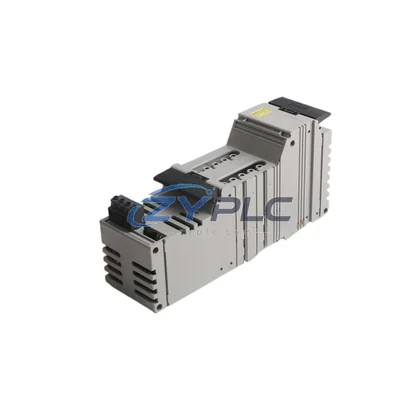
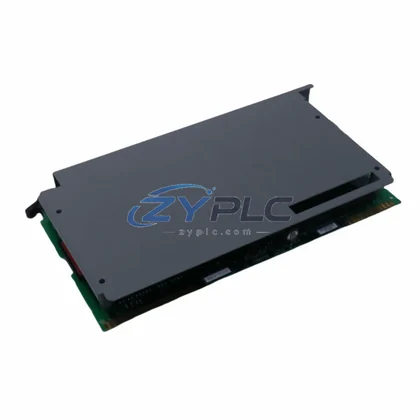
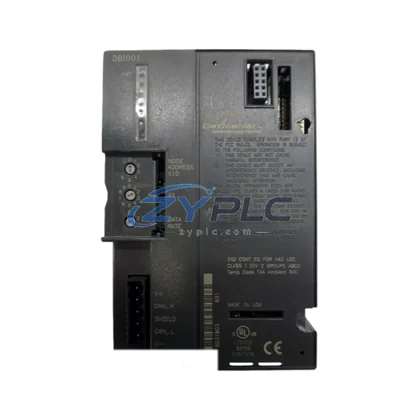
The GE Fanuc IC670CHS101C is a field-wiring terminal block engineered for seamless integration within the IC670 Series distributed I/O architecture. Rather than functioning as a standalone component, the IC670CHS101C serves as a critical interface layer between field instrumentation and the IC670 I/O modules, ensuring signal integrity, wiring consistency, and long-term maintainability across the full control system hierarchy. In modern industrial automation environments — spanning manufacturing, power generation, petrochemical processing, water treatment, mining, metallurgy, and packaging lines — the reliability of the I/O termination layer directly determines the stability of the entire control loop. The IC670CHS101C addresses this requirement with a robust mechanical design, standardized terminal pitch, and full compatibility with the IC670 module ecosystem.
Within a layered automation architecture, the IC670CHS101C occupies the field-side termination position in the I/O layer, sitting between the physical process signals and the IC670 discrete or analog I/O modules. This positioning makes it a foundational element for system engineers who prioritize structured wiring, reduced commissioning time, and simplified maintenance access. When paired with IC670 I/O modules such as the IC670MDL640 discrete input module or the IC670MDL740 discrete output module, the IC670CHS101C enables a clean, modular wiring approach that supports both initial installation and future field modifications without disturbing upstream module connections.
System architects integrating the IC670CHS101C into a GE Fanuc Series 90 or VersaMax distributed I/O network will find that the terminal block’s design aligns with the broader IC670 backplane and carrier philosophy. The IC670CHS101C is compatible with IC670 I/O carriers and can be deployed alongside the IC670CHS002 power supply terminal block and IC670CHS101 standard terminal assemblies to build a consistent, scalable I/O node. Communication between the IC670 I/O node and the host controller — whether a GE Fanuc Series 90-30 CPU such as the IC693CPU374, a Series 90-70 processor, or a VersaMax CPU — is maintained through the IC670PBI001 or IC670PBI002 bus interface units, which bridge the I/O node to the Genius Bus or DeviceNet network layer.
From a system redundancy perspective, the IC670CHS101C supports architectures where I/O node redundancy is achieved through dual bus interface units and mirrored I/O configurations. In process-critical applications such as power plant distributed control or chemical reactor management, maintaining uninterrupted signal flow through the I/O termination layer is non-negotiable. The IC670CHS101C’s robust terminal design minimizes the risk of field-wiring faults that could propagate upstream to the CPU or HMI layer, preserving overall system availability.
For HMI integration, operators monitoring process variables through GE Fanuc QuickPanel or Cimplicity SCADA platforms rely on accurate, low-latency signal transmission from the field layer. The IC670CHS101C’s role in maintaining clean field connections directly supports the data quality that HMI and SCADA systems depend on for accurate process visualization and alarm management. Similarly, in execution-layer applications involving servo drives, variable frequency drives, or pneumatic actuators, the terminal block ensures that control signals from IC670 output modules reach field devices without degradation.
Engineering teams managing large-scale control cabinet installations benefit from the IC670CHS101C’s standardized form factor, which simplifies panel layout planning, cable management, and documentation. The terminal block’s compatibility with standard DIN rail mounting and its alignment with IC670 module footprints reduce the engineering overhead associated with custom wiring designs. During commissioning, technicians can verify field connections at the terminal block level before energizing I/O modules, reducing the risk of wiring errors propagating into the control system. Long-term, the IC670CHS101C’s replaceable design means that field wiring can be preserved during module swaps, significantly reducing maintenance downtime in production environments.
Inventory availability for the IC670CHS101C is maintained to support both planned maintenance schedules and emergency replacement scenarios. All units supplied by ZYPLC are covered by a warranty terms confirmed during quotation, ensuring that system operators have confidence in component reliability from installation through the initial operational period. ZYPLC’s global logistics network supports fast dispatch to industrial sites across Asia, Europe, the Americas, and the Middle East, minimizing the lead time impact on plant maintenance windows.
Product Specification Table
| System Role |
Field-Wiring I/O Terminal Block — IC670 Distributed I/O Layer |
| Compatible Series |
GE Fanuc IC670 (VersaMax / Series 90 Distributed I/O) |
| Module Compatibility |
IC670 Discrete & Analog I/O Modules (IC670MDL640, IC670MDL740, etc.) |
| Mounting |
DIN Rail / Panel Mount, IC670 Carrier-Compatible |
| Terminal Type |
Screw-Type Field Wiring Terminals |
| Communication Layer |
Passive termination; upstream via IC670PBI001/IC670PBI002 Bus Interface |
| Network Protocol Support |
Genius Bus, DeviceNet (via Bus Interface Unit) |
| Operating Temperature |
0°C to 60°C (standard industrial environment) |
| Installation Environment |
Control Cabinet / Industrial Panel, IP20 (module-level) |
| Origin |
United States |
| Warranty |
warranty terms confirmed during quotation (ZYPLC) |
System Compatibility Notes
The IC670CHS101C achieves its full value when deployed as part of a coordinated IC670 I/O node rather than as an isolated component. A typical IC670 distributed I/O node built around the IC670CHS101C includes the following coordinated elements:
The IC670PBI001 or IC670PBI002 Bus Interface Unit connects the I/O node to the Genius Bus network, providing the communication backbone between the distributed I/O layer and the host CPU. The IC670CHS002 power supply terminal block provides regulated power to the I/O node, ensuring stable voltage delivery to all connected modules. Discrete input signals are captured by modules such as the IC670MDL640 120VAC discrete input module, while output control is handled by the IC670MDL740 discrete output module. For analog process variables, the IC670ALG220 analog input module integrates 4–20mA field signals into the control loop. The host controller — typically a IC693CPU374 Series 90-30 CPU or a VersaMax CPU module — processes all I/O data and executes the control program. At the HMI layer, a GE Fanuc QuickPanel operator interface provides real-time process visualization, while the IC670CHS101 standard terminal assembly complements the IC670CHS101C in multi-node panel installations. Together, these components form a complete, validated control architecture in which the IC670CHS101C serves as the reliable field-wiring foundation.
Industrial Application Notes
The IC670CHS101C is deployed across a wide range of industrial automation sectors. In discrete manufacturing environments such as automotive assembly and electronics production, the terminal block supports high-density I/O configurations that connect sensors, limit switches, and actuators to the IC670 control node. In power generation and electrical distribution applications, the IC670CHS101C provides the field-wiring interface for protection relay signals, breaker status inputs, and motor control outputs within substation automation panels. In petrochemical and refinery process control systems, the terminal block’s compatibility with IC670 analog I/O modules enables precise measurement and control of temperature, pressure, and flow variables. Water and wastewater treatment facilities use the IC670CHS101C in pump control panels and SCADA-connected I/O nodes that monitor tank levels and valve positions. In mining and metallurgical operations, the terminal block supports conveyor control, crusher monitoring, and furnace temperature regulation within distributed control architectures. Packaging and material handling lines rely on the IC670CHS101C for high-speed discrete I/O termination in pick-and-place, labeling, and palletizing systems. Across all these applications, the IC670CHS101C’s standardized design and warranty terms confirmed during quotation support both the initial commissioning phase and the long-term operational lifecycle of the control system.
Product Compatibility FAQ
Q1: Is the IC670CHS101C compatible with both Genius Bus and DeviceNet IC670 network configurations?
A: Yes. The IC670CHS101C is a passive field-wiring terminal block that is network-agnostic at the termination level. Network protocol selection is determined by the Bus Interface Unit (IC670PBI001 for Genius Bus or IC670PBI002 for DeviceNet) installed in the same IC670 I/O node. The IC670CHS101C is compatible with both configurations and does not require modification when the network topology changes.
Q2: Can the IC670CHS101C be replaced during live system maintenance without rewiring field cables?
A: The IC670CHS101C is designed to support maintainability in operational environments. In many IC670 installations, the terminal block’s field-wiring connections can be preserved during module-level maintenance by following proper lockout/tagout procedures and using the IC670 carrier’s modular design. Engineers should consult the GE Fanuc IC670 installation manual and site safety procedures before performing any live-panel maintenance. ZYPLC’s warranty terms confirmed during quotation covers manufacturing defects and supports planned replacement cycles.
Q3: What is the recommended approach for integrating the IC670CHS101C into a new control cabinet design?
A: For new installations, system engineers should begin with the IC670 node layout, positioning the IC670CHS101C adjacent to the corresponding I/O module carrier to minimize field-wiring run lengths. DIN rail mounting should follow GE Fanuc’s recommended spacing guidelines to ensure adequate ventilation and access for terminal connections. Cable segregation between signal and power wiring at the terminal block level is strongly recommended to minimize electrical noise. ZYPLC’s technical team can provide application guidance for IC670 node configuration and cabinet layout planning.