GE Fanuc IC670GBI002 Bus Interface for Series 90-30: Compatibility and Replacement Notes
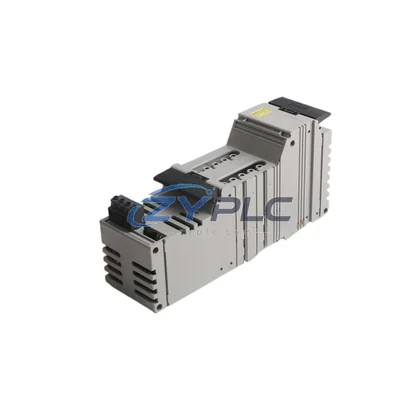
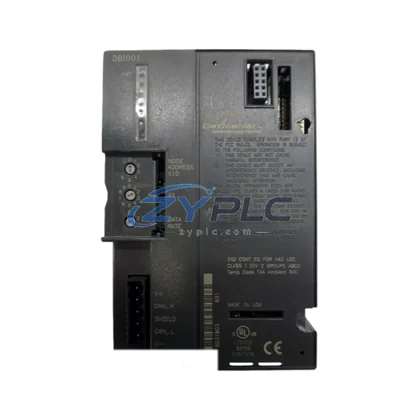
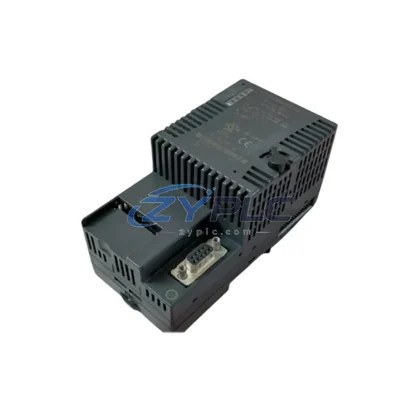
In modern industrial automation, no module operates in isolation. The GE Fanuc IC670GBI002 Genius Bus Interface Module is a critical communication bridge within the GE Fanuc Series 90-30 and VersaMax control architecture, enabling seamless data exchange between the central CPU and distributed Genius I/O field devices. Understanding its role requires examining the full control system stack — from the CPU layer down through I/O, network, power, HMI, and actuator layers — and how the IC670GBI002 enhances system consistency, scalability, redundancy, and long-term maintainability.
The IC670GBI002 connects directly to the Genius Bus, a deterministic serial network operating at 153. 6 Kbaud, and serves as the gateway through which the Series 90-30 CPU — such as the IC693CPU374 or IC693CPU364 — communicates with up to 32 Genius I/O blocks per bus. This architecture allows engineers to distribute I/O across large plant floors without running individual signal cables back to a central panel, dramatically reducing wiring complexity and improving signal integrity in electrically noisy environments such as steel mills, chemical plants, and water treatment facilities.
Within the control layer, the IC670GBI002 interfaces with the Series 90-30 backplane, occupying a standard I/O slot alongside modules such as the IC693MDL340 discrete output module and IC693ALG220 analog input module. The CPU communicates with the GBI via the backplane bus, treating the Genius network as a transparent extension of its local I/O map. This system integration approach means that field devices on the Genius Bus — including IC670MDL240 discrete input blocks, IC670ALG230 analog output blocks, and IC670GBI001 bus interface units — appear to the CPU as local I/O, simplifying program logic and reducing scan time overhead.
At the network layer, the Genius Bus protocol provides inherent fault detection and diagnostic capabilities. Each Genius block continuously monitors its own health and reports status back through the IC670GBI002 to the CPU. This real-time diagnostics loop supports predictive maintenance strategies, allowing maintenance teams to identify failing field devices before they cause unplanned downtime. In redundant architectures, dual IC670GBI002 modules can be deployed on separate bus segments, with the CPU configured for hot-standby failover using the IC693CMM321 communications coprocessor or a dedicated redundancy controller such as the IC693CPU374-EJ.
Power distribution is another critical consideration in Genius Bus system design. The IC670GBI002 draws power from the Series 90-30 power supply — typically the IC693PWR321 or IC693PWR330 — and the Genius field blocks are powered separately via 24VDC field power supplies. Proper power segmentation ensures that a field-side fault does not propagate to the controller backplane, maintaining CPU availability even during partial field failures. Engineers designing new panels should account for the IC670GBI002’s backplane current draw alongside other modules to avoid overloading the power supply.
From an HMI and SCADA integration perspective, the IC670GBI002 enables rich process visibility. Operators using GE’s iFIX or Cimplicity SCADA platforms can access individual Genius block diagnostics, I/O status, and bus health data through the Series 90-30 CPU’s Ethernet or serial communications ports — such as those provided by the IC693CMM311 or IC693ETM001 Ethernet module. This end-to-end data transparency, from field actuator to operator workstation, is the hallmark of a well-architected Genius Bus system.
For system expansion, the IC670GBI002 supports the addition of new Genius I/O blocks without requiring changes to the CPU program structure, provided the new blocks are added within the existing bus address space. This plug-and-expand capability is particularly valuable in phased plant expansions, where new production lines or process units must be integrated into an existing control system with minimal disruption. Terminal blocks such as the IC670CHS002 carrier and IC670PWR002 power supply carrier further simplify field wiring and module replacement during maintenance windows.
Long-term supply chain reliability is a key concern for facilities operating GE Fanuc Series 90-30 systems. ZYPLC maintains availability subject to RFQ confirmation of the IC670GBI002 and compatible Genius Bus components, supporting both new system builds and legacy system maintenance. All units are covered by a warranty terms confirmed during quotation, ensuring that procurement teams can plan capital expenditures with confidence. Our technical team provides pre-sales architecture consultation to verify module compatibility, bus loading calculations, and power budget analysis before shipment.
Product Specification Table
| Parameter |
Specification |
| System Role |
Genius Bus Interface Module — bridges Series 90-30 CPU backplane to Genius I/O field network |
| Compatible CPU |
IC693CPU364, IC693CPU374, IC693CPU374-EJ (redundancy) |
| Bus Protocol |
Genius Bus (serial, 153. 6 Kbaud, deterministic) |
| Max Genius Blocks per Bus |
32 blocks |
| Backplane Interface |
Series 90-30 standard I/O slot |
| Electrical Supply |
Powered via Series 90-30 backplane (IC693PWR321 / IC693PWR330) |
| Field Power |
24VDC (separate field power supply required for Genius blocks) |
| Communication Capability |
Full duplex Genius Bus; supports diagnostics, datagram, and global data |
| Installation Environment |
Panel-mount, DIN rail compatible backplane; IP20 enclosure required |
| Operating Temperature |
0°C to 60°C |
| Warranty |
warranty terms confirmed during quotation — all units verified before shipment |
System Compatibility Notes
A complete Series 90-30 Genius Bus system integrates multiple hardware layers working in concert. At the controller level, the IC693CPU374 provides the processing backbone, executing ladder logic and managing I/O scan cycles. The IC670GBI002 extends this control reach across the plant floor, communicating with distributed Genius blocks including the IC670MDL240 (16-point 120VAC discrete input), IC670MDL740 (16-point relay output), and IC670ALG230 (4-channel analog voltage output). For analog process control loops, the IC670ALG320 analog input block provides 4–20mA signal acquisition directly on the Genius Bus, eliminating the need for separate analog input modules in the CPU rack.
Network redundancy is achieved by pairing the IC670GBI002 with a secondary bus interface on a parallel Genius segment, with the IC693CMM321 coprocessor managing bus arbitration and failover logic. Power redundancy is addressed through dual IC693PWR330 power supplies in a load-sharing configuration, ensuring that a single power supply failure does not interrupt CPU operation. For facilities requiring remote I/O over longer distances, the IC670GBI002 supports bus extension via Genius Bus repeaters, maintaining signal integrity across cable runs exceeding 750 meters.
Panel integration is simplified through the use of IC670CHS002 carriers and IC670TBK002 terminal block kits, which provide consistent wiring interfaces for field technicians. The modular carrier design allows individual Genius blocks to be replaced without disturbing adjacent wiring, reducing mean time to repair (MTTR) during unplanned maintenance events.
Industrial Application Notes
The IC670GBI002 is deployed across a wide range of industrial sectors where distributed I/O and deterministic communication are essential. In power generation and distribution facilities, the module manages discrete and analog I/O for turbine control panels, switchgear monitoring, and transformer protection systems, where communication reliability and fault diagnostics are non-negotiable. The Genius Bus protocol’s built-in error detection ensures that corrupted data frames are identified and flagged before reaching the CPU, preventing false actuations in safety-critical applications.
In petrochemical and refinery environments, the IC670GBI002 supports process control systems managing valve positioners, flow transmitters, and pressure sensors distributed across hazardous areas. The module’s ability to interface with intrinsically safe Genius field blocks — when used with appropriate IS barriers — makes it suitable for Zone 1 and Zone 2 classified areas under IEC 60079 standards. Water treatment and municipal utility operators rely on the Genius Bus architecture for SCADA-integrated pump control, chemical dosing, and level monitoring across geographically dispersed lift stations and treatment cells.
In discrete manufacturing — including automotive assembly, packaging lines, and metal fabrication — the IC670GBI002 coordinates with servo drives, pneumatic valve manifolds, and conveyor motor starters, providing the CPU with real-time feedback on actuator status and fault conditions. Mining and minerals processing operations use the module in crusher control panels, conveyor drive systems, and ore sorting equipment, where the rugged Genius Bus protocol maintains communication integrity in high-vibration, high-dust environments.
Product Compatibility FAQ
Q1: Is the IC670GBI002 compatible with both Series 90-30 and VersaMax CPU platforms?
The IC670GBI002 is designed primarily for the Series 90-30 backplane architecture. VersaMax systems use their own Genius Bus Interface variants (such as the IC200GBI001) that are native to the VersaMax I/O carrier system. While both platforms communicate over the Genius Bus protocol, the backplane form factor and slot addressing differ. Engineers integrating IC670GBI002 into a mixed-platform architecture should verify CPU compatibility and I/O map configuration with GE Fanuc documentation before deployment.
Q2: How many IC670GBI002 modules can be installed in a single Series 90-30 rack, and what are the bus loading constraints?
Multiple IC670GBI002 modules can be installed in a Series 90-30 rack, each managing an independent Genius Bus segment with up to 32 field blocks. The primary constraint is backplane current draw: each GBI module consumes backplane power, and the total load across all modules must remain within the IC693PWR321 or IC693PWR330 power supply rating. Additionally, each Genius Bus segment must be individually terminated with the correct bus termination resistor to prevent signal reflections. ZYPLC’s pre-sales team can assist with bus loading calculations and power budget analysis as part of the warranty terms confirmed during quotation procurement process.
Q3: What is covered under the warranty terms confirmed during quotation, and how does ZYPLC support long-term maintenance for legacy Series 90-30 systems?
All IC670GBI002 units supplied by ZYPLC are covered by a warranty terms confirmed during quotation against manufacturing defects and functional failures under normal operating conditions. In the event of a warranty claim, ZYPLC provides advance replacement units to minimize system downtime, with full technical support for installation and commissioning. For long-term maintenance planning, ZYPLC maintains ongoing stock of IC670GBI002 and compatible Genius Bus components — including IC670MDL240, IC670ALG230, IC670CHS002 carriers, and IC693PWR330 power supplies — supporting facilities that must sustain Series 90-30 systems beyond the original manufacturer’s active production lifecycle.