GE Fanuc IC694MDL930C: Industrial Data Link for Smart Factory Output Control
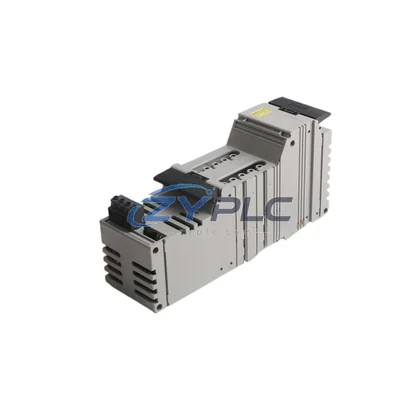
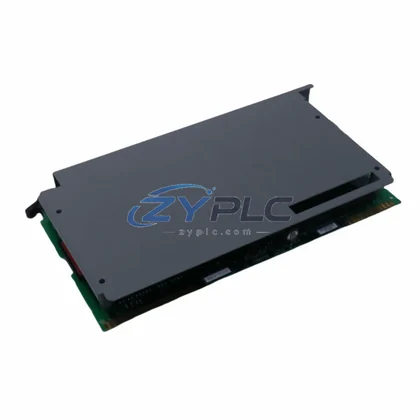
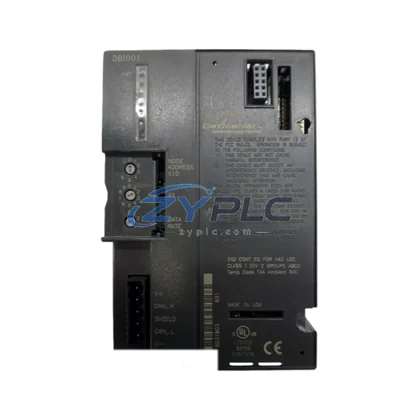
The GE Fanuc IC694MDL930C is a 16-point relay output module engineered for the GE Series 90-30 PLC platform, delivering robust discrete output control across demanding industrial environments. As a core node in the plant-floor data chain, the IC694MDL930C bridges the gap between PLC logic execution and physical field devices — enabling reliable signal switching for motors, solenoids, contactors, and actuators in manufacturing, process control, and smart factory deployments.
In modern industrial networks, output modules are not passive endpoints — they are active participants in the real-time data flow that connects field devices to supervisory systems. The IC694MDL930C integrates seamlessly into the Series 90-30 backplane architecture, where it receives discrete command signals from the CPU module (such as the IC693CPU374 or IC694CPU310) and translates them into energized relay contacts that drive downstream equipment. This tight coupling between PLC logic and physical output ensures deterministic response times critical for production line synchronization.
Compatibility & Integration Notes
| Parameter |
Specification |
| SKU / Part Number |
IC694MDL930C |
| Brand / Manufacturer |
GE Fanuc |
| Series / Platform |
Series 90-30 PLC |
| Module Type |
Relay Output Module |
| Output Points |
16-Point Discrete Relay Output |
| Communication Protocol |
Series 90-30 Backplane Bus (parallel I/O bus) |
| Interface Type |
Backplane slot-mount, Series 90-30 compatible |
| Output Contact Type |
Relay (Form A / SPST-NO) |
| Network Compatibility |
GE Series 90-30 racks (IC693CHS391, IC694CHS392, etc.) |
| SCADA / HMI Integration |
Compatible via Series 90-30 CPU with Ethernet, SNP, or Genius Bus gateway |
| System Application |
Discrete output control, motor starter switching, solenoid valve actuation, conveyor control |
| Warranty |
warranty terms confirmed during quotation — Tested Before Shipment |
Connected Automation Data Flow
Understanding the IC694MDL930C requires viewing it within the full automation data chain of a Series 90-30 system. At the top of the hierarchy, an HMI terminal (such as a GE QuickPanel or third-party SCADA workstation running iFIX or Cimplicity) sends operator commands through an Ethernet gateway — often via a IC693CMM321 Ethernet Interface Module — down to the Series 90-30 CPU. The CPU processes ladder logic and writes output coil states to the I/O bus, where the IC694MDL930C receives those discrete signals and closes or opens its relay contacts accordingly.
In distributed control architectures, the Series 90-30 system may communicate with remote I/O drops using a Genius Bus Controller (IC693BEM331), extending the output network across large plant floors without running individual signal cables. The IC694MDL930C can be installed in both local and remote racks, making it a flexible node in multi-drop Genius Bus topologies. For facilities integrating legacy GE equipment with modern Ethernet-based SCADA, a GE RX3i CPU315 or PACSystems gateway can bridge the SNP serial protocol to Modbus TCP or EtherNet/IP, allowing the IC694MDL930C’s output states to be monitored in real time by upstream MES or cloud analytics platforms.
On the field device side, the relay outputs of the IC694MDL930C connect directly to motor starters, solenoid valves, pilot lights, and alarm horns. In conveyor and packaging lines, these outputs coordinate with proximity sensors and photoelectric sensors wired to companion input modules such as the IC694MDL340 (DC input) or IC694MDL230 (AC input), forming a closed-loop control circuit where sensor feedback drives output switching logic in the CPU. Variable frequency drives (VFDs) receiving run/stop commands from relay outputs of the IC694MDL930C can also report speed and fault data back through analog input modules like the IC694ALG221, completing the data loop between drive, PLC, and SCADA.
For facilities deploying edge computing, an industrial edge gateway installed alongside the Series 90-30 rack can poll the CPU’s data registers via OPC-UA or Modbus TCP, extracting output status, cycle counts, and fault flags from the IC694MDL930C’s associated coil addresses. This data feeds into real-time dashboards, enabling production managers to monitor output switching frequency, detect relay wear trends, and schedule predictive maintenance before unplanned downtime occurs.
Solving Data Isolation in Industrial Sites
One of the most persistent challenges in legacy industrial environments is data isolation — where field-level devices operate in silos, disconnected from plant-wide visibility systems. The IC694MDL930C, as part of the Series 90-30 ecosystem, directly addresses this by serving as a standardized, protocol-consistent output node that integrates with GE’s full suite of communication modules.
Sites running mixed protocols — where older Genius Bus segments coexist with newer Ethernet/IP or Modbus TCP networks — can use the Series 90-30 CPU as a protocol bridge, with the IC694MDL930C providing the physical output layer that remains consistent regardless of the upstream communication method. This eliminates the need to replace field wiring or output hardware when upgrading supervisory systems, protecting capital investment while enabling digital transformation.
Remote monitoring is another area where the IC694MDL930C delivers value. By mapping relay output states to CPU data registers accessible via the Ethernet interface module, maintenance engineers can remotely diagnose output faults, verify relay energization status, and trigger test sequences from a SCADA workstation — without dispatching technicians to the field. This capability is especially valuable in hazardous or hard-to-access plant areas such as chemical processing, water treatment, and offshore facilities.
For production line transparency, the IC694MDL930C’s output switching data can be logged by the SCADA historian, providing a timestamped record of every relay activation. This data supports OEE (Overall Equipment Effectiveness) analysis, shift reporting, and compliance documentation — transforming a simple output module into a source of actionable operational intelligence. System expansion is equally straightforward: additional IC694MDL930C modules can be added to existing Series 90-30 racks without CPU replacement, and new racks can be added to the Genius Bus network to scale output capacity as production demands grow.
Industrial Connectivity FAQ
Q1: What communication protocols does the IC694MDL930C support for SCADA integration?
The IC694MDL930C itself communicates via the Series 90-30 backplane bus. SCADA integration is achieved through the Series 90-30 CPU, which supports SNP serial, Ethernet (via IC693CMM321 or IC694CMM321), Modbus RTU/TCP, and Genius Bus protocols. This allows the relay output states of the IC694MDL930C to be monitored and controlled by any SCADA or HMI system compatible with these protocols.
Q2: How is network stability ensured in high-cycle relay output applications?
The IC694MDL930C is designed for industrial-grade reliability with relay contacts rated for high-cycle switching. The Series 90-30 backplane bus uses a deterministic scan cycle, ensuring output updates are delivered consistently without network contention. For applications requiring extremely high switching frequencies, GE also offers transistor output modules (such as the IC694MDL340 DC output variant) as complementary options within the same rack.
Q3: Can the IC694MDL930C be used in systems with mixed GE and third-party PLCs?
Yes. While the IC694MDL930C is native to the Series 90-30 platform, its relay outputs are electrically isolated and voltage-agnostic, meaning they can switch circuits controlled by third-party systems. Additionally, using a protocol gateway (such as a Modbus TCP to SNP converter), third-party PLCs can communicate with the Series 90-30 CPU to control the IC694MDL930C’s outputs, enabling hybrid automation architectures.
Q4: What does the warranty terms confirmed during quotation cover, and how is pre-shipment testing conducted?
Every IC694MDL930C unit supplied by ZYPLC undergoes functional testing prior to shipment, verifying relay contact continuity, backplane communication integrity, and output switching performance under load. The warranty terms confirmed during quotation covers manufacturing defects and functional failures under normal operating conditions. Units are shipped with full traceability documentation, and our technical team provides post-sale support for installation, configuration, and system integration queries.