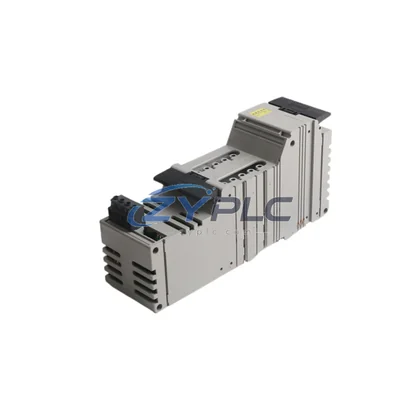
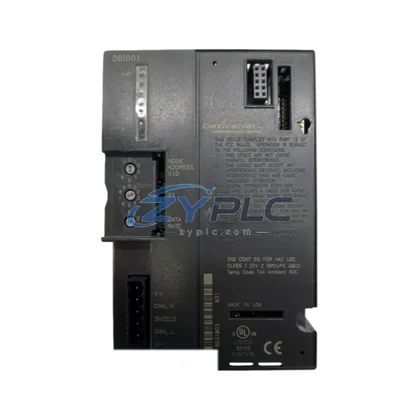
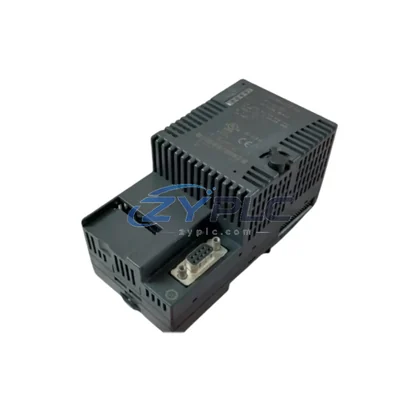
GE Fanuc IC697BEM731F Bus Controller for 90-70: Control System Coordination and system integration
The GE Fanuc IC697BEM731F is a dedicated Bus Controller Module engineered for deployment within the GE Series 90-70 (IC697) programmable logic controller architecture. As a critical node in the backplane communication hierarchy, the IC697BEM731F manages the high-speed data exchange between the CPU rack and remote I/O expansion racks, enabling engineers to design scalable, distributed control systems without sacrificing signal integrity or scan-cycle determinism. In modern industrial automation environments — where control layers, I/O layers, network layers, and power layers must operate in tight synchronization — this module serves as the structural backbone that binds distributed hardware into a unified, coherent control platform.
Unlike standalone components evaluated in isolation, the IC697BEM731F is best understood within the context of the complete Series 90-70 system architecture. Its value is realized when paired with the full ecosystem of GE Fanuc IC697-series hardware, where it enables seamless system integration across every tier of the automation hierarchy.
Product Specification Table
| Parameter |
Specification |
| System Role |
Remote I/O Bus Controller — manages backplane communication between CPU rack and expansion racks |
| Compatible Platform |
GE Fanuc Series 90-70 (IC697 Architecture) |
| Module Form Factor |
Single-slot IC697 VME-based rack module |
| Communication Protocol |
GE Fanuc Genius Bus / Series 90-70 proprietary backplane bus |
| Bus Speed |
High-speed synchronous backplane data transfer |
| Rack Compatibility |
IC697CHS750, IC697CHS782, IC697CHS790 and compatible IC697 expansion racks |
| Power Consumption |
Supplied via IC697 backplane; compatible with IC697PWR711, IC697PWR724, IC697PWR748 power supply modules |
| Operating Temperature |
0°C to 60°C (32°F to 140°F) |
| Relative Humidity |
5% to 95% non-condensing |
| Installation Environment |
Industrial control cabinet; DIN rail or rack-mount enclosure |
| Country of Origin |
United States |
| Warranty |
warranty terms confirmed during quotation — covers hardware defects and functional failure under normal operating conditions |
System Compatibility Notes
The IC697BEM731F does not operate in isolation — its performance is inseparable from the broader Series 90-70 control system architecture. In a fully configured IC697 system, the CPU module (such as the IC697CPU772 or IC697CPU781) resides in the primary rack and executes the control program. The IC697BEM731F acts as the communication bridge, extending the system’s I/O reach to remote expansion racks where analog and discrete I/O modules — including the IC697MDL340 (discrete input), IC697MDL341 (discrete output), and IC697ALG440 (analog input) — are installed to interface with field devices.
Power integrity across the system is maintained by dedicated power supply modules such as the IC697PWR711 and IC697PWR724, which provide regulated backplane voltage to all installed modules. In high-availability applications, redundant power configurations ensure that a single power supply failure does not interrupt process control. The IC697BEM731F supports this redundancy philosophy by maintaining bus communication continuity even during partial rack reconfiguration.
At the network layer, the Series 90-70 platform integrates with plant-wide communication infrastructure through Ethernet and serial communication modules such as the IC697CMM742 (communications coprocessor) and IC697BEM733 (bus expansion module), enabling the IC697 system to participate in SCADA networks, DCS integration, and MES data exchange. The IC697BEM731F’s role in maintaining deterministic backplane scan cycles is essential to ensuring that network-layer data reflects real-time field conditions without latency-induced errors.
At the human-machine interface layer, operator workstations and HMI panels connected via the Genius Bus or Ethernet receive process data routed through the IC697BEM731F’s managed bus segments. This system integration — where every layer from field sensor to operator display is synchronized through a coherent data path — is the defining characteristic of a well-engineered Series 90-70 system. The IC697BEM731F is the module that makes this integration structurally possible at the I/O expansion level.
Industrial Application Notes
The IC697BEM731F has been deployed across a wide range of industrial sectors where the Series 90-70 platform remains the control standard of choice for its proven reliability and long service life.
In power generation and electrical utilities, the module supports distributed I/O architectures in turbine control panels, switchgear automation, and substation protection systems. Its ability to maintain high-speed bus communication across physically separated racks makes it well-suited for large electrical control rooms where I/O points are distributed across multiple enclosures.
In petrochemical and refinery applications, the IC697BEM731F enables process control systems to manage hundreds of analog and discrete I/O points across reactor control, distillation column automation, and pipeline monitoring systems. The module’s industrial-grade operating temperature range and robust backplane design support continuous 24/7 operation in demanding process environments.
In water and wastewater treatment facilities, the Series 90-70 architecture — anchored by modules like the IC697BEM731F — provides the scalable I/O expansion needed to monitor pump stations, valve actuators, flow meters, and chemical dosing systems across geographically distributed treatment plants.
In automotive and discrete manufacturing, the module supports high-speed assembly line control where deterministic scan cycles and reliable I/O communication are critical to maintaining production throughput and quality consistency. Packaging lines, press control systems, and conveyor automation all benefit from the IC697BEM731F’s ability to extend the control system’s I/O capacity without introducing communication bottlenecks.
In mining and metallurgical operations, the module’s rugged design and compatibility with the IC697 rack system make it a reliable choice for crusher control, conveyor management, and smelting process automation, where environmental conditions are harsh and system downtime is costly.
Product Compatibility FAQ
Q1: Is the IC697BEM731F compatible with all IC697 Series 90-70 CPU modules and rack configurations?
The IC697BEM731F is designed for use within the GE Fanuc Series 90-70 (IC697) platform and is compatible with standard IC697 racks including the IC697CHS750, IC697CHS782, and IC697CHS790 chassis. It works in conjunction with IC697-series CPU modules such as the IC697CPU772 and IC697CPU781. For specific firmware revision compatibility or mixed-generation rack configurations, we recommend verifying the GE Fanuc Series 90-70 Hardware Reference Manual or contacting our technical team prior to installation.
Q2: How does the IC697BEM731F support system redundancy and long-term maintainability in critical process control applications?
The IC697BEM731F supports distributed I/O architectures that are inherently more maintainable than centralized single-rack designs, as individual expansion racks can be serviced or reconfigured without taking the entire control system offline. In redundant system designs, paired bus controller configurations allow one bus segment to remain active while the other undergoes maintenance. For long-term maintainability, ZYPLC maintains RFQ-confirmed sourcing of IC697BEM731F and related Series 90-70 components, ensuring rapid replacement availability. All units supplied by ZYPLC are covered by a warranty terms confirmed during quotation against hardware defects and functional failure.
Q3: What should engineers verify during commissioning when integrating the IC697BEM731F into an existing Series 90-70 system?
During commissioning, engineers should verify that the module is correctly seated in the IC697 rack backplane and that the bus address configuration matches the system’s I/O map as defined in the PLC programming software (GE Proficy Machine Edition or legacy Logicmaster 90). Confirm that the power supply module (IC697PWR711 or equivalent) provides adequate current capacity for all installed modules in the rack. Validate bus communication status via the CPU’s diagnostic registers and confirm that all remote I/O modules report healthy status before enabling process control outputs. ZYPLC’s technical support team is available to assist with pre-installation verification and commissioning guidance for all supplied hardware.
© 2026 ZYPLC. All rights reserved.
Contact: +86 19859288691 | plc.sales@zyplc.com