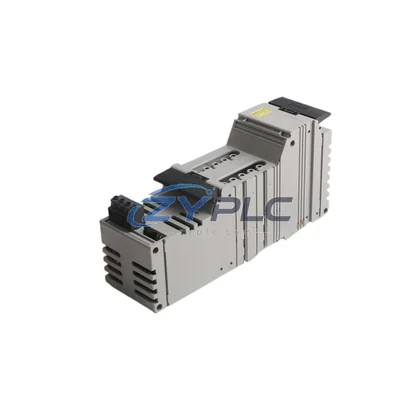
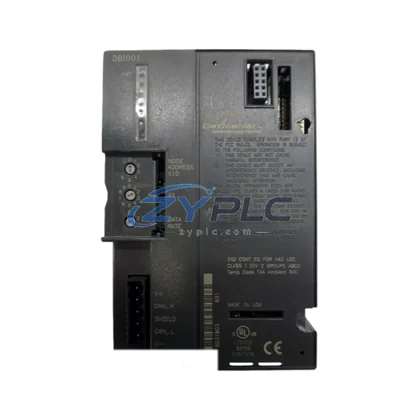
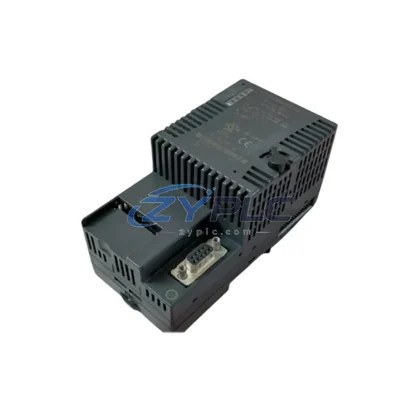
GE Fanuc IC697CMM741 Communication Module for Series 90-70
The GE Fanuc IC697CMM741 is a high-performance Communications Coprocessor Module (CMM) engineered for seamless integration within the Series 90-70 rack-based PLC architecture. Designed to operate as a dedicated communications processor, the IC697CMM741 offloads serial and network communication tasks from the central CPU, enabling the control system to maintain deterministic scan cycles even under heavy data exchange loads. In distributed automation environments — spanning manufacturing, power generation, petrochemical processing, water treatment, mining, metallurgy, and packaging lines — reliable inter-device communication is not optional; it is the backbone of system integrity. The IC697CMM741 addresses this requirement with precision.
Within a complete Series 90-70 control architecture, the IC697CMM741 occupies a critical position in the communication layer, bridging the CPU rack to field devices, SCADA systems, remote I/O drops, and supervisory networks. It supports multiple serial protocols and can be configured to handle SNP, SNP-X, and RTU communications, making it compatible with a broad range of field instruments, drives, and third-party controllers. This protocol flexibility is essential in legacy-integrated plants where heterogeneous device ecosystems must coexist under a unified control platform.
System architects deploying the IC697CMM741 typically pair it with the IC697CPU772 or IC697CPU781 central processing units, which serve as the primary execution engines for ladder logic, function block diagrams, and structured text programs. The CPU modules reside in the same VME-based rack — such as the IC697CHS750 or IC697CHS782 nine-slot or twelve-slot baseplate — alongside the IC697CMM741, allowing high-speed backplane communication between the coprocessor and the CPU without external cabling overhead. This tight architectural coupling reduces latency and improves overall system throughput.
On the power supply side, the IC697PWR711 or IC697PWR724 rack power supply modules provide the regulated DC voltages required by the IC697CMM741 and co-resident modules. Proper power architecture — including redundant power supply configurations where uptime requirements demand it — ensures that communication functions remain uninterrupted during single-point power events. The IC697CMM741’s low power draw makes it compatible with standard rack power budgets even in fully populated chassis configurations.
I/O integration is equally important. The IC697CMM741 works in coordination with analog and digital I/O modules such as the IC697MDL340 discrete input module and IC697ALG440 analog output module, which populate adjacent rack slots. By handling communication independently, the IC697CMM741 frees the CPU to focus on I/O scan and control logic execution, improving overall system responsiveness. In applications requiring remote I/O expansion, the IC697CMM741 can interface with remote drop controllers and bus interface units, extending the control architecture across large plant floor footprints without sacrificing communication reliability.
For human-machine interface connectivity, the IC697CMM741 facilitates data exchange between the Series 90-70 PLC and operator panels or SCADA workstations running Proficy HMI/SCADA iFIX or Cimplicity software. This enables real-time visualization of process variables, alarm management, and historical data logging — all critical functions in regulated industries such as pharmaceuticals, food and beverage, and utilities. The communication module’s ability to sustain stable, high-throughput data links to HMI systems ensures that operators always have accurate, up-to-date process information.
Redundancy is a key design consideration in mission-critical applications. The IC697CMM741 supports architectures where communication path redundancy is implemented through dual-port configurations or parallel communication modules within the same rack. When paired with the IC697BEM731 bus expansion module or similar rack interconnect hardware, the system can be extended across multiple racks while maintaining communication coherence. This scalability is particularly valuable in large-scale process control installations where a single rack cannot accommodate all required I/O and communication modules.
From an engineering and commissioning perspective, the IC697CMM741 is configured using GE Fanuc’s Logicmaster 90-70 or Proficy Machine Edition software environments. Configuration parameters — including baud rate, protocol selection, station addressing, and timeout values — are set through the software toolset and downloaded to the module via the programming port or network connection. This software-driven configuration approach simplifies commissioning and reduces the risk of hardware misconfiguration errors that can cause communication failures in the field.
Long-term maintenance and spare parts availability are critical factors in the total cost of ownership for any industrial control system. The IC697CMM741 is available as a tested, verified replacement module with a warranty terms confirmed during quotation, providing engineering teams and maintenance departments with confidence in module reliability. Stocking a spare IC697CMM741 as part of a planned maintenance inventory strategy minimizes unplanned downtime risk — a single communication module failure in an unspared system can halt production for hours or days while a replacement is sourced. Proactive spare parts management, supported by a reliable supply chain partner, is the most cost-effective approach to sustaining Series 90-70 system uptime over a multi-decade operational lifecycle.
system integration support means the IC697CMM741 is supplied with configuration guidance, compatibility verification against your existing rack and CPU firmware revision, and technical assistance to ensure the module integrates correctly into your specific control architecture from day one.
Product Specification Table
| Parameter |
Specification |
| System Role |
Communications Coprocessor Module (CMM) — Serial & Network Communication Offload |
| Compatible Platform |
GE Fanuc Series 90-70 VME Rack Architecture |
| Supported Protocols |
SNP, SNP-X, RTU (Modbus), Serial ASCII |
| Communication Ports |
Dual RS-232/RS-422/RS-485 configurable serial ports |
| Backplane Interface |
VME-based high-speed backplane bus |
| Power Consumption |
Compatible with IC697PWR711 / IC697PWR724 rack power supplies |
| Operating Temperature |
0°C to 60°C (32°F to 140°F) |
| Relative Humidity |
5% to 95% non-condensing |
| Installation Environment |
Panel-mount rack enclosure; DIN rail not applicable |
| Compatible Racks |
IC697CHS750, IC697CHS782 (9-slot and 12-slot baseplates) |
| Configuration Software |
Logicmaster 90-70, Proficy Machine Edition |
| Firmware Compatibility |
Series 90-70 CPU firmware Rev. 9.x and above |
| Warranty |
warranty terms confirmed during quotation — Tested & Verified |
| system integration |
Included — compatibility verification & configuration support |
System Compatibility Notes
A fully realized Series 90-70 control system built around the IC697CMM741 draws on a coordinated set of modules and components, each fulfilling a defined role in the system hierarchy. The IC697CPU772 and IC697CPU781 CPUs execute the control program and manage I/O scanning, while the IC697CMM741 handles all serial communication tasks independently, preventing communication overhead from impacting scan time performance. The IC697CHS750 nine-slot rack and IC697CHS782 twelve-slot rack provide the physical backplane infrastructure that ties these modules together.
Power integrity is maintained by the IC697PWR711 power supply module, which delivers regulated 5 VDC and 24 VDC to all rack-resident modules. For applications requiring power redundancy, dual power supply configurations using the IC697PWR724 are supported. Discrete I/O is handled by modules such as the IC697MDL340 32-point discrete input module and IC697MDL341 discrete output module, while process analog signals are conditioned through the IC697ALG440 analog output module. The IC697CMM741 communicates with field devices connected to these I/O modules through its serial ports, enabling closed-loop control across distributed process segments.
For rack expansion and remote I/O architectures, the IC697BEM731 bus expansion module extends the Series 90-70 backplane across multiple rack enclosures, allowing the IC697CMM741 to serve as the communication hub for a multi-rack system. This architecture is common in large substations, compressor stations, and continuous process plants where I/O point counts exceed single-rack capacity. Terminal modules and marshalling panels interface field wiring to the I/O modules, completing the signal chain from field instrument to control logic.
Industrial Application Notes
The IC697CMM741 finds application across a wide spectrum of industrial sectors. In power generation and substation automation, it enables serial communication between the Series 90-70 PLC and protective relays, energy meters, and RTUs, supporting SCADA integration for grid monitoring and control. In petrochemical and refinery applications, the module facilitates communication with distributed control system (DCS) gateways and field transmitters, supporting continuous process monitoring under demanding environmental conditions.
In water and wastewater treatment facilities, the IC697CMM741 connects the PLC to flow meters, level sensors, and chemical dosing controllers via serial links, enabling automated process control with remote SCADA supervision. Mining and mineral processing operations use the module to integrate conveyor drive controllers, crusher PLCs, and weighing systems into a unified control network. In metallurgical and steel mill applications, the IC697CMM741 supports communication with rolling mill drives and furnace temperature controllers, where deterministic communication timing is essential for product quality.
Packaging and material handling lines benefit from the IC697CMM741’s ability to coordinate communication between the Series 90-70 PLC and barcode readers, vision systems, and servo drive controllers, enabling high-speed, synchronized production operations. Across all these applications, the module’s proven reliability, broad protocol support, and seamless integration into the Series 90-70 architecture make it the preferred communication solution for both new installations and system upgrades.
Product Compatibility FAQ
Q1: Is the IC697CMM741 compatible with all Series 90-70 CPU modules and rack configurations?
The IC697CMM741 is designed for use in any standard Series 90-70 VME rack, including the IC697CHS750 and IC697CHS782 baseplates. It is compatible with Series 90-70 CPU modules operating on firmware revision 9.x and above, including the IC697CPU772 and IC697CPU781. Prior to installation, firmware revision compatibility should be verified using Proficy Machine Edition or Logicmaster 90-70 to ensure correct module recognition and configuration download.
Q2: Can the IC697CMM741 be used in a redundant communication architecture, and what are the configuration requirements?
Yes. Redundant communication architectures can be implemented by installing multiple IC697CMM741 modules in the same or expanded rack configuration, with each module assigned to a separate communication path or protocol. The IC697BEM731 bus expansion module supports multi-rack architectures where communication redundancy spans rack boundaries. Configuration of redundant communication paths is performed through the software toolset, with each CMM module configured independently for its assigned protocol and station address.
Q3: What does the warranty terms confirmed during quotation cover, and what support is included with the system integration service?
The warranty terms confirmed during quotation covers the IC697CMM741 module against defects in materials and workmanship under normal operating conditions. Each module is tested and verified prior to shipment. The system integration service includes compatibility verification against your existing Series 90-70 CPU firmware revision and rack configuration, configuration guidance for protocol and port settings, and technical support during initial commissioning to ensure the module integrates correctly into your control architecture.
—