GE Fanuc IS200TBCIS2CCD: Industrial Data Link for Mark VI Smart Factory Networks
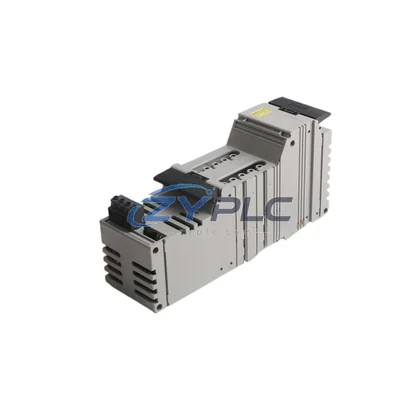
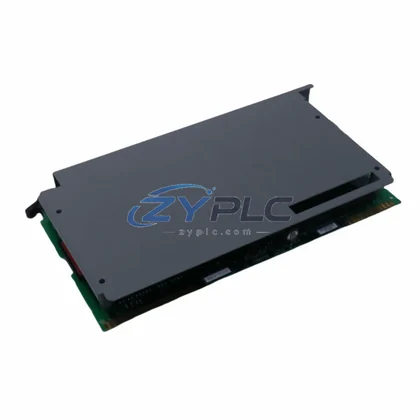
The GE Fanuc IS200TBCIS2CCD is a high-integrity I/O Terminal Board engineered for the Mark VI Turbine Control System, one of GE’s most widely deployed platforms in power generation, oil & gas, and heavy industrial automation. Designed to serve as a critical junction point in the industrial data chain, the IS200TBCIS2CCD enables reliable signal acquisition, structured data routing, and seamless protocol-level communication between field instrumentation and upper-level control architectures.
In modern smart factory and process automation environments, the integrity of the data link between field devices and supervisory systems is non-negotiable. The IS200TBCIS2CCD addresses this requirement by providing a robust, tested terminal interface that connects directly to the Mark VI controller backplane, ensuring that analog and digital I/O signals from sensors, actuators, and transmitters are accurately captured and transmitted without latency or data loss. This makes it an essential component in any Mark VI-based control loop where real-time process visibility is required.
Compatibility & Integration Notes
| Parameter |
Specification |
| SKU / Part Number |
IS200TBCIS2CCD |
| Brand / Manufacturer |
GE Fanuc (GE Energy) |
| Series / Platform |
Mark VI Turbine Control System |
| Product Type |
I/O Terminal Board |
| Protocol Support |
Proprietary GE Mark VI I/O Bus; compatible with IONET / IONet Ethernet backbone |
| Interface Type |
Terminal Board — field wiring termination to Mark VI I/O modules |
| Communication Role |
Signal conditioning, I/O channel routing, redundancy support |
| Network Compatibility |
Mark VI simplex and TMR (Triple Modular Redundancy) architectures |
| System Application |
Gas turbine, steam turbine, combined cycle, compressor control |
| SCADA / HMI Integration |
Compatible via Mark VI controller to GE Cimplicity, iFIX, or third-party SCADA over OPC |
| Origin |
United States |
| Warranty |
Warranty and support terms confirmed before quote — Verified Pre-Shipment Testing |
Connected Automation Data Flow
The IS200TBCIS2CCD sits at the foundation of the Mark VI I/O architecture, acting as the physical and electrical bridge between field instrumentation and the controller’s processing core. In a typical turbine control deployment, field signals originate from thermocouples, RTDs, pressure transmitters, and vibration sensors wired directly to the IS200TBCIS2CCD terminal board. These signals are then routed through companion I/O modules such as the IS200TBCIS2A or IS200TBCIS2B variants, which handle analog input conditioning before passing structured data to the IS215UCVEH2A or IS215UCVEH2B VME controller cards at the core of the Mark VI rack.
Within the Mark VI cabinet, the controller communicates over the IONet Ethernet-based I/O network, linking multiple I/O packs and terminal boards across the control system. This network backbone supports real-time data exchange between the IS200TBCIS2CCD-connected field channels and the IS200DSPXH1B digital signal processor board, which executes turbine protection logic and control algorithms at high scan rates. The processed data is then forwarded upstream to the IS215VCMIH2C communication interface module, which bridges the Mark VI system to plant-level Ethernet networks and SCADA infrastructure.
At the supervisory level, operators interact with the turbine control data through GE Cimplicity HMI workstations or third-party SCADA platforms connected via OPC-DA or OPC-UA gateways. Remote I/O extensions using IS200IOCIH1B I/O controller interface boards allow the Mark VI architecture to expand across distributed control panels without sacrificing data integrity or scan cycle performance. For plants integrating legacy DCS systems, protocol conversion gateways such as the IS200EPCTG1A enable Modbus RTU or PROFIBUS DP bridging, ensuring that the IS200TBCIS2CCD’s field data reaches every layer of the automation pyramid — from the sensor floor to the enterprise historian.
In combined cycle power plants, the IS200TBCIS2CCD is frequently deployed alongside IS200TREGH1B turbine regulation boards and IS200TSVOH1B servo output terminal boards, forming a complete I/O termination ecosystem within a single Mark VI enclosure. This modular approach allows maintenance teams to replace or upgrade individual terminal boards without disrupting the broader control network, minimizing planned downtime and supporting continuous production targets.
Solving Data Isolation in Industrial Sites
One of the most persistent challenges in turbine and process control environments is the fragmentation of data across incompatible I/O systems, proprietary protocols, and aging hardware platforms. The IS200TBCIS2CCD directly addresses this by providing a standardized, well-documented termination interface within the Mark VI ecosystem, eliminating the signal ambiguity and wiring errors that often arise when field devices are connected through improvised or non-OEM terminal solutions.
In sites where multiple control generations coexist — for example, a plant running both Mark V and Mark VI controllers — the IS200TBCIS2CCD enables a structured migration path. By maintaining consistent terminal board form factors and wiring conventions, engineering teams can transition field wiring from legacy systems to the Mark VI platform without redesigning the entire I/O architecture. This reduces integration risk and shortens commissioning timelines significantly.
Remote monitoring and diagnostics are equally critical in unmanned or remotely operated facilities. The Mark VI system’s IONet backbone, anchored by terminal boards like the IS200TBCIS2CCD, supports continuous health monitoring of I/O channels, enabling predictive maintenance alerts to be surfaced through connected SCADA or asset management platforms. Alarm conditions detected at the terminal board level — such as open-circuit faults, out-of-range analog signals, or redundancy mismatches — are immediately propagated to the operator HMI, reducing mean time to repair (MTTR) and preventing unplanned shutdowns.
For plants pursuing production line transparency and OEE (Overall Equipment Effectiveness) improvement, the IS200TBCIS2CCD’s role in the data chain is foundational. Every process variable captured at the terminal board contributes to the real-time dataset that feeds performance dashboards, energy management systems, and digital twin models. By ensuring that field signal integrity is maintained from the first point of contact, the IS200TBCIS2CCD supports the broader goal of factory-wide data visibility and continuous improvement.
System scalability is another key advantage. The Mark VI architecture supports expansion through additional I/O packs and terminal boards without requiring controller replacement, allowing plants to add new measurement points or control loops as production requirements evolve. The IS200TBCIS2CCD’s compatibility with both simplex and TMR redundancy configurations means it can be deployed in safety-critical applications where single points of failure are unacceptable.
Industrial Connectivity FAQ
Q1: What communication protocols does the IS200TBCIS2CCD support for SCADA integration?
The IS200TBCIS2CCD itself is a terminal board and does not independently implement communication protocols. It interfaces with Mark VI I/O modules and controllers, which communicate over GE’s proprietary IONet Ethernet I/O bus. SCADA integration is achieved at the controller level via OPC-DA, OPC-UA, or Modbus TCP gateways, enabling connectivity to GE Cimplicity, iFIX, Wonderware, and other industrial SCADA platforms.
Q2: Is the IS200TBCIS2CCD compatible with Mark VI TMR (Triple Modular Redundancy) systems?
Yes. The IS200TBCIS2CCD is designed to support both simplex and TMR Mark VI configurations. In TMR deployments, three independent I/O channels are voted to ensure fault tolerance, and the terminal board’s wiring architecture accommodates the redundant signal paths required for safety-critical turbine protection applications.
Q3: How is network stability and signal integrity ensured during long-term operation?
The IS200TBCIS2CCD undergoes pre-shipment functional testing to verify terminal continuity, channel isolation, and signal conditioning performance. GE’s Mark VI I/O architecture includes built-in diagnostics that continuously monitor I/O channel health, flagging faults at the terminal board level before they propagate to the control loop. All units supplied by ZYPLC carry a warranty and support terms confirmed before quote covering hardware defects identified under normal operating conditions.
Q4: Can the IS200TBCIS2CCD be used to expand an existing Mark VI system without replacing the controller?
Yes. The Mark VI platform is designed for modular expansion. Additional terminal boards and I/O packs can be added to the IONet network without replacing the core controller hardware, provided the system’s I/O pack capacity and network bandwidth are within specification. This makes the IS200TBCIS2CCD a cost-effective solution for plants adding new measurement points or upgrading field instrumentation without a full control system overhaul.