GE IC660EBA026 Bus Transmitter for Series Six: Control System and system integration
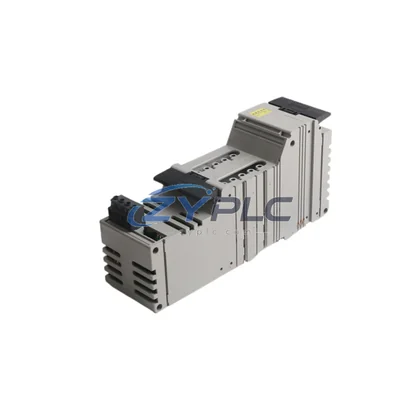
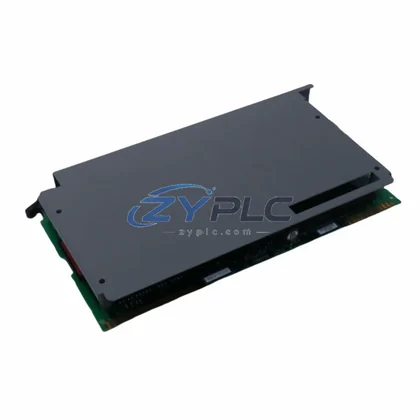
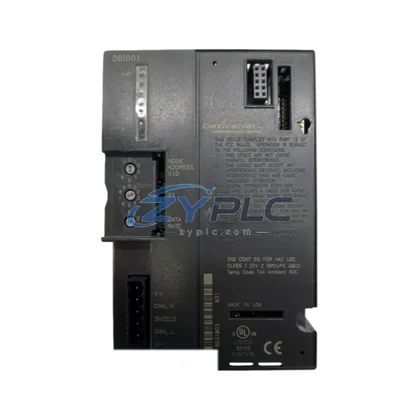
The GE IC660EBA026 is a Genius I/O Bus Transmitter module engineered for deployment within GE Series Six and Series 90 distributed control architectures. As a core node on the Genius Bus, this transmitter serves as the critical communication bridge between field-level I/O devices and the central CPU platform, enabling deterministic, high-speed data exchange across multi-drop serial bus topologies. Understanding the IC660EBA026 not as a standalone component but as an integral element of a layered automation system is essential for engineers designing, commissioning, or maintaining industrial control infrastructure.
In a fully realized control system, the IC660EBA026 occupies the I/O layer, interfacing directly with the Genius Bus serial network while reporting real-time field data upward to the control layer. Its role is to aggregate discrete and analog signals from connected field devices and transmit structured data packets to the host CPU — whether a Series Six mainframe processor or a Series 90-70 rack-mounted controller — with the timing precision that process-critical applications demand. This system integration capability ensures that the IC660EBA026 does not operate in isolation but participates actively in the signal flow that governs machine behavior, safety interlocks, and process sequencing.
Product Specification Table
| Parameter |
Specification |
| System Role |
Genius I/O Bus Transmitter — I/O Layer Node |
| Compatible Platform |
GE Series Six, Series 90-70, Genius Distributed I/O |
| Bus Protocol |
Genius Bus (serial, multi-drop, token-passing) |
| Bus Speed |
153.6 kbps (standard Genius Bus rate) |
| Supply Voltage |
24 VDC nominal (field-side power) |
| I/O Capacity |
Up to 32 discrete I/O points per block (configuration-dependent) |
| Communication Interface |
Genius Bus serial port (dual redundant bus capable) |
| Installation Environment |
Industrial panel mount; DIN rail or backplane compatible |
| Operating Temperature |
0°C to 60°C |
| Certifications |
UL, CE (series standard) |
| Warranty |
warranty terms confirmed during quotation — ZYPLC Certified Replacement |
System Compatibility Notes
The IC660EBA026 achieves its full operational value when integrated within a coherent system architecture that spans multiple functional layers. At the control layer, a GE Series Six CPU module — such as those housed in the IC600 mainframe chassis — issues scan-cycle commands that propagate down through the Genius Bus to each connected transmitter block. The IC660EBA026 receives these commands, executes local I/O reads, and returns data within the bus cycle window, maintaining the deterministic scan performance that process automation requires.
Power integrity at the I/O layer is maintained through dedicated field-side power supplies. The IC660BBS100 Bus Switching Module and associated power conditioning components ensure that voltage fluctuations at the panel level do not propagate into the Genius Bus signal domain, protecting data integrity across all connected nodes including the IC660EBA026. In redundant bus configurations, a secondary Genius Bus cable and a paired IC660ELB931 Bus Controller provide automatic failover, ensuring that a single cable fault does not interrupt I/O communication to the host CPU.
Discrete output expansion is commonly achieved by pairing the IC660EBA026 with IC660BBD024 discrete output blocks, which share the same Genius Bus segment and respond to output commands issued by the same CPU scan cycle. For analog signal acquisition, IC660BBA026 analog input blocks complement the IC660EBA026 by providing 4–20 mA or voltage signal conditioning on the same bus, allowing a single Genius Bus segment to serve both discrete and analog I/O requirements without additional communication infrastructure.
At the network layer, the IC660CBB902 and IC660CBB903 Bus Interface Units (BIUs) facilitate communication between the Genius Bus and higher-level networks such as GE’s SRTP Ethernet or legacy serial protocols, enabling the IC660EBA026’s field data to be accessible to SCADA systems, historian platforms, and remote HMI terminals. The IC660HHM501 Hand-Held Monitor provides on-bus diagnostic access, allowing technicians to interrogate individual bus nodes — including the IC660EBA026 — without interrupting live production, a capability that significantly reduces mean time to repair during fault investigation.
Terminal block assemblies such as the IC660TSA100 provide the physical wiring interface between field cables and the IC660EBA026’s I/O terminals, ensuring that field wiring can be disconnected and reconnected during maintenance without disturbing the module itself. In cabinet-level designs, the IC660FP900K field panel kit provides the mechanical enclosure and grounding infrastructure within which the IC660EBA026 and its associated bus components are mounted, ensuring EMC compliance and physical protection in harsh industrial environments.
Industrial Application Notes
The IC660EBA026 Bus Transmitter is deployed across a wide range of industrial sectors where GE Series Six and Genius I/O platforms remain the backbone of operational control. In power generation and electrical substation automation, the module provides reliable discrete I/O for breaker status monitoring, relay control, and protection system feedback — applications where communication latency and signal integrity are non-negotiable. The Genius Bus architecture’s deterministic timing makes the IC660EBA026 particularly well-suited to these environments, where scan-cycle jitter could trigger nuisance trips or mask genuine fault conditions.
In petrochemical and refinery process control, the IC660EBA026 serves as the field I/O interface for valve position feedback, pump run/stop control, and level switch monitoring across distributed process units. Its ability to operate on long bus cable runs — up to 7,500 feet at standard bus speed — allows a single Genius Bus segment to span large process areas without signal repeaters, reducing installation cost and simplifying network topology. Water treatment and municipal utility facilities similarly benefit from this extended bus reach, using the IC660EBA026 to monitor remote pump stations and chemical dosing systems from a centralized control room.
In discrete manufacturing and automotive assembly, the IC660EBA026 integrates with conveyor control systems, robotic cell I/O, and safety interlock circuits. Its compatibility with the broader Genius I/O ecosystem — including high-density discrete blocks, analog modules, and bus interface units — allows engineers to design scalable I/O architectures that can be expanded incrementally as production lines evolve. Mining and metals processing operations rely on the IC660EBA026 for crusher control, conveyor monitoring, and ventilation system management, where the module’s industrial-grade construction ensures reliable operation in high-vibration, high-dust environments.
Product Compatibility FAQ
Q1: Is the IC660EBA026 compatible with both Series Six and Series 90-70 CPU platforms on the same Genius Bus segment?
Yes. The Genius Bus protocol is consistent across GE’s Series Six and Series 90-70 platforms. The IC660EBA026 communicates using the standard Genius Bus token-passing protocol, which is recognized by both CPU families. In mixed-platform architectures — where a Series 90-70 CPU has replaced a legacy Series Six processor but the field I/O infrastructure remains unchanged — the IC660EBA026 continues to operate without modification, provided the bus address configuration and I/O map assignments are correctly maintained in the new CPU’s configuration database.
Q2: How does the IC660EBA026 support redundant bus architectures, and what additional components are required?
The IC660EBA026 supports dual-bus redundancy when used with a compatible redundant bus controller. In a redundant configuration, two independent Genius Bus cables are routed to each I/O block, and the bus controller — such as the IC660ELB931 — monitors both bus paths simultaneously. In the event of a primary bus fault, the controller switches I/O communication to the secondary bus within one bus scan cycle, maintaining uninterrupted I/O data exchange with the host CPU. No changes to the IC660EBA026’s local configuration are required to enable redundant bus operation; the redundancy logic is managed at the bus controller level.
Q3: What does the warranty terms confirmed during quotation cover for the IC660EBA026, and how does ZYPLC support long-term maintenance planning?
ZYPLC’s warranty terms confirmed during quotation on the IC660EBA026 covers manufacturing defects, component failures, and functional non-conformance under normal operating conditions. Each unit is tested against GE’s original performance specifications prior to shipment. For long-term maintenance planning, ZYPLC maintains inventory of IC660EBA026 units and compatible Genius I/O components, enabling rapid replacement in the event of field failures. Engineers managing aging Series Six or Genius I/O installations are encouraged to establish a spare parts inventory strategy that includes bus transmitters, power supplies, and bus interface units to minimize unplanned downtime risk.