GE IC660ERD025B Industrial Network Interface for Series 90-70 Systems: Bridging Field Devices and Smart Factory Data Links
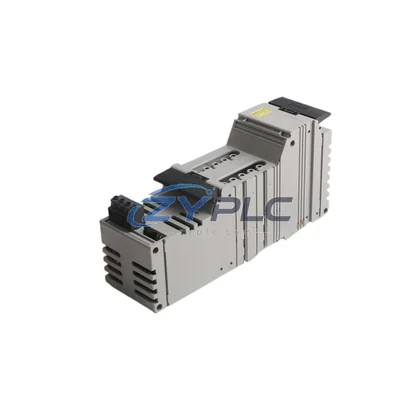
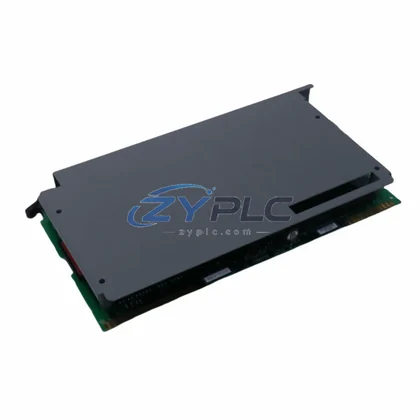
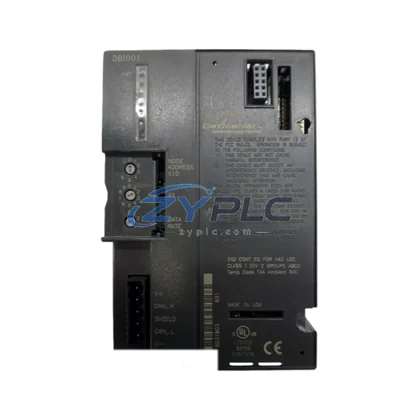
The GE Fanuc IC660ERD025B is a high-performance Remote I/O Communication Module engineered for the Series 90-70 programmable automation platform. Designed to operate on the Genius Bus industrial fieldbus protocol, this module serves as a critical node in the plant-floor data chain — connecting distributed field devices, sensors, and actuators to the central PLC controller and upper-level supervisory systems. In modern smart factory environments where data latency, protocol consistency, and network uptime are non-negotiable, the IC660ERD025B delivers the deterministic communication performance that industrial engineers demand.
With support for 115VAC digital I/O and a robust Genius Bus interface, this module enables seamless signal acquisition from field-level instruments and transmits real-time process data upstream to Series 90-70 CPU racks — including platforms such as the IC697CPU772 and IC697CPU781 — without introducing communication bottlenecks. Its architecture is purpose-built for high-availability production lines where even milliseconds of data delay can trigger cascading process faults.
Compatibility & Integration Notes
| Parameter |
Specification |
| SKU / Part Number |
IC660ERD025B |
| Brand / Manufacturer |
GE Fanuc |
| Series |
Series 90-70 |
| Communication Protocol |
Genius Bus (GE Fieldbus) |
| Interface Type |
Remote I/O Bus Interface |
| I/O Type |
115VAC Digital Input/Output |
| Transmission Capability |
Deterministic real-time I/O data transfer |
| Network Compatibility |
GE Series 90-70 Genius Bus network |
| System Application |
PLC, SCADA, DCS, Remote I/O, HMI integration |
| Product Type |
Remote I/O Communication Module |
| Origin |
United States |
| Warranty |
warranty terms confirmed during quotation |
| Shipping |
DHL / FedEx global express delivery |
| Availability |
Availability confirmed by RFQ, shipment arranged after confirmation |
Connected Automation Data Flow
In a fully integrated Series 90-70 automation architecture, the IC660ERD025B functions as the fieldbus gateway between distributed I/O nodes and the central control backbone. The data flow begins at the sensor and actuator layer — where devices such as proximity switches, photoelectric sensors, and 115VAC solenoid valves generate discrete signals. These signals are captured by the IC660ERD025B and transmitted over the Genius Bus to the Series 90-70 CPU rack, where the main controller — such as the IC697CPU772 — processes the data and executes the control logic in real time.
Within the same Genius Bus segment, the IC660ERD025B operates alongside other I/O modules such as the IC660EBD025 (115VAC discrete output block) and the IC660BBD025 (bus interface unit), forming a distributed I/O network that spans the production floor without requiring dedicated point-to-point wiring for every field device. This topology dramatically reduces installation complexity and cable runs while maintaining the deterministic scan cycle that Series 90-70 applications require.
At the controller level, the Series 90-70 CPU communicates with the plant’s SCADA system — typically via an Ethernet gateway module such as the IC697CMM742 — enabling real-time process visualization, alarm management, and historical data logging in platforms like iFIX, Wonderware, or Ignition SCADA. The IC660ERD025B’s I/O data is thus made available not only to the local PLC logic but also to the HMI operator stations and the enterprise MES layer above.
For drive integration, the Genius Bus network can interface with GE AF-300 series variable frequency drives through dedicated drive interface modules, allowing the IC660ERD025B’s digital outputs to control motor start/stop commands and speed references while feeding back drive status and fault data to the SCADA dashboard. Similarly, remote diagnostic tools connected to the Series 90-70 backplane — such as the IC697PCM711 communications coprocessor — enable engineers to perform remote fault isolation and firmware diagnostics without dispatching field technicians to the panel.
Edge gateway devices installed at the network boundary can aggregate Genius Bus data and forward it to cloud-based analytics platforms, enabling predictive maintenance models that analyze I/O cycle patterns, signal anomalies, and communication error rates across the entire IC660ERD025B node network. This end-to-end data chain — from field sensor through Genius Bus, PLC, SCADA, and edge gateway to the cloud — represents the full connectivity value that the IC660ERD025B delivers in a modern smart factory deployment.
Solving Data Isolation in Industrial Sites
Many legacy manufacturing facilities operate with fragmented automation islands: Series 90-70 PLCs managing one production zone, third-party controllers handling another, and SCADA systems that can only partially see the plant floor. The IC660ERD025B directly addresses this data isolation challenge by providing a standardized Genius Bus interface that consolidates distributed I/O signals into a single, coherent data stream accessible to the Series 90-70 CPU and, by extension, to the plant’s SCADA and MES systems.
Protocol fragmentation is one of the most persistent barriers to plant-wide transparency. When field devices speak different electrical and logical languages — 115VAC discrete signals, analog 4–20mA loops, and serial RS-485 instruments — the IC660ERD025B’s role as a Genius Bus node ensures that all 115VAC digital I/O data is normalized into the Genius Bus frame format before reaching the CPU. This eliminates the need for custom protocol converters at each field junction and reduces the risk of data corruption during signal translation.
Remote monitoring is another area where the IC660ERD025B adds measurable value. Because its I/O status is continuously reported to the Series 90-70 CPU over the Genius Bus, any field device fault — a failed sensor, a tripped actuator, or a wiring open-circuit — is immediately reflected in the PLC’s I/O fault table and propagated to the SCADA alarm system. Maintenance teams receive real-time fault notifications on their HMI screens and mobile devices, enabling rapid response without manual panel inspection.
System expansion is straightforward with the Genius Bus architecture. Additional IC660ERD025B modules or compatible I/O blocks can be added to the bus segment up to the maximum node count, allowing the automation system to grow with the production line without requiring a controller upgrade or network redesign. Each new module is auto-configured by the Series 90-70 CPU during the bus scan cycle, minimizing commissioning time and reducing the risk of configuration errors during plant expansions.
Every IC660ERD025B unit supplied by ZYPLC undergoes pre-shipment functional testing, including Genius Bus communication verification, I/O channel continuity checks, and power-on self-test validation. Units are shipped with a warranty terms confirmed during quotation covering manufacturing defects and communication failures, backed by ZYPLC’s technical support team for post-installation troubleshooting and replacement logistics.
Industrial Connectivity FAQ
Q1: What is the communication latency of the IC660ERD025B on the Genius Bus network?
The Genius Bus protocol used by the IC660ERD025B operates with a deterministic scan cycle, typically in the range of 2–10 milliseconds depending on the number of nodes on the bus segment and the CPU scan rate configured in the Series 90-70 controller. This deterministic behavior ensures that I/O data is delivered to the CPU within a predictable time window, making the IC660ERD025B suitable for time-critical control applications such as conveyor synchronization, press control, and safety interlock systems.
Q2: Is the IC660ERD025B compatible with third-party SCADA and HMI systems?
Yes. While the IC660ERD025B communicates natively over the GE Genius Bus protocol, the Series 90-70 CPU to which it connects supports standard Ethernet and serial communication modules — such as the IC697CMM742 — that provide OPC, Modbus TCP, and SRTP connectivity to third-party SCADA platforms including Wonderware, iFIX, Ignition, and Siemens WinCC. This allows the IC660ERD025B’s I/O data to be surfaced in any SCADA or HMI system that supports these standard industrial protocols.
Q3: How does ZYPLC ensure network stability for the IC660ERD025B before shipment?
Each IC660ERD025B unit undergoes a pre-shipment test protocol that includes Genius Bus communication verification, I/O channel functional testing, and power supply integrity checks. Units that fail any test parameter are quarantined and not shipped. ZYPLC maintains RFQ-confirmed sourcing of IC660ERD025B modules to support urgent replacement orders, with DHL and FedEx express shipping options available for next-day delivery to major industrial hubs globally.
Q4: Can the IC660ERD025B be added to an existing Series 90-70 Genius Bus network without reconfiguring the entire system?
Yes. The Genius Bus architecture supports hot-addition of new I/O nodes within the bus segment’s node capacity limits. When a new IC660ERD025B is added to the bus, the Series 90-70 CPU detects it during the next bus scan and automatically incorporates its I/O data into the controller’s reference table. Minor configuration updates in the Series 90-70 programming software (Logicmaster 90 or Proficy Machine Edition) are required to map the new module’s I/O addresses, but the existing bus nodes and their configurations remain unaffected. The warranty terms confirmed during quotation covers the new module from the date of shipment.