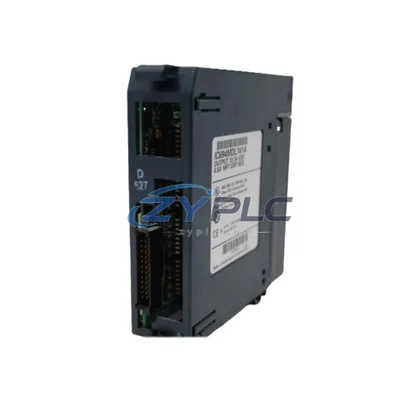
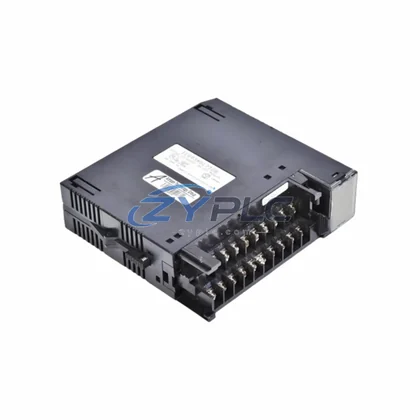
The GE IC670ALG230 is a high-precision analog input module engineered for seamless integration within GE Genius I/O distributed control architectures. Designed to operate as a critical signal acquisition node in layered automation systems, this module bridges the physical process environment and the digital control layer with accuracy, reliability, and long-term maintainability. Rather than functioning as a standalone component, the IC670ALG230 is purpose-built to operate in concert with upstream CPU platforms, downstream field devices, and lateral communication infrastructure — making it an indispensable element of any well-structured industrial control system.
In modern distributed control environments, analog signal integrity is foundational. The IC670ALG230 accepts multiple analog input channels, converting real-world process variables — such as temperature, pressure, flow, and level — into digital values that the control processor can act upon. Its compatibility with the Genius I/O bus architecture ensures that signal transmission between the field and the controller remains stable, deterministic, and immune to the latency issues that can compromise process safety and efficiency.
Product Specification Table
| Parameter |
Specification |
| System Role |
Analog Input Node — Genius I/O Distributed I/O Architecture |
| Module Series |
GE IC670 / Genius I/O Series |
| Input Channels |
16 Analog Input Channels (Voltage / Current configurable) |
| Input Signal Range |
0–10 VDC / 4–20 mA (field-selectable per channel) |
| Resolution |
12-bit A/D Conversion |
| Communication Interface |
Genius Bus (Serial, 153.6 kbps) |
| Bus Address |
Configurable via rotary switch (0–31) |
| Power Supply |
24 VDC (supplied via Genius Bus or local backplane) |
| Operating Temperature |
0°C to 60°C |
| Mounting |
DIN Rail / Panel Mount compatible with IC670 series carriers |
| Isolation |
Optical isolation between field and logic circuits |
| Diagnostics |
On-board LED status indicators; bus fault reporting |
| Warranty |
warranty terms confirmed during quotation — Covered by ZYPLC quality assurance program |
System Compatibility Notes
The IC670ALG230 achieves its full potential when deployed within a coordinated GE Genius I/O control system. At the controller level, it interfaces directly with GE Series 90-70 CPUs such as the IC697CPU772 or IC697CPU781, which execute the ladder logic or function block programs that process the analog data acquired by this module. The CPU communicates with the IC670ALG230 via the Genius Bus Controller — typically the IC697BEM731 — which manages bus arbitration, data transfer scheduling, and fault isolation across the entire distributed I/O network.
On the power distribution side, the IC697PWR711 or IC697PWR724 rack power supply modules provide the stable 24 VDC and 5 VDC rails required for both the CPU rack and the Genius I/O field modules. Proper power architecture is critical in analog systems: voltage ripple or transient spikes can introduce noise into the A/D conversion process, degrading measurement accuracy. The IC670ALG230’s internal optical isolation mitigates this risk, but a well-designed power layer remains essential for system-wide signal integrity.
For applications requiring redundant control, the IC670ALG230 can be deployed in dual-bus Genius architectures alongside a secondary IC697BEM731 bus controller, enabling hot-standby configurations where a CPU failover does not interrupt analog data acquisition. This redundancy design is particularly valuable in continuous process industries where even brief measurement gaps can trigger safety shutdowns or product quality deviations.
At the human-machine interface layer, operator stations running GE Proficy HMI/SCADA or third-party SCADA platforms receive the analog process values via the Series 90-70 CPU’s Ethernet module — such as the IC697CMM742 — enabling real-time trending, alarm management, and historical data logging. The seamless data path from field sensor through the IC670ALG230, across the Genius Bus, into the CPU, and up to the SCADA layer exemplifies the system integration that defines a well-engineered automation architecture.
Terminal block assemblies and field wiring accessories — including IC670CHS002 or IC670CHS004 I/O carriers — provide the physical mounting and field termination infrastructure for the IC670ALG230. Selecting the correct carrier ensures proper bus connectivity, adequate channel density, and maintainable wiring layouts that reduce commissioning time and long-term maintenance burden.
Industrial Application Notes
The IC670ALG230 is deployed across a wide spectrum of industrial sectors where distributed analog signal acquisition is a core requirement of the control architecture.
In power generation and electrical utilities, this module monitors generator output parameters, transformer temperatures, and switchgear current levels, feeding real-time data to the plant DCS or SCADA system for load balancing and protective relay coordination. Its deterministic Genius Bus communication ensures that critical measurements reach the control processor within defined scan cycle windows, supporting the tight timing requirements of power system protection schemes.
In petrochemical and refinery applications, the IC670ALG230 acquires pressure transmitter and thermocouple signals from distillation columns, heat exchangers, and reactor vessels. The module’s optical isolation protects the control system from the high common-mode voltages and ground loops that are endemic in large-scale process plants, while its 12-bit resolution provides the measurement granularity needed for precise temperature and pressure control loops.
In water and wastewater treatment facilities, the module interfaces with flow meters, pH sensors, dissolved oxygen probes, and level transmitters distributed across pump stations, clarifiers, and filtration systems. The Genius I/O architecture’s ability to distribute I/O nodes across large geographic areas — without proportional increases in wiring cost — makes the IC670ALG230 particularly well-suited to the spatially distributed nature of water infrastructure.
In mining and metallurgical operations, the IC670ALG230 monitors conveyor belt load cells, crusher motor current, and smelter temperature profiles. Its robust operating temperature range and optical isolation make it suitable for the electrically noisy environments characteristic of heavy industry, where variable-frequency drives and large motor starters generate significant electromagnetic interference.
In packaging and discrete manufacturing lines, the module acquires tension, force, and position feedback signals from servo systems and pneumatic actuators, enabling closed-loop process control that maintains product consistency across high-speed production runs.
Product Compatibility FAQ
Q1: Is the IC670ALG230 compatible with both Series 90-70 and Series 90-30 CPU platforms?
The IC670ALG230 is a Genius I/O bus device and communicates via the Genius serial bus protocol. It is compatible with any GE Series 90-70 or Series 90-30 CPU that is equipped with a Genius Bus Controller module (such as the IC697BEM731 for Series 90-70 or the IC693BEM331 for Series 90-30). The CPU platform itself does not directly determine compatibility — the bus controller interface does. This makes the IC670ALG230 a flexible analog input solution across multiple GE control platform generations, supporting long-term architecture continuity and reducing the need for module replacement during CPU upgrades.
Q2: How does the IC670ALG230 support redundant architecture designs, and what are the commissioning considerations?
In redundant Genius Bus configurations, two bus controllers are connected to the same Genius Bus segment, with one operating as primary and the other in hot-standby mode. The IC670ALG230 participates in this architecture transparently — it responds to bus scan commands from whichever controller is currently active, without requiring module-level reconfiguration during a failover event. During commissioning, engineers should verify bus address uniqueness across all nodes, confirm termination resistor placement at both ends of the bus cable, and validate scan time settings in the CPU configuration to ensure analog data refresh rates meet process control requirements. ZYPLC’s technical team provides pre-shipment configuration verification as part of the warranty terms confirmed during quotation support program.
Q3: What does the warranty terms confirmed during quotation cover, and how does ZYPLC support long-term inventory availability for this module?
The warranty terms confirmed during quotation covers manufacturing defects, functional failures under normal operating conditions, and bus communication faults attributable to the module itself. Warranty claims are processed through ZYPLC’s RMA procedure, with replacement or repair turnaround designed to minimize system downtime. Beyond the warranty period, ZYPLC maintains ongoing inventory of IC670ALG230 modules and compatible Genius I/O components to support long-term maintenance programs for installed base systems. For facilities operating legacy GE Genius I/O architectures where OEM support has been discontinued, ZYPLC serves as a reliable aftermarket supply partner, ensuring that analog input module availability does not become a constraint on system longevity or production continuity.