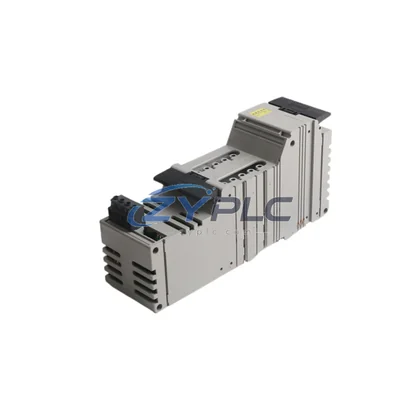
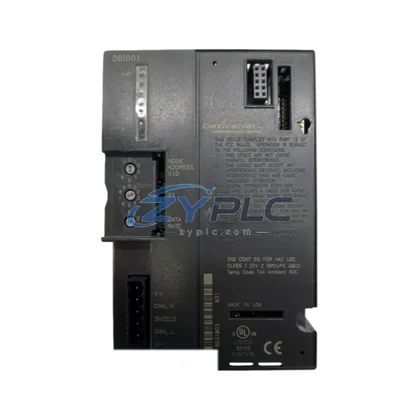
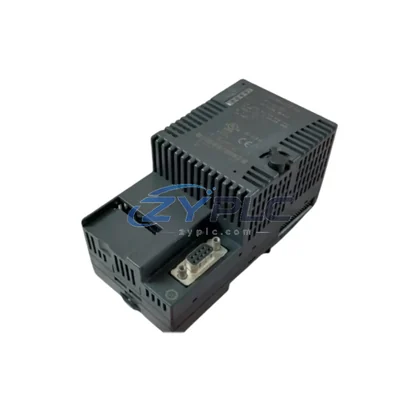
GE IC687BEM731 Industrial Network Interface for Series 90-70 Systems
The GE IC687BEM731 Genius Bus Controller is a high-performance industrial network interface module engineered for GE Series 90-70 PLC platforms. Designed to serve as the backbone of fieldbus communication in demanding manufacturing environments, the IC687BEM731 enables seamless data exchange between field-level devices, programmable logic controllers, remote I/O stations, HMI panels, SCADA systems, and upper-level enterprise networks. Whether you are modernizing a legacy production line or expanding an existing automation architecture, this module delivers the protocol reliability, real-time data throughput, and system integration depth that smart factory operations require.
Compatibility & Integration Notes
| Parameter |
Specification |
| Protocol Support |
Genius Fieldbus (GE proprietary high-speed serial) |
| Interface Type |
Genius Bus — dual-redundant serial bus interface |
| Transmission Capability |
Up to 153.6 Kbps on Genius Bus; supports up to 32 devices per bus segment |
| Network Compatibility |
GE Series 90-70 PLC backplane; compatible with IC697 CPU modules |
| System Application |
Remote I/O, distributed control, SCADA integration, HMI data acquisition |
| Operating Environment |
0–60°C; industrial EMC-rated; DIN-rail or rack-mount installation |
| Warranty |
warranty terms confirmed during quotation — tested and verified before shipment |
Connected Automation Data Flow
In a fully connected Series 90-70 automation architecture, the IC687BEM731 acts as the central communication bridge between the GE IC697CPU772 or IC697CPU781 processor and distributed field devices. Signals originating from Genius Smart Distributed System (SDS) blocks — such as the IC660BBD024 discrete block or IC660BBA020 analog block — are transmitted over the Genius Bus at high speed, with the IC687BEM731 managing bus arbitration, device addressing, and data integrity checks in real time.
On the drive side, GE AF-600 FP series variable frequency drives connected via Genius Bus report motor load, speed feedback, and fault status directly to the Series 90-70 CPU, enabling closed-loop energy management without additional gateway hardware. Similarly, GE Multilin 750/760 series protection relays can feed power quality and fault event data into the same Genius Bus segment, giving SCADA operators a unified view of both process and electrical health.
For HMI integration, GE iFIX SCADA software running on a supervisory workstation communicates with the Series 90-70 CPU via an IC641HSC100 SRTP Ethernet interface, while the IC687BEM731 simultaneously handles real-time I/O updates from the field layer — ensuring that HMI displays reflect live process states with minimal latency. Remote I/O expansion racks equipped with IC697BEM711 bus expansion modules extend the Genius Bus segment across large plant floors, maintaining deterministic scan times even as the device count grows.
Edge connectivity is achieved by pairing the Series 90-70 system with a GE RX3i CPE330 or a third-party OPC-UA gateway, which aggregates Genius Bus data and publishes it to cloud-based MES or ERP platforms. This architecture eliminates data silos between the field layer and enterprise systems, enabling production transparency, predictive maintenance scheduling, and remote diagnostics — all without replacing the proven IC687BEM731-based control infrastructure.
Solving Data Isolation in Industrial Sites
One of the most persistent challenges in legacy industrial facilities is protocol fragmentation: field devices speaking proprietary fieldbus dialects that cannot natively communicate with modern Ethernet-based SCADA or MES platforms. The IC687BEM731 addresses this at the source by providing a stable, deterministic Genius Bus interface that consolidates I/O data from up to 32 field nodes per bus segment into a single, coherent data stream for the Series 90-70 CPU.
Plants operating mixed fleets — where older Genius SDS blocks coexist with newer Profibus or Modbus TCP devices — can use the IC687BEM731 alongside protocol gateway modules to bridge these networks without disrupting existing wiring or control logic. This approach dramatically reduces the cost and risk of network modernization projects, as the existing Genius Bus infrastructure remains fully operational while new Ethernet segments are added in parallel.
Remote monitoring and diagnostics are equally strengthened. The IC687BEM731 supports bus-level fault reporting, allowing maintenance teams to identify cable faults, device dropouts, or communication errors from the SCADA workstation without dispatching technicians to the field. This capability reduces mean time to repair (MTTR), minimizes unplanned downtime, and supports the shift from reactive to predictive maintenance strategies. Combined with verified pre-shipment testing and a warranty terms confirmed during quotation, the IC687BEM731 is a dependable foundation for long-term industrial network stability.
For facilities planning system expansion, the Genius Bus architecture scales linearly: additional IC687BEM731 modules can be installed in the Series 90-70 rack to support multiple independent bus segments, each serving a dedicated production zone. This segmentation improves fault isolation, limits the blast radius of any single network event, and supports phased capacity expansion aligned with production growth.
Industrial Connectivity FAQ
Q1: What communication latency can I expect from the IC687BEM731 on a fully loaded Genius Bus?
A: On a 32-device Genius Bus segment running at 153.6 Kbps, typical bus scan times are in the range of 2–10 ms depending on the number of active devices and data block sizes. This deterministic, low-latency performance makes the IC687BEM731 suitable for time-critical discrete and process control applications.
Q2: Is the IC687BEM731 compatible with both IC697 and IC693 Series 90 CPUs?
A: The IC687BEM731 is designed for the Series 90-70 (IC697) backplane architecture. It is not directly compatible with Series 90-30 (IC693) racks. For Series 90-30 Genius Bus connectivity, GE offers the IC693BEM331 as the appropriate module.
Q3: How is the IC687BEM731 tested before shipment?
A: Every IC687BEM731 unit undergoes functional verification testing prior to dispatch, including bus communication checks, backplane interface validation, and firmware version confirmation. Units are shipped with a warranty terms confirmed during quotation covering manufacturing defects and operational failures under normal industrial use conditions.
Q4: Can the IC687BEM731 be used in a redundant bus configuration?
A: Yes. The Genius Bus protocol supports dual-bus redundancy, and the IC687BEM731 can be configured to operate on redundant bus segments. In the event of a primary bus fault, the controller automatically switches to the secondary bus, maintaining continuous I/O communication without interrupting the PLC scan cycle.