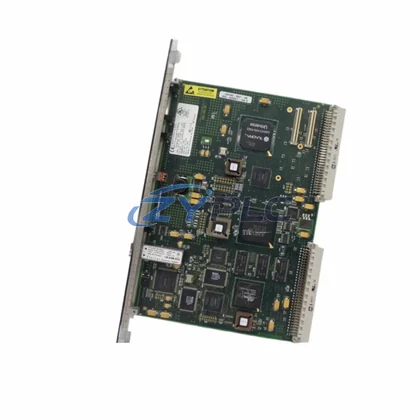
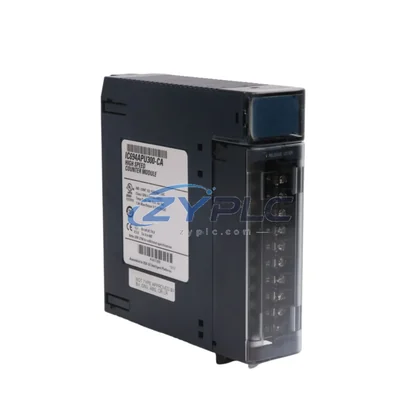
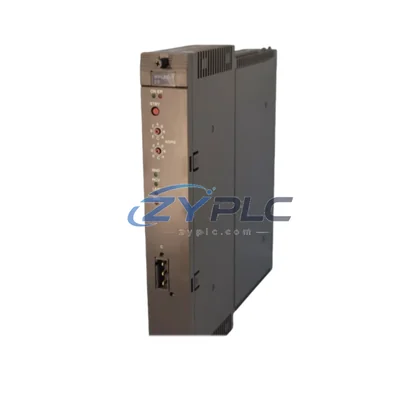
The GE IC697ALG321 is a high-density analog input module engineered for the GE Series 90-70 PLC platform, designed to occupy a precise and critical role within layered industrial control architectures. Rather than functioning as a standalone acquisition device, the IC697ALG321 operates as a structured signal entry point that bridges the physical process environment with the digital control layer — enabling the CPU, I/O subsystem, and supervisory network to act on real-time process data with accuracy and consistency.
In a fully integrated Series 90-70 rack system, the IC697ALG321 is typically installed alongside the IC697CPU772 or IC697CPU781 central processing unit, which handles scan-cycle execution and ladder logic processing. The module receives analog signals — voltage or current — from field instruments such as transmitters, sensors, and transducers, and converts them into digital values that the CPU can act upon within each scan cycle. This tight coupling between the analog front-end and the processing core is what makes the IC697ALG321 indispensable in precision-controlled environments.
The module slots directly into the Series 90-70 VME-based backplane, sharing the same rack infrastructure as power supply modules such as the IC697PWR711 or IC697PWR724. These power modules provide regulated DC voltage to the entire rack, ensuring that analog signal conditioning circuits within the IC697ALG321 receive stable power — a prerequisite for maintaining measurement accuracy across all input channels. Any voltage fluctuation at the rack level directly affects analog resolution, making power supply selection a critical architectural decision.
From a signal flow perspective, the IC697ALG321 sits at the I/O layer of the control hierarchy. Field signals enter through wiring connected to the module’s terminal interface, pass through internal signal conditioning and analog-to-digital conversion, and are then mapped into the CPU’s I/O table. This data is subsequently available to the control program, HMI systems, and upstream SCADA platforms via communication modules such as the IC697CMM711 Ethernet interface or the IC697BEM713 bus expansion module, which extends the rack’s I/O capacity across multiple chassis in distributed configurations.
In architectures requiring redundancy or extended I/O reach, the IC697ALG321 can be deployed across secondary racks connected via the IC697BEM711 remote I/O bus controller. This allows process engineers to distribute analog acquisition points closer to field instruments, reducing cable runs and signal degradation while maintaining centralized control logic in the primary CPU rack. Such configurations are common in large-scale process plants, power generation facilities, and petrochemical installations where field devices are spread across wide physical areas.
The module’s compatibility with the Series 90-70 programming environment — including Proficy Machine Edition — means that channel configuration, scaling, and alarm thresholds can be managed directly within the control program without requiring external calibration tools. Engineers can define engineering unit conversions, set high/low alarm limits, and enable channel-level diagnostics from within the same development environment used for the rest of the control system. This reduces commissioning time and simplifies long-term maintenance workflows.
In manufacturing environments, the IC697ALG321 is frequently used to monitor process variables such as temperature, pressure, flow rate, and level — feeding real-time data into PID control loops executed by the CPU. When paired with analog output modules such as the IC697ALG320, the system forms a closed-loop control architecture capable of continuously adjusting actuators, control valves, and variable-speed drives based on measured process conditions. This closed-loop capability is fundamental to maintaining product quality and process stability in industries such as food and beverage, pharmaceuticals, and chemical processing.
For facilities operating in power distribution, water treatment, or mining environments, the IC697ALG321 provides the analog acquisition backbone for condition monitoring and equipment protection systems. Signals from current transformers, voltage dividers, and vibration sensors are routed through the module into the control system, where they are processed against defined thresholds to trigger protective actions or generate maintenance alerts. This integration supports predictive maintenance strategies by providing continuous visibility into equipment health indicators.
Every IC697ALG321 unit supplied by ZYPLC is sourced from verified inventory channels, subjected to functional testing prior to shipment, and covered by a warranty terms confirmed during quotation. Stock availability is maintained to support both planned system builds and urgent replacement requirements, with fast dispatch to minimize production downtime. Our technical team is available to assist with module configuration, rack compatibility verification, and system integration guidance.
Product Specification Table
| Parameter |
Specification |
| System Role |
Analog Signal Acquisition — I/O Layer |
| Compatible Platform |
GE Series 90-70 VME Rack System |
| Input Channels |
16 Differential Analog Inputs |
| Input Signal Range |
±10V, 0–10V, 4–20mA (configurable per channel) |
| Resolution |
12-bit ADC |
| Electrical Isolation |
Channel-to-backplane isolated |
| Communication Interface |
VME Backplane Bus |
| Compatible CPUs |
IC697CPU772, IC697CPU781, IC697CPU788 |
| Compatible Power Supplies |
IC697PWR711, IC697PWR724 |
| Installation Environment |
Industrial Control Panel, DIN Rail Rack |
| Operating Temperature |
0°C to 60°C |
| Warranty |
warranty terms confirmed during quotation — Tested & Verified |
System Compatibility Notes
The IC697ALG321 achieves its full value when integrated within a coordinated Series 90-70 control system. At the processing core, the IC697CPU772 executes the control program and manages I/O table updates on every scan cycle, reading analog values delivered by the IC697ALG321 and issuing control outputs accordingly. The rack’s structural integrity depends on the IC697PWR711 power supply, which delivers regulated voltage to all installed modules including the analog input card.
For systems requiring expanded I/O capacity, the IC697BEM713 bus expansion module connects additional racks to the primary chassis, allowing the IC697ALG321 to be deployed in remote I/O configurations without compromising scan performance. Network connectivity is handled by the IC697CMM711 Ethernet communications module, which enables the CPU to exchange data with SCADA systems, historian servers, and HMI terminals over standard industrial Ethernet protocols.
On the output side, the IC697ALG320 analog output module completes the closed-loop control chain, translating CPU-generated setpoints into analog signals that drive control valves, positioners, and variable-frequency drives. Discrete I/O modules such as the IC697MDL340 handle digital signal acquisition in parallel, providing the CPU with a complete picture of both analog process variables and discrete equipment states within a single rack architecture.
For human-machine interface requirements, operator stations running Proficy iFIX or compatible HMI software connect to the Series 90-70 system via the Ethernet communications module, providing operators with real-time visualization of analog trends, alarm states, and process setpoints. This multi-layer architecture — from field sensor through analog input module, CPU, communications network, and HMI — represents the complete signal flow that the IC697ALG321 anchors at the I/O acquisition layer.
Industrial Application Notes
In power generation and distribution facilities, the IC697ALG321 monitors generator output parameters, transformer temperatures, and bus voltage levels, feeding this data into protection relay logic executed by the Series 90-70 CPU. Any deviation from defined operating bands triggers automated protective switching sequences, preventing equipment damage and maintaining grid stability.
In petrochemical and refinery environments, the module acquires pressure and temperature signals from process vessels, reactors, and heat exchangers. These values feed into PID control loops that regulate flow control valves and heat exchanger bypass dampers, maintaining process conditions within safe operating windows. The module’s channel isolation prevents ground loops that could corrupt measurements in electrically noisy plant environments.
In water and wastewater treatment plants, the IC697ALG321 collects flow meter, pH sensor, and turbidity analyzer signals, enabling the control system to automatically adjust chemical dosing pumps and aeration blowers based on real-time water quality data. This closed-loop approach reduces chemical consumption and ensures consistent effluent quality without continuous operator intervention.
In mining and mineral processing operations, the module monitors conveyor belt load cells, crusher motor currents, and flotation cell level sensors, providing the control system with the data needed to optimize throughput and protect mechanical equipment from overload conditions. Predictive maintenance algorithms running on the CPU use this analog data to identify developing equipment faults before they cause unplanned shutdowns.
Product Compatibility FAQ
Q1: Is the IC697ALG321 compatible with all Series 90-70 CPU modules?
The IC697ALG321 is compatible with the full range of Series 90-70 CPU modules, including the IC697CPU772, IC697CPU781, and IC697CPU788. It communicates via the VME backplane bus and is recognized automatically by the CPU during rack initialization. No special firmware or hardware modification is required for integration into existing Series 90-70 rack configurations.
Q2: Can the IC697ALG321 be used in a remote I/O rack connected via the BEM713 bus expansion module?
Yes. The IC697ALG321 can be installed in secondary racks connected to the primary CPU rack via the IC697BEM713 bus expansion module or the IC697BEM711 remote I/O bus controller. This configuration allows analog acquisition points to be distributed across multiple physical locations within the same control system, with all channel data mapped into the CPU’s I/O table as if the module were installed in the primary rack.
Q3: What warranty and testing standards apply to IC697ALG321 units supplied by ZYPLC?
Every IC697ALG321 unit supplied by ZYPLC undergoes functional testing prior to dispatch, verifying channel accuracy, backplane communication, and signal conditioning performance. All units are covered by a warranty terms confirmed during quotation from the date of shipment. In the event of a confirmed module fault within the warranty period, ZYPLC will provide a replacement unit or full refund. Our technical team is available to support installation, configuration, and commissioning queries throughout the warranty period.
—