GE IC697MDL241 Industrial Network Interface for Series 90-70 Systems: Bridging Field Devices and Smart Factory Data Flows
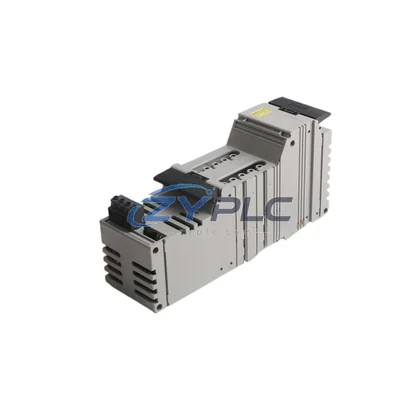
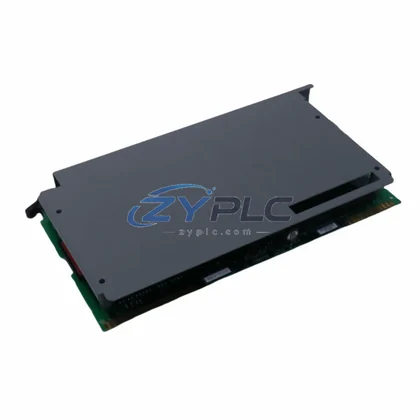
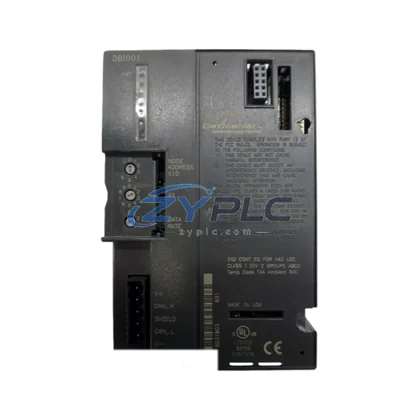
The GE IC697MDL241 is a 24VDC discrete input module engineered for the GE Fanuc Series 90-70 PLC platform — one of the most widely deployed modular control architectures in heavy industry, utilities, and process manufacturing. Designed to slot directly into the Series 90-70 backplane, the IC697MDL241 serves as a critical data acquisition node, capturing digital field signals from sensors, limit switches, proximity detectors, and push-button stations, then delivering that information in real time to the CPU for processing, alarming, and upstream SCADA communication.
In modern smart factory environments, the value of a discrete input module extends far beyond simple on/off signal detection. The IC697MDL241 acts as the first link in an industrial data chain — converting physical field events into structured digital data that flows upward through the Series 90-70 backplane, through the CPU such as the IC697CPX935 or IC697CPU772, and onward to supervisory systems via communication modules like the IC697CMM742 Ethernet Interface or the IC697BEM731 Bus Expansion Module. This unbroken data path is what enables real-time production visibility, predictive maintenance, and remote diagnostics across distributed plant networks.
Compatibility & Integration Notes
| Parameter |
Specification |
| SKU / Part Number |
IC697MDL241 |
| Brand / Series |
GE Fanuc / Series 90-70 |
| Module Type |
Discrete Input Module |
| Input Voltage |
24VDC |
| Number of Input Points |
32 Channels |
| Protocol Support |
Series 90-70 Backplane Bus, SNP/SNPX, Modbus RTU (via CMM), Ethernet/IP (via CMM742) |
| Interface Type |
Backplane Slot (Series 90-70 Rack) |
| Network Compatibility |
GE Fanuc Series 90-70 Rack, IC697CHS750 / IC697CHS782 Chassis |
| SCADA / HMI Integration |
Compatible via IC697CMM742, iFIX, Cimplicity, WinCC, Ignition SCADA |
| System Application |
Discrete Signal Acquisition, PLC I/O Expansion, Remote Monitoring, Smart Factory Integration |
| Warranty |
warranty terms confirmed during quotation |
| Shipping |
Global DHL / FedEx Express |
Connected Automation Data Flow
Understanding how the IC697MDL241 fits into a complete industrial data architecture is essential for system integrators and plant engineers. In a typical Series 90-70 installation, field-level sensors — including inductive proximity switches, photoelectric sensors, and emergency stop circuits — wire directly into the IC697MDL241’s 32-channel input terminal block. The module scans these inputs at high speed and writes the state data to the PLC’s I/O image table via the Series 90-70 backplane bus.
The CPU module — commonly the IC697CPX935 or IC697CPU772 — reads this image table on every scan cycle, executing ladder logic or function block programs that govern machine behavior. When a process condition triggers an alarm threshold, the CPU can simultaneously update an HMI display connected via the IC697CMM742 Ethernet Interface Module and log the event to a SCADA historian such as Cimplicity or iFIX running on the supervisory network.
For plants requiring remote I/O expansion across large floor areas, the IC697BEM731 Bus Expansion Module extends the Series 90-70 rack architecture over fiber or coaxial cable, allowing IC697MDL241 modules installed in remote racks to feed data back to the main CPU as if they were local. This architecture is particularly effective in automotive assembly lines, water treatment facilities, and power generation plants where field devices are spread across hundreds of meters.
At the drive and motion layer, variable frequency drives (VFDs) and servo amplifiers often generate discrete run/fault/ready signals that feed directly into IC697MDL241 input channels. These signals are then processed by the Series 90-70 CPU and forwarded to the SCADA layer, enabling operators to monitor drive status, detect faults early, and initiate remote restart sequences without dispatching field technicians.
Edge gateway devices — such as those running OPC-UA or MQTT protocols — can connect to the Series 90-70 network via the IC697CMM742 or a dedicated protocol converter, pulling real-time I/O data from the IC697MDL241 and publishing it to cloud-based MES or ERP platforms. This integration path is increasingly common in Industry 4.0 retrofit projects where legacy GE Fanuc systems are being connected to modern digital infrastructure without replacing the existing PLC hardware.
Complementary modules in the Series 90-70 ecosystem — including the IC697MDL250 discrete output module, the IC697MDL340 AC input module, and the IC697ALG230 analog input module — work alongside the IC697MDL241 to provide a complete mixed-signal I/O solution. Together, these modules give engineers the flexibility to handle both digital and analog field signals within a single unified rack, simplifying wiring, reducing panel footprint, and lowering overall system cost.
Solving Data Isolation in Industrial Sites
One of the most persistent challenges in industrial automation is data isolation — the condition where field-level signals exist in physical form but never reach the supervisory systems that need them for decision-making. The IC697MDL241 directly addresses this problem by providing a reliable, high-density discrete input interface that integrates seamlessly with the Series 90-70 communication stack.
In older plant installations, discrete signals from limit switches, flow switches, and level sensors were often wired to standalone relay panels with no connection to the PLC network. Retrofitting these signals into an IC697MDL241 module — installed in an existing Series 90-70 rack — immediately brings those field events into the PLC data domain, where they can be processed, alarmed, logged, and transmitted to SCADA without any additional protocol conversion hardware.
For sites running mixed communication environments — where some devices speak Modbus RTU, others use Profibus, and the supervisory layer runs Ethernet/IP — the Series 90-70 platform with IC697CMM742 communication modules acts as a protocol gateway, normalizing data from multiple sources into a single coherent network. The IC697MDL241 contributes to this architecture by ensuring that discrete field signals are captured accurately and made available to the gateway layer in real time.
Remote monitoring and diagnostics are also significantly enhanced by the IC697MDL241’s integration into the Series 90-70 network. Plant managers can use SCADA systems like Ignition or Cimplicity to monitor the status of every input channel remotely, set alarm thresholds, and receive notifications when field devices fail or go out of range — all without physical access to the control panel. This capability reduces mean time to repair (MTTR), improves overall equipment effectiveness (OEE), and supports the shift toward predictive maintenance strategies.
Production line transparency — knowing exactly what is happening at every machine and process stage in real time — is a core requirement of smart factory initiatives. The IC697MDL241, as part of a fully networked Series 90-70 system, enables this transparency by ensuring that every discrete field event is captured, timestamped, and made available to the production management layer. Engineers can trace process anomalies back to specific input events, identify bottlenecks, and optimize cycle times based on actual field data rather than estimates.
Industrial Connectivity FAQ
Q1: What communication protocols does the IC697MDL241 support for SCADA integration?
The IC697MDL241 communicates via the Series 90-70 backplane bus and does not have a standalone network port. SCADA integration is achieved through communication modules installed in the same rack, such as the IC697CMM742 Ethernet Interface, which supports Ethernet/IP and SRTP protocols, or via Modbus RTU through serial communication modules. This allows the IC697MDL241’s input data to be accessed by SCADA platforms including Cimplicity, iFIX, WinCC, and Ignition.
Q2: Is the IC697MDL241 compatible with third-party HMI and SCADA systems?
Yes. When paired with the appropriate Series 90-70 communication module, the IC697MDL241’s data is accessible to any SCADA or HMI system that supports GE SRTP, Modbus TCP, or OPC-DA/UA protocols. Major platforms including Wonderware, Ignition, and Siemens WinCC have established driver support for the Series 90-70 architecture, making cross-vendor integration straightforward.
Q3: How does the IC697MDL241 perform in terms of network stability and scan cycle reliability?
The IC697MDL241 is designed for deterministic, high-reliability operation within the Series 90-70 backplane. Input scan times are synchronized with the CPU scan cycle, ensuring that no discrete events are missed between scans. The module operates across a wide temperature range and is rated for continuous industrial duty, making it suitable for demanding environments including automotive plants, chemical processing facilities, and power utilities.
Q4: What warranty and pre-shipment testing does the IC697MDL241 come with?
Every IC697MDL241 unit supplied by ZYPLC is covered by a warranty terms confirmed during quotation against manufacturing defects and functional failures. Prior to shipment, each module undergoes functional verification testing to confirm input channel integrity, backplane communication, and LED indicator operation. Units are shipped via DHL or FedEx Express with full tracking, and our technical team provides post-sale support for installation, configuration, and system integration queries.