GE IS200SHRAH2A System-Ready HART Analog I/O for Mark VI Architecture: Control System Architecture and Upstream–Downstream Coordination
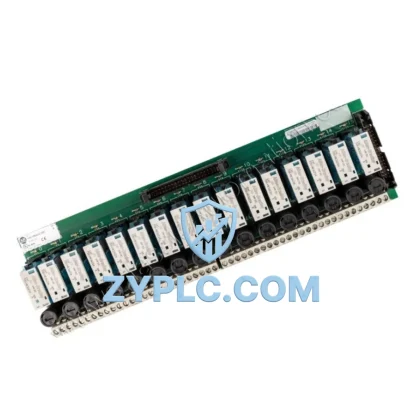
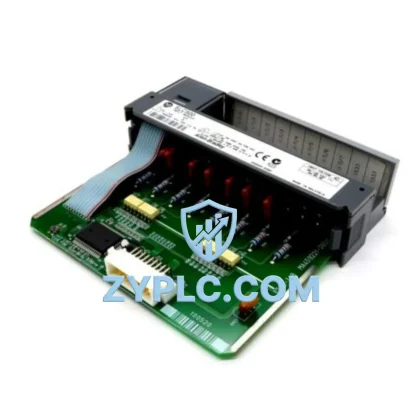
The GE IS200SHRAH2A is a HART-enabled analog input/output board engineered specifically for integration within the GE Mark VI turbine control platform. Rather than functioning as a standalone signal conditioner, this module occupies a critical position within a layered automation architecture — bridging the field instrument layer and the controller core, enabling bidirectional HART communication, precision analog signal conditioning, and real-time process variable transmission across the full control hierarchy. Understanding its role requires examining how it interacts with every layer of the control system: from the CPU and backplane to the I/O termination assemblies, power distribution, HMI, and field actuators.
In a complete Mark VI control system, the IS200SHRAH2A is mounted within the VMIVME or VME-based I/O rack and communicates directly with the Mark VI controller board — typically the IS215UCVEH2A or IS215UCVEH2B CPU module — via the high-speed VME backplane bus. This tight integration ensures that analog process variables such as temperature, pressure, flow, and valve position are sampled, conditioned, and delivered to the control logic with minimal latency. The HART protocol layer embedded in the IS200SHRAH2A further extends this capability by enabling digital communication overlaid on the 4–20 mA analog signal, allowing field devices to report diagnostics, device identity, and secondary variables without additional wiring infrastructure.
Architecture Specification Table
| Parameter |
Specification |
| System Role |
HART Analog I/O Interface Module — Mark VI Control Platform |
| Compatible Platform |
GE Mark VI Turbine Control System |
| Communication Protocol |
HART (Highway Addressable Remote Transducer), VME Backplane Bus |
| Signal Type |
Analog Input / Output, 4–20 mA with HART overlay |
| Electrical Interface |
VME 6U form factor, 5 VDC logic supply via backplane |
| Operating Voltage |
24 VDC field loop power (typical) |
| Operating Temperature |
0°C to +60°C (standard industrial range) |
| Mounting |
VME rack-mount, compatible with Mark VI I/O enclosures |
| Installation Environment |
Control cabinet, DIN-rail enclosure, turbine control panel |
| Warranty |
12-Month Warranty — covers functional defects under normal operating conditions |
| Contextual Integration |
Fully validated for Contextual Integration within Mark VI system architecture |
Coordinated Control System Design
The IS200SHRAH2A does not operate in isolation. Its value is realized through coordinated interaction with a complete suite of Mark VI system components. At the controller level, the IS215UCVEH2A CPU module processes the analog data delivered by the IS200SHRAH2A and executes the turbine control algorithms — governing fuel flow, speed control, exhaust temperature management, and load dispatch. The IS200SHRAH2A’s HART capability allows the CPU to interrogate field transmitters directly, retrieving device health data and secondary process variables without interrupting the primary 4–20 mA control loop.
Power integrity for the IS200SHRAH2A and its associated I/O rack is maintained by the IS200EPBAG1A power distribution board, which conditions and distributes 28 VDC across the VME backplane. Redundant power supply configurations — using dual IS200EPBAG1A modules — ensure that a single power supply failure does not interrupt analog signal acquisition, a critical requirement in gas turbine and steam turbine applications where process uptime is non-negotiable.
Signal termination between the IS200SHRAH2A and field instruments is managed through the IS200TBCIH1C or IS200TBCIH2C terminal board assemblies, which provide screw-terminal connections for 4–20 mA field loops, HART device wiring, and shield grounding. These terminal boards mount within the same control cabinet and connect to the IS200SHRAH2A via ribbon cable or direct backplane interface, maintaining signal integrity across the full analog chain from field transmitter to controller input register.
For systems requiring expanded I/O capacity, the IS200SHRAH2A operates alongside digital I/O modules such as the IS200SDCIH1A discrete contact input board and the IS200SDOIH1A discrete output board, all sharing the same VME rack and backplane. This modular architecture allows engineers to configure the exact I/O mix required for each turbine unit — combining analog inputs for process variables, analog outputs for valve positioner setpoints, and discrete I/O for permissive logic and alarm annunciation — within a single, unified control enclosure.
Network connectivity and remote monitoring are handled by the IS200EACAH1A Ethernet adapter module, which bridges the Mark VI VME backplane to the plant-level DCS or SCADA network via Modbus TCP or proprietary GE communication protocols. This allows the IS200SHRAH2A’s analog data to be aggregated at the HMI level — typically a GE Cimplicity or iFIX workstation — where operators monitor real-time process trends, configure alarm setpoints, and initiate control actions. The seamless data path from field instrument through IS200SHRAH2A to HMI represents the full vertical integration of the Mark VI architecture.
Application in Layered Automation Systems
The IS200SHRAH2A finds application across a broad spectrum of industrial sectors where the GE Mark VI platform is deployed as the primary turbine or process control system.
In power generation — including gas turbine combined-cycle plants, steam turbine units, and aeroderivative peaking units — the IS200SHRAH2A handles analog inputs from combustion temperature thermocouples, compressor inlet pressure transmitters, and exhaust gas oxygen analyzers. Its HART capability allows maintenance engineers to perform remote device calibration and diagnostics without taking the turbine offline, reducing planned maintenance windows and improving overall plant availability.
In petrochemical and refinery applications, the IS200SHRAH2A integrates with process control loops governing reactor temperature, column pressure, and flow control valves. The HART overlay enables smart valve positioner diagnostics — detecting valve stem friction, actuator wear, and positioner calibration drift — directly from the Mark VI controller, supporting predictive maintenance programs and reducing unplanned process shutdowns.
In water and wastewater treatment facilities, the IS200SHRAH2A manages analog signals from flow meters, pH analyzers, dissolved oxygen sensors, and pump discharge pressure transmitters. Its compatibility with HART-enabled field instruments from multiple manufacturers ensures that plant engineers can standardize on the Mark VI control platform while retaining flexibility in field device selection.
In mining and mineral processing operations, the IS200SHRAH2A supports analog I/O for conveyor belt load cells, crusher motor current transmitters, and flotation cell level sensors. The module’s robust VME construction and wide operating temperature range make it suitable for the harsh electrical environments typical of mining control rooms, where conducted EMI from large motor drives and variable frequency drives can compromise signal integrity in less robust I/O hardware.
Architecture Engineering FAQ
Q1: Is the IS200SHRAH2A compatible with both simplex and TMR (Triple Modular Redundant) Mark VI configurations?
A: Yes. The IS200SHRAH2A is designed to operate in simplex, dual-redundant, and TMR Mark VI architectures. In TMR configurations, three IS200SHRAH2A modules are installed in parallel I/O racks, with the Mark VI controller performing voted analog input comparison to detect and isolate a failed module without process interruption. This redundancy architecture is standard practice in critical turbine protection applications where a single I/O failure must not result in a spurious trip or loss of protection.
Q2: What commissioning steps are required when replacing an IS200SHRAH2A in a live Mark VI system?
A: Replacement of the IS200SHRAH2A in a running system requires coordination with the plant control engineer. The standard procedure involves placing the affected I/O channel in manual mode at the HMI, removing the failed module from the VME rack, installing the replacement IS200SHRAH2A, and verifying channel calibration against known reference signals before returning the channel to automatic control. HART device re-polling should be performed after module replacement to re-establish digital communication with all connected field instruments. Full loop checks against the IS200TBCIH1C terminal board are recommended before returning the system to service.
Q3: What does the 12-Month Warranty cover, and how does ZYPLC support long-term inventory availability for Mark VI components?
A: The 12-Month Warranty covers functional defects in the IS200SHRAH2A under normal operating conditions, including analog signal accuracy, HART communication integrity, and VME backplane interface reliability. ZYPLC maintains dedicated inventory of Mark VI I/O modules — including the IS200SHRAH2A and related components — to support both immediate replacement requirements and long-term maintenance contracts. For obsolete or end-of-life GE Mark VI components, ZYPLC provides sourcing, functional testing, and warranty-backed supply to ensure that aging turbine control systems can be maintained without forced platform migration.
© 2026 ZYPLC. All rights reserved.
Original Source: https://zyplc.com
Contact: +86 19859288691 | plc.sales@zyplc.com