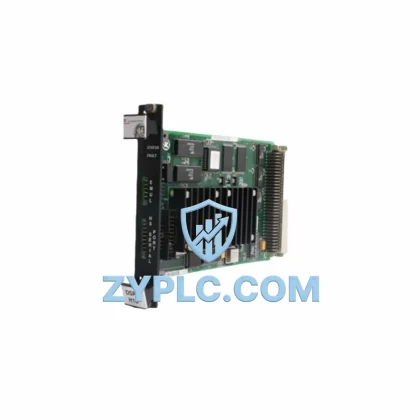
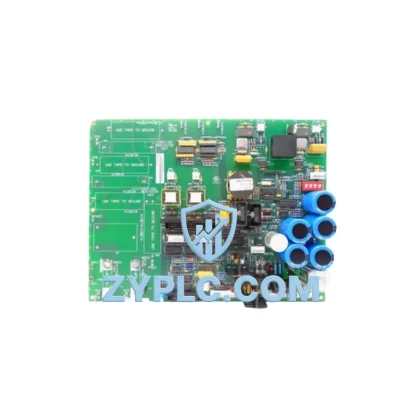
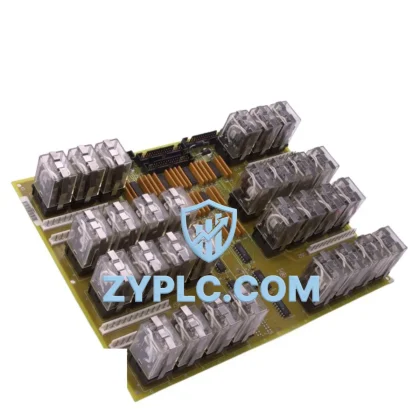
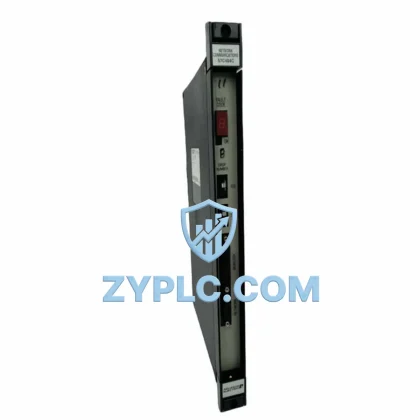
The GE IS200STAIH2ACB is a precision-engineered Analog Input Terminal Board designed as an integral component within the GE Mark VI Turbine Control System architecture. Rather than functioning as a standalone device, the IS200STAIH2ACB occupies a critical position in the signal acquisition layer of a distributed control system, serving as the physical interface between field instrumentation and the Mark VI controller’s processing core. Its role in ensuring accurate, noise-free analog signal conditioning directly influences the reliability of the entire control loop — from sensor input through to actuator response.
In a fully configured Mark VI system, the IS200STAIH2ACB works in close coordination with the VCMI (VME Communications Module Interface) and the PPRO (Protection Processor) boards. Analog signals from thermocouples, RTDs, pressure transmitters, and flow sensors are routed through the IS200STAIH2ACB’s terminal interface, where they are conditioned and passed upstream to the IS200VCRCH1B or IS200VCMIH2B communication modules for processing. This layered signal flow ensures that the control system maintains high-fidelity data integrity across all operating conditions, including high-vibration and high-temperature environments typical of gas turbine and steam turbine installations.
Product Specification Table
| Parameter |
Specification |
| System Role |
Analog Input Terminal Board — Signal Acquisition Layer |
| Compatible Platform |
GE Mark VI Turbine Control System |
| Signal Types Supported |
Thermocouple, RTD, 4–20 mA, 0–10 V Analog Inputs |
| Input Channels |
Up to 16 differential analog input channels (configuration-dependent) |
| Electrical Interface |
Terminal block field wiring; DIN rail or panel mount compatible |
| Communication Interface |
Backplane bus interface to Mark VI VME-based controller rack |
| Operating Temperature |
0°C to +60°C (standard industrial range) |
| Storage Temperature |
-40°C to +85°C |
| Power Supply |
Supplied via Mark VI system backplane (24 VDC nominal) |
| Mounting |
Mark VI I/O rack — compatible with IS200 series terminal board slots |
| Isolation |
Channel-to-channel and channel-to-ground isolation for signal integrity |
| system integration |
Full system integration with Mark VI VCMI, PPRO, and I/O modules |
| Warranty |
12-Month Warranty — covered by ZYPLC standard service agreement |
| Compliance |
CE, RoHS; suitable for Class I, Division 2 hazardous area applications |
System Compatibility Notes
The IS200STAIH2ACB does not operate in isolation. Its value is fully realized when integrated within a complete Mark VI control architecture that spans multiple functional layers. At the controller layer, the IS200VCMIH2B VME Communications Module serves as the central processing hub, receiving conditioned analog data from the IS200STAIH2ACB and distributing control commands to downstream I/O modules. The IS200VCRCH1B Relay Contact Output Board handles discrete output signals, while the IS200STCIH2B Thermocouple Input Terminal Board works alongside the IS200STAIH2ACB to cover the full spectrum of temperature measurement inputs required in turbine applications.
Power integrity across the Mark VI rack is maintained by the IS200EPCTG1A Power Supply Module, which provides regulated DC power to all I/O boards including the IS200STAIH2ACB. In redundant system configurations — common in critical power generation and petrochemical applications — the IS200STAIH2ACB is typically deployed in TMR (Triple Modular Redundancy) arrangements, where three parallel signal paths are compared by the PPRO protection processor to detect and isolate faults without process interruption.
Network connectivity between the Mark VI system and plant-level SCADA or DCS platforms is handled by the IS200VSVOH1B Serial Communications Module or Ethernet-based gateway modules, enabling the analog data acquired by the IS200STAIH2ACB to be transmitted to historian servers, operator workstations, and asset management systems. At the human-machine interface layer, GE Cimplicity or third-party HMI platforms visualize the real-time analog values, providing operators with actionable process data derived directly from the IS200STAIH2ACB’s field inputs.
For applications requiring expanded I/O capacity, the IS200STAIH2ACB can be deployed alongside additional IS200-series terminal boards within the same Mark VI I/O rack, supporting modular system expansion without architectural redesign. This scalability is a key advantage in large-scale installations such as combined-cycle power plants, LNG processing facilities, and offshore platform control systems, where I/O point counts can reach into the thousands.
Industrial Application Notes
The IS200STAIH2ACB finds application across a broad range of industrial sectors where precise analog signal acquisition is fundamental to process safety and efficiency. In power generation, it is deployed within gas turbine and steam turbine control systems to monitor exhaust gas temperatures, compressor inlet pressures, and vibration-derived analog signals, feeding real-time data to the Mark VI protection and control logic. Any deviation beyond setpoint triggers protective action through the PPRO module, preventing equipment damage and unplanned outages.
In the petrochemical and refining industry, the IS200STAIH2ACB supports continuous process monitoring in reactor temperature control, distillation column pressure management, and flow measurement loops. Its high channel isolation and noise rejection characteristics make it suitable for environments with significant electromagnetic interference from variable frequency drives, high-voltage switchgear, and large motor loads.
Water treatment and municipal utility applications benefit from the IS200STAIH2ACB’s ability to interface with a wide variety of field transmitters — including pH sensors, dissolved oxygen analyzers, and level transmitters — within a unified Mark VI control architecture. Mining and mineral processing operations use the board in conveyor system monitoring, crusher load measurement, and flotation cell control, where reliable analog data acquisition is essential for process optimization and energy efficiency.
In metallurgical and steel production environments, the IS200STAIH2ACB supports temperature profiling in furnace control systems, where accurate thermocouple and RTD signal acquisition directly impacts product quality and energy consumption. Packaging and discrete manufacturing lines leverage the board’s multi-channel capability to monitor servo drive feedback signals, tension control inputs, and web tension measurements within integrated Mark VI-based machine control architectures.
Product Compatibility FAQ
Q1: Is the IS200STAIH2ACB compatible with both Mark VI and Mark VIe control systems?
The IS200STAIH2ACB is designed primarily for the GE Mark VI platform and its IS200-series I/O rack architecture. While some IS200-series boards share physical form factors with Mark VIe components, direct interoperability with Mark VIe requires verification against the specific system’s I/O module compatibility matrix. ZYPLC’s technical team can assist with cross-platform compatibility assessment prior to procurement, and all supplied units are covered by a 12-Month Warranty regardless of the target system configuration.
Q2: How does the IS200STAIH2ACB support TMR redundancy architecture, and what happens during a board failure?
In a Triple Modular Redundancy (TMR) configuration, three IS200STAIH2ACB boards simultaneously acquire the same analog signals from field instruments via signal splitters or dedicated terminal blocks. The Mark VI PPRO module continuously compares the three data streams and uses a voting algorithm to identify and isolate any discrepant channel. A failed board can be identified through the Mark VI diagnostic toolset (ToolboxST) and replaced during a maintenance window without requiring a full system shutdown, provided the redundant channels remain healthy. This architecture is standard practice in turbine protection systems where continuous availability is mandatory.
Q3: What are the long-term maintenance and supply considerations for the IS200STAIH2ACB in aging Mark VI installations?
GE Mark VI systems have been deployed since the mid-1990s, and many installations are now in their second or third decade of operation. Maintaining a strategic spare inventory of IS200STAIH2ACB boards is essential for minimizing mean time to repair (MTTR) in the event of board failure. ZYPLC maintains stock of tested and verified IS200STAIH2ACB units, each supplied with a 12-Month Warranty and full functional test documentation. For sites transitioning to Mark VIe or third-party DCS platforms, ZYPLC can also advise on migration strategies that preserve existing field wiring infrastructure while upgrading the control layer.
© 2026 ZYPLC. All rights reserved.
Original Source: https://zyplc.com
Contact: +86 19859288691 | plc.sales@zyplc.com