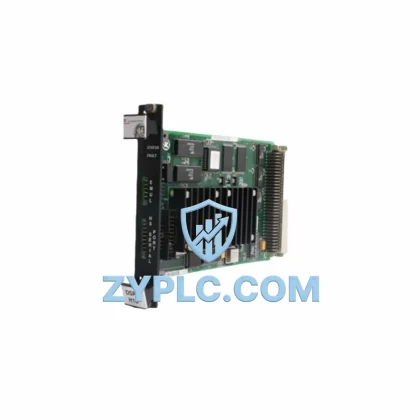
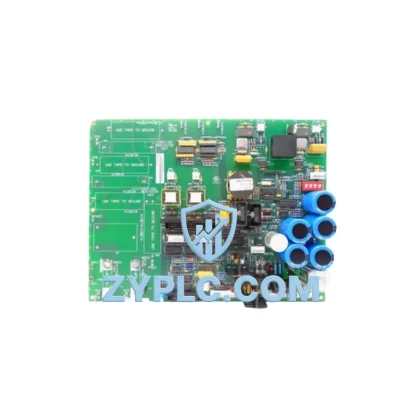
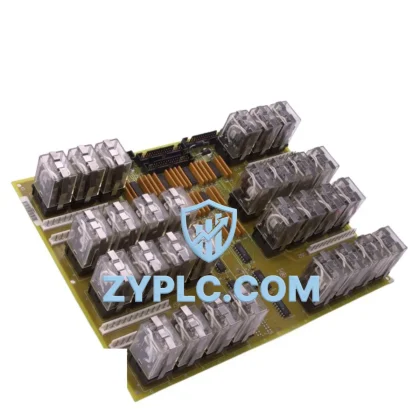
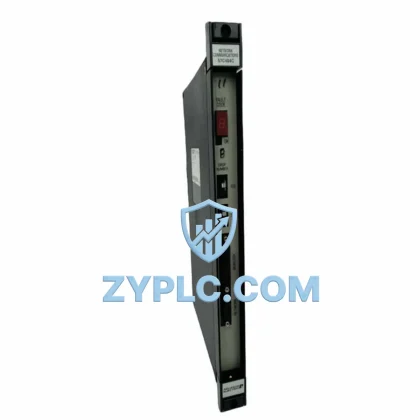
GE IS200TSVOH1BDC Terminal Board for Mark VI Automation
The GE IS200TSVOH1BDC is a high-performance terminal board module engineered for the GE Mark VI turbine control platform. Designed to serve as a critical interface layer between field instrumentation and the Mark VI controller core, this module plays a direct role in reducing signal processing overhead, minimizing wiring losses, and enabling tighter closed-loop control — all of which translate into measurable operational stability across gas turbine, steam turbine, and combined-cycle power generation applications.
In modern industrial maintenance planning, every millisecond of control latency and every watt of parasitic loss matters. The IS200TSVOH1BDC addresses both by providing a robust, low-impedance terminal interface that ensures clean signal transmission from thermocouples, RTDs, and discrete I/O devices directly into the Mark VI control logic. When field signals arrive with high fidelity and minimal noise, the control system can execute fuel-air ratio adjustments, load-following sequences, and protective shutdowns with greater precision — reducing fuel waste and preventing energy-intensive restart cycles.
Each unit supplied by ZYPLC undergoes full functional testing prior to shipment, covering channel continuity, isolation resistance, and signal integrity under simulated load conditions. This pre-shipment validation process ensures that the module performs to OEM specification from the moment it is installed, eliminating the energy and downtime costs associated with field commissioning failures.
Product Specification Table
| Parameter |
Specification / Value |
| Part Number |
IS200TSVOH1BDC |
| Platform |
GE Mark VI Turbine Control System |
| Module Type |
Terminal Board (Signal Interface) |
| Operating Voltage |
24 VDC (nominal, Mark VI backplane) |
| Signal Channels |
Multi-channel thermocouple / RTD / discrete I/O |
| Operating Temperature |
0°C to +60°C (industrial rated) |
| Compatible Systems |
GE Mark VI, Mark VIe turbine control platforms |
| Application Environment |
Gas turbine, steam turbine, combined-cycle power plants |
| Maintenance Value |
Reduces signal noise → tighter fuel control → lower specific fuel consumption |
| Condition |
Tested, fully functional, OEM-equivalent performance |
| Warranty |
12-Month Warranty (ZYPLC) |
| Origin |
USA |
| Availability |
In Stock — Ready to Ship |
System Compatibility and Application
The IS200TSVOH1BDC does not operate in isolation — its maintenance planning value is realized through its integration within a broader GE Mark VI control architecture. At the controller level, the IS200HMPAH1A HMI processor board aggregates real-time data from terminal boards like the IS200TSVOH1BDC and presents operators with actionable efficiency metrics. Alongside it, the IS200DSPXH1DBB digital signal processor board executes the high-speed control algorithms that translate clean terminal board inputs into precise actuator commands.
On the I/O side, the IS200BIOTH1A I/O terminal board handles discrete and analog field signals in parallel with the TSVOH1BDC, ensuring that the Mark VI controller receives a complete picture of plant operating conditions without signal gaps or latency spikes. The IS200TRLYH1BCC relay output terminal board then executes protective and sequencing actions based on that data, enabling the system to respond to efficiency deviations — such as compressor surge or turbine over-temperature — before they escalate into energy-wasting trips.
For power quality and condition monitoring at the plant level, the Mark VI architecture integrates with GE EnerVista software and compatible power monitoring modules, allowing plant engineers to correlate turbine heat rate data with terminal board signal quality trends. When the IS200TSVOH1BDC is functioning correctly, thermocouple readings are stable and accurate, which means the fuel control valve — typically driven by a Mark VI servo output card such as the IS200VSVOH1B — receives clean setpoint commands and operates at its designed efficiency point.
Communication between the Mark VI controller and plant-level SCADA or DCS systems is handled through the IS200ECTBH1A Ethernet communication terminal board, which enables real-time energy data export to historian systems and maintenance planning platforms. This closed-loop data flow — from field sensor through terminal board, through controller, through communication interface, to maintenance planning software — is what transforms the IS200TSVOH1BDC from a passive wiring interface into an active participant in plant maintenance planning.
Additional system components that work in concert with the IS200TSVOH1BDC include the IS200PSCDH1A power supply conditioning board, which ensures stable backplane voltage and prevents power quality disturbances from corrupting terminal board signal readings, and the IS200TREGH1B voltage regulator board, which maintains consistent operating conditions across the Mark VI chassis under varying load conditions.
Maintenance and Replacement Notes
In a combined-cycle power plant operating two gas turbines and one steam turbine, the Mark VI control system may be managing hundreds of thermocouple and RTD inputs simultaneously. A degraded or failed terminal board in this environment does not simply cause a fault indication — it causes the control system to operate on incomplete or inaccurate temperature data, which forces conservative fuel scheduling, increases heat rate, and reduces net electrical output. Replacing a faulty terminal board with a tested IS200TSVOH1BDC unit restores full signal fidelity and allows the control system to return to its optimized operating point.
Planned maintenance windows are another area where the IS200TSVOH1BDC delivers energy value. Because ZYPLC maintains in-stock inventory of this module, plant maintenance teams can schedule terminal board replacements during planned outages rather than extending unplanned downtime waiting for parts. Every hour of unplanned turbine downtime in a mid-size power plant represents significant lost generation capacity and potential grid stability costs. Having a tested, warranted replacement unit available on short notice directly reduces this risk.
Predictive maintenance programs that monitor Mark VI diagnostic data can identify terminal board degradation — manifested as increasing signal noise, channel drift, or intermittent faults — before it causes a trip. When the IS200TSVOH1BDC is identified as a candidate for replacement during a predictive maintenance review, the ability to source a tested unit quickly means the replacement can be executed during the next scheduled maintenance window, avoiding the energy and cost penalties of an unplanned shutdown.
From a production line rhythm perspective, turbine availability directly determines plant capacity factor. A Mark VI system with fully functional terminal boards, including the IS200TSVOH1BDC, maintains the signal integrity needed for the control system to execute start-stop sequences, load ramp sequences, and fuel changeover sequences at their designed speed — keeping the turbine on its optimal operating curve and minimizing the energy cost of transient operation.
Product Sourcing FAQ
Q1: How does the IS200TSVOH1BDC contribute to energy efficiency in a Mark VI turbine control system?
The IS200TSVOH1BDC provides the clean, low-noise signal interface between field sensors and the Mark VI controller. Accurate temperature and I/O data enables the controller to execute tighter fuel control, reducing specific fuel consumption and improving turbine heat rate. Signal degradation at the terminal board level directly translates into less efficient combustion control.
Q2: Is the IS200TSVOH1BDC compatible with both Mark VI and Mark VIe platforms?
The IS200TSVOH1BDC is designed for the GE Mark VI turbine control platform. Compatibility with Mark VIe configurations should be verified against your specific system revision and I/O architecture. ZYPLC’s technical team can assist with compatibility verification prior to purchase.
Q3: What testing does ZYPLC perform before shipping the IS200TSVOH1BDC?
Each IS200TSVOH1BDC unit undergoes functional testing covering channel continuity, signal isolation, and operational verification under simulated Mark VI conditions. This ensures the module meets OEM performance specifications and will perform reliably from initial installation, reducing commissioning time and the risk of energy-wasting startup failures.
Q4: What warranty coverage is provided, and what does it include?
ZYPLC provides a 12-month warranty on the IS200TSVOH1BDC covering functional defects under normal operating conditions. If the module fails to perform to specification within the warranty period, ZYPLC will provide a replacement or repair. This warranty coverage reduces the total cost of ownership and supports plant maintenance budgeting for energy-critical control system components.
© 2026 ZYPLC. All rights reserved.
Original Source: https://zyplc.com
Contact: +86 19859288691 | plc.sales@zyplc.com