GE IS200WEORG1A System-Ready Relay Output for Mark VI Control Architecture
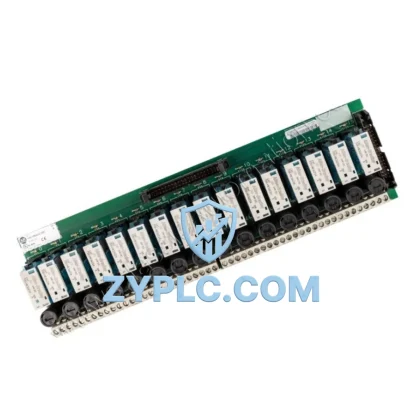
The GE IS200WEORG1A is a weld output relay board engineered specifically for deployment within GE’s Mark VI turbine control platform — one of the most widely adopted distributed control architectures in power generation, oil & gas, and heavy industrial environments. Rather than functioning as a standalone component, the IS200WEORG1A is designed to operate as an integral node within a layered automation system, where signal integrity, relay switching reliability, and seamless board-level integration directly influence the performance of the entire control loop.
In a complete Mark VI control architecture, the IS200WEORG1A occupies the output execution layer, receiving discrete commands from the controller core and translating them into relay-switched signals that drive field actuators, solenoid valves, motor starters, and protective trip circuits. Its role is not isolated — it works in close coordination with upstream I/O processors, communication backplanes, and power distribution modules to ensure that every output command is executed with the precision and speed that turbine and generator control demands.
Architecture Specification Table
| Attribute |
Specification |
| System Role |
Weld Output Relay Board — Discrete Output Execution Layer |
| Compatible Platform |
GE Mark VI Turbine Control System |
| Part Number |
IS200WEORG1A |
| Output Type |
Relay Contact Output (Weld Output Configuration) |
| Mounting |
Mark VI VME-style backplane rack installation |
| Communication Interface |
Backplane I/O bus — integrated with Mark VI I/O network |
| Operating Temperature |
0°C to 60°C (standard industrial enclosure) |
| Power Supply Compatibility |
Mark VI distributed DC power rail (typically 28 VDC) |
| Electrical Isolation |
Relay contact isolation per output channel |
| Redundancy Support |
Compatible with TMR (Triple Modular Redundancy) architecture |
| Warranty |
12-Month Warranty — Fully tested prior to shipment |
| Contextual Integration |
Contextual Integration ready — drop-in replacement for Mark VI systems |
Coordinated Control System Design
The IS200WEORG1A does not operate in isolation. Its value is realized only when it is correctly positioned within the broader Mark VI system architecture. In a typical turbine control cabinet, the IS200WEORG1A is installed alongside the IS200VCRCH1B VME communication and control board, which manages the high-speed I/O bus that carries output commands from the controller to the relay board. The IS200BICLH1A provides the backplane interconnect layer, ensuring that signal routing between boards remains stable under continuous industrial duty cycles.
On the power distribution side, the IS200EPCTG1A power conditioning module supplies the regulated DC rail that the IS200WEORG1A depends on for consistent relay coil energization. Any instability in this power layer will directly affect relay switching repeatability — making the selection of a compatible, tested power module as critical as the relay board itself. For systems requiring redundant power paths, the IS200EPCTG1B variant supports dual-feed configurations that eliminate single points of failure in the power supply chain.
At the controller level, the IS200UCVEH2A unit controller board issues the discrete output commands that the IS200WEORG1A executes. In TMR (Triple Modular Redundancy) configurations, three independent controller boards vote on each output state before the relay board acts — a design that is essential in applications where a spurious trip or missed output command could result in turbine damage or process shutdown. The IS200WEORG1A’s relay contact architecture is fully compatible with this voting logic, making it a preferred choice for safety-critical output circuits.
For I/O expansion in larger control cabinets, the IS200IOCIH1A I/O controller interface board extends the addressable I/O space, allowing additional relay output boards to be added to the same rack without reconfiguring the controller software. This modularity is a defining characteristic of the Mark VI platform and is one of the reasons it remains in active service across thousands of turbine installations worldwide. Communication between the IS200WEORG1A and remote HMI stations is managed through the IS200STCIH1A serial communication interface, which bridges the backplane I/O bus to the plant-level SCADA or DCS network.
In applications where the relay outputs drive motor control centers or high-current switching circuits, the IS200WEORG1A is typically paired with external IS200TSVOH1A terminal boards that provide the field wiring interface, surge suppression, and cable management required for reliable long-term operation. This combination — relay board plus terminal board — forms the standard output circuit assembly used in GE-designed turbine control panels across the power generation industry.
Application in Layered Automation Systems
The IS200WEORG1A finds its most demanding applications in power generation facilities, where gas turbines, steam turbines, and combined-cycle units require output relay boards that can sustain millions of switching cycles without contact degradation. In these environments, the relay board is responsible for executing trip commands, valve open/close signals, and auxiliary equipment start/stop sequences — all of which must be executed within the response time windows defined by the turbine OEM’s control philosophy.
In oil and gas processing plants, the IS200WEORG1A is deployed in compressor control systems and wellhead automation panels where the Mark VI platform provides the backbone for safety instrumented functions. The relay output board’s isolated contact design ensures that field-side faults — such as short circuits in solenoid valve coils — do not propagate back into the controller backplane, protecting the integrity of the entire control system.
In petrochemical and refinery applications, the board supports process control loops where discrete outputs must be coordinated with analog control signals from separate I/O modules. The IS200WEORG1A’s position in the output layer means that it must be synchronized with the scan cycle of the Mark VI controller — a requirement that is met through the backplane communication architecture that GE designed into the Mark VI platform from its inception.
For mining and metals processing operations, where control systems are exposed to high levels of electrical noise from variable frequency drives, arc furnaces, and large motor loads, the IS200WEORG1A’s relay contact isolation provides a critical barrier between the control system and the high-energy field circuits. This makes it a preferred output technology in environments where solid-state output modules would be susceptible to noise-induced false triggering.
In water and wastewater treatment facilities operating Mark VI-based control systems, the IS200WEORG1A manages pump start/stop sequences, valve actuation, and alarm output circuits. Its long service life and availability as a tested replacement module make it an important component in the spare parts inventory of any facility that depends on the Mark VI platform for continuous process control.
Architecture Engineering FAQ
Q1: Is the IS200WEORG1A compatible with both simplex and TMR Mark VI configurations?
Yes. The IS200WEORG1A is designed to operate in simplex, dual, and TMR Mark VI architectures. In TMR systems, the board receives voted output commands from the triple-redundant controller assembly, and its relay contacts are wired in the configuration specified by the system’s safety and control philosophy. No hardware modification is required when moving the board between simplex and redundant system configurations — the backplane interface handles the architectural differences transparently.
Q2: What is the recommended procedure for replacing an IS200WEORG1A in a live Mark VI system?
Replacement should follow GE’s standard hot-swap procedure for Mark VI I/O boards where the system architecture supports it. In simplex configurations, the affected output circuits should be placed in a safe state before board removal. In TMR configurations, the redundant channels maintain output integrity during the replacement window. All replacement boards supplied by ZYPLC are tested to OEM specifications and include a 12-Month Warranty, ensuring that the replacement unit meets the same performance standards as the original factory-installed board.
Q3: How does the IS200WEORG1A support long-term maintenance and inventory planning for Mark VI systems?
The IS200WEORG1A is a mature, well-documented component within the Mark VI ecosystem, and its standardized form factor means that a single spare board can serve as a replacement across multiple relay output positions in the same rack. ZYPLC maintains stock of tested IS200WEORG1A boards to support both planned maintenance outages and emergency replacement requirements. Each board is covered by a 12-Month Warranty and is shipped with full test documentation, allowing maintenance engineers to verify board performance against system specifications before installation. For facilities managing large Mark VI fleets, ZYPLC can provide consignment stock arrangements to minimize lead times for critical spare parts.
© 2026 ZYPLC. All rights reserved.
Original Source: https://zyplc.com
Contact: +86 19859288691 | plc.sales@zyplc.com