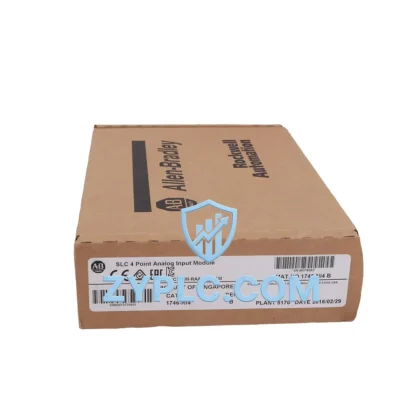
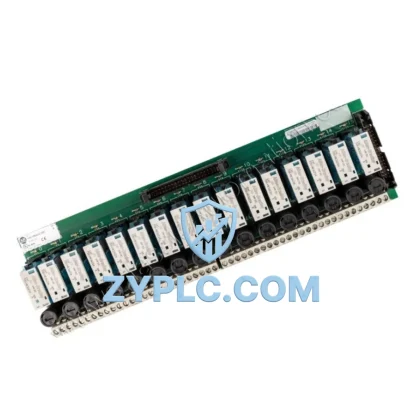
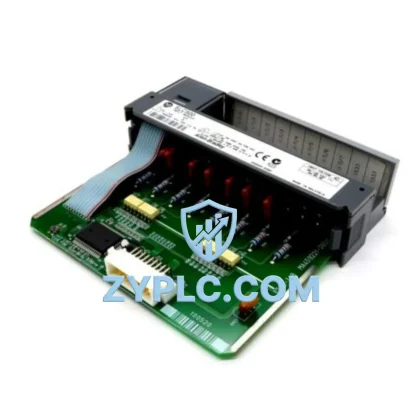
GE IS2020RKPSG2A System-Ready Relay Output for Mark VI Control Architecture
The GE IS2020RKPSG2A is a relay output module purpose-built for integration within the GE Mark VI turbine control system architecture. Rather than functioning as a standalone component, this module occupies a critical position within the output layer of a distributed control platform — bridging the logic decisions made at the CPU level with the physical actuation demands of field devices such as solenoid valves, motor starters, and protective relay circuits. Understanding its role requires examining the full control hierarchy in which it operates: from the controller core, through the I/O backplane, across the communication network, and down to the execution layer where process commands are physically realized.
In a complete Mark VI turbine control system, the IS2020RKPSG2A is typically installed on a VMIVME or VCMI-compatible I/O rack, interfacing directly with the IS200TBAIH1C terminal board or equivalent field termination assembly. The relay contacts on this module receive switching commands from the IS215UCVEH2A or IS215UCVEH2B controller card, which serves as the central processing unit managing turbine sequencing, protection logic, and speed control algorithms. The module’s relay outputs are hardwired to field devices through marshalling panels, ensuring that discrete output signals are galvanically isolated from the control electronics — a fundamental requirement in high-voltage turbine environments.
System architects integrating the IS2020RKPSG2A must account for its position within the broader I/O layer. The Mark VI platform supports both simplex and TMR (Triple Modular Redundant) configurations. In TMR architectures, three independent IS2020RKPSG2A modules may be deployed in a voted output arrangement alongside the IS200TRLYH1C relay output terminal board, ensuring that no single point of failure can interrupt a critical output command. This redundancy design is essential in power generation applications where unplanned shutdowns carry significant operational and financial consequences.
From a network and communication perspective, the IS2020RKPSG2A operates downstream of the IONet Ethernet communication layer that connects the Mark VI controller to its distributed I/O packs. The IS200IOCIH1A I/O controller interface card manages the real-time data exchange between the CPU and the I/O modules, ensuring that relay switching commands are executed within the deterministic scan cycle required for turbine protection functions. Engineers commissioning this module should verify IONet segment integrity and confirm that the I/O pack firmware version is compatible with the installed controller revision to avoid communication latency issues.
Power distribution within the Mark VI cabinet is managed by dedicated DC power supply modules such as the IS200EPCTG1A power converter card, which conditions incoming AC supply into the regulated 28 VDC logic power required by the relay output modules. Proper power sequencing and redundant power feed design are prerequisites for reliable relay operation, particularly in applications where the IS2020RKPSG2A is used to control emergency shutdown (ESD) circuits or fuel valve actuators. The module’s coil drive circuitry is designed to operate within the voltage and current envelope provided by the Mark VI power architecture, and any deviation from specified supply parameters can result in relay chatter or failure to energize.
At the human-machine interface layer, operators interact with the relay output status through the GE Toolbox software environment or via SCADA systems connected through the IS200ENETG1A Ethernet gateway module. Real-time relay state feedback is displayed on operator workstations, allowing maintenance personnel to verify output status without physical inspection of the cabinet. This visibility is particularly valuable during commissioning and fault-finding, where confirming relay energization state against the control logic output is a standard diagnostic step.
Long-term maintenance planning for the IS2020RKPSG2A should include periodic contact resistance measurement, coil insulation testing, and verification of relay pick-up and drop-out timing against the original factory specification. Because relay contacts are subject to mechanical wear over extended operational cycles, maintaining a qualified spare inventory is a best practice in critical infrastructure applications. All IS2020RKPSG2A units supplied by ZYPLC are covered by a 12-Month Warranty and have undergone functional verification testing prior to dispatch, ensuring that replacement modules can be installed with confidence and minimal commissioning time.
Architecture Specification Table
| Parameter |
Specification |
| Part Number |
IS2020RKPSG2A |
| Manufacturer |
General Electric (GE) |
| Product Series |
Mark VI Turbine Control System |
| Module Function |
Relay Output Module |
| System Role |
Discrete Output Layer — Field Device Switching |
| Output Type |
Dry Contact Relay (Form A / Form C) |
| Logic Supply Voltage |
28 VDC (Mark VI Standard) |
| Contact Rating |
Up to 2A @ 30 VDC / 0.5A @ 125 VAC (typical) |
| Communication Interface |
IONet (Ethernet-based deterministic I/O bus) |
| Redundancy Support |
TMR (Triple Modular Redundant) compatible |
| Mounting |
Mark VI I/O Rack / VMIVME Backplane |
| Operating Temperature |
0°C to 60°C |
| Isolation |
Galvanic isolation between relay contacts and logic |
| Contextual Integration |
Full Contextual Integration with Mark VI I/O architecture |
| Warranty |
12-Month Warranty (ZYPLC) |
| Condition |
New / Refurbished — Functionally Tested |
| Origin |
United States |
Coordinated Control System Design
The IS2020RKPSG2A achieves its full operational value only when considered as part of a coordinated Mark VI system assembly. A typical turbine control cabinet integrating this module will include the IS215UCVEH2A controller card as the primary CPU, supported by the IS200IOCIH1A I/O controller interface for managing I/O pack communication. The relay output module connects to field devices through the IS200TRLYH1C relay output terminal board, which provides the physical screw-terminal interface for field wiring. Power is supplied and conditioned by the IS200EPCTG1A power converter card, ensuring stable 28 VDC logic supply across all I/O modules in the rack.
For applications requiring analog feedback alongside discrete relay outputs, the IS2020RKPSG2A is commonly deployed in the same I/O rack as the IS200AIAAH1A analog input module, which handles 4–20 mA process signals from field transmitters. Communication between the I/O rack and the plant DCS or SCADA system is facilitated by the IS200ENETG1A Ethernet gateway, enabling Modbus TCP or OPC-DA data exchange. In redundant architectures, the IS200TBAIH1C terminal board provides the marshalling interface that allows three independent relay output modules to drive a single voted output circuit, maintaining system availability even during individual module maintenance or replacement.
Application in Layered Automation Systems
The IS2020RKPSG2A finds application across a broad range of industrial sectors where the GE Mark VI platform is deployed as the primary turbine or process control system. In power generation facilities — including gas turbine, steam turbine, and combined-cycle plants — this module controls fuel valve solenoids, lube oil pump starters, and generator breaker trip circuits, all of which require the galvanic isolation and contact reliability that relay output technology provides.
In oil and gas processing and petrochemical plants, the IS2020RKPSG2A is used within compressor control systems and emergency shutdown (ESD) panels, where SIL-rated discrete output performance is a regulatory requirement. The module’s compatibility with TMR voting architectures makes it suitable for safety-instrumented system (SIS) applications where IEC 61511 compliance is mandated.
In water treatment and pumping stations, the module controls motor starter contactors and valve actuators within Mark VI-based SCADA-integrated control systems. Its deterministic IONet communication ensures that pump sequencing commands are executed within the required response time, even in multi-drop I/O configurations spanning large physical installations. For mining and metallurgical applications, the IS2020RKPSG2A supports conveyor interlock circuits, crusher protection relays, and ventilation fan control — environments where robust relay contact ratings and resistance to electrical noise are essential for reliable long-term operation.
Architecture Engineering FAQ
Q1: Is the IS2020RKPSG2A compatible with both simplex and TMR Mark VI configurations?
Yes. The IS2020RKPSG2A is designed to operate in both simplex and Triple Modular Redundant (TMR) Mark VI architectures. In TMR configurations, three modules are installed in parallel and their outputs are voted by the IS200TRLYH1C terminal board, ensuring that a single module failure does not interrupt the output command. System integrators should confirm the specific I/O pack revision and terminal board variant required for their cabinet configuration before ordering.
Q2: What commissioning steps are required when replacing an IS2020RKPSG2A in a live Mark VI system?
Replacement of the IS2020RKPSG2A in an operational system should follow the GE Mark VI maintenance procedure, which typically includes: placing the affected I/O pack in bypass mode via the Toolbox software, physically replacing the module, verifying relay contact continuity with a multimeter, restoring the I/O pack to active mode, and confirming relay state feedback in the operator display. All ZYPLC-supplied modules are pre-tested and include a 12-Month Warranty, reducing the risk of commissioning failures due to latent module defects.
Q3: How does ZYPLC’s 12-Month Warranty apply to the IS2020RKPSG2A, and what does Contextual Integration mean for this module?
ZYPLC’s 12-Month Warranty covers functional defects identified during normal operation within the specified Mark VI system environment. If a module fails to perform its relay switching function within the warranty period under normal operating conditions, ZYPLC will provide a replacement unit. Contextual Integration refers to ZYPLC’s commitment to supplying modules that have been verified for compatibility within the specific system architecture context — including I/O rack type, terminal board variant, and controller firmware revision — rather than as generic spare parts without application validation.
© 2026 ZYPLC. All rights reserved.
Original Source: https://zyplc.com
Contact: +86 19859288691 | plc.sales@zyplc.com