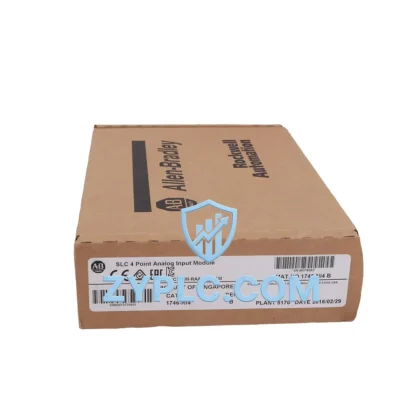
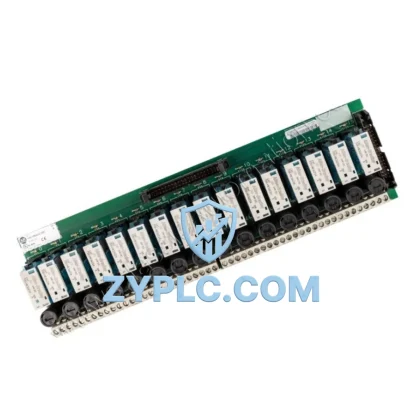
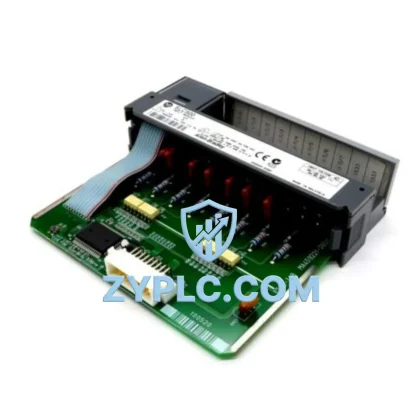
GE IS220PTURH1B System-Ready Thermocouple Input for Mark VI Architecture
The GE IS220PTURH1B is a high-precision thermocouple input module engineered for deployment within the GE Mark VI turbine control system — one of the most widely adopted distributed control platforms in power generation, oil & gas, and heavy industrial environments. Rather than functioning as a standalone measurement device, the IS220PTURH1B is designed as an integral node within a layered automation architecture, where signal accuracy, system synchronization, and long-term reliability are non-negotiable requirements. Understanding its role across the control layer, I/O layer, network layer, power layer, HMI layer, and actuator layer is essential for engineers responsible for turbine system commissioning, expansion, and lifecycle maintenance.
Within the Mark VI control hierarchy, the IS220PTURH1B occupies the I/O layer, collecting thermocouple signals from exhaust thermocouples, combustion zone sensors, and bearing temperature probes, then transmitting conditioned data upward to the controller core. This signal flow is foundational: the Mark VI controller — typically the IS215UCVEH2A or IS215UCVEH2B CPU module — relies on accurate, low-latency temperature data to execute fuel control algorithms, load management routines, and protective trip logic. Any degradation in thermocouple signal quality at the I/O layer propagates directly into control decisions at the processor layer, making the IS220PTURH1B a critical reliability point in the overall system architecture.
Architecture Specification Table
| Parameter |
Specification |
| Part Number |
IS220PTURH1B |
| Brand |
GE (General Electric) |
| Series |
Mark VI Turbine Control System |
| Module Type |
Thermocouple Input Module |
| System Role |
I/O Layer — Temperature Signal Acquisition |
| Input Channels |
Multi-channel thermocouple inputs (Type J, K, T, E, R, S, B) |
| Signal Conditioning |
Cold junction compensation, open-circuit detection |
| Communication Interface |
Mark VI backplane bus (IONet compatible) |
| Installation Environment |
DIN rail / Mark VI I/O rack, -20°C to +60°C operating range |
| Power Supply Compatibility |
Mark VI distributed I/O power rail (IS200EPSMG1A compatible) |
| Redundancy Support |
TMR (Triple Modular Redundancy) architecture compatible |
| Contextual Integration |
Full Contextual Integration with Mark VI controller and HMI layer |
| Warranty |
12-Month Warranty |
| Condition |
New / Refurbished — Tested and Verified |
| Origin |
USA |
Coordinated Control System Design
The IS220PTURH1B does not operate in isolation. Its value is realized through tight coordination with adjacent modules across every layer of the Mark VI control architecture. At the controller layer, the IS215UCVEH2A CPU module processes the thermocouple data streams delivered by the IS220PTURH1B, executing real-time turbine protection and load control algorithms. The CPU communicates with I/O modules via the Mark VI IONet backplane, where signal integrity and scan cycle consistency are maintained across all connected I/O nodes.
Power delivery to the IS220PTURH1B and its rack neighbors is managed by the IS200EPSMG1A power supply module, which provides regulated DC power across the I/O chassis. In TMR configurations, redundant power feeds ensure that no single power failure can interrupt thermocouple signal acquisition — a critical requirement in continuous-duty gas turbine applications. Alongside the IS220PTURH1B, the IS220PSVOH1B servo output module and IS220PTCCH1B contact input module share the same I/O rack, forming a cohesive signal acquisition and actuation layer that feeds the controller with a complete picture of turbine operating state.
At the network layer, the IS215ACLEH2A communication module bridges the Mark VI controller to plant-level Ethernet networks, enabling data exchange with SCADA systems, historian servers, and remote HMI stations. The thermocouple data collected by the IS220PTURH1B is thus available not only for local turbine protection but also for plant-wide performance monitoring and predictive maintenance analytics. The IS200VCRCH1BAA VME communication card further extends network connectivity in legacy Mark VI installations, ensuring backward compatibility across multi-generation turbine fleets.
At the human-machine interface layer, the GE Cimplicity HMI platform visualizes thermocouple readings in real time, presenting exhaust temperature spreads, combustion zone profiles, and bearing temperature trends to operators. The Contextual Integration capability of the IS220PTURH1B ensures that tag assignments, alarm thresholds, and engineering unit conversions are automatically recognized by the HMI configuration, reducing commissioning time and eliminating manual tag mapping errors. The IS200TREGH1B terminal board provides the physical wiring interface between field thermocouple cables and the IS220PTURH1B module, supporting organized, labeled termination that simplifies both initial installation and future maintenance access.
For redundancy-critical installations, the IS220PTURH1B integrates seamlessly into TMR voting architectures where three independent controller paths — each receiving thermocouple data from dedicated I/O modules — cross-validate temperature readings before executing any protective action. This architecture, supported by the IS215UCVEH2B TMR controller module, ensures that a single module failure does not result in a spurious trip or an undetected fault condition, maintaining both turbine availability and operational safety.
Application in Layered Automation Systems
The IS220PTURH1B finds its primary application in gas turbine power generation facilities, where exhaust temperature monitoring is central to combustion tuning, emissions compliance, and hot section life management. In combined-cycle power plants, the module supports continuous monitoring of exhaust gas temperature (EGT) spreads across all combustion cans, enabling operators to detect combustor degradation before it progresses to hardware damage. The 12-Month Warranty provided with each IS220PTURH1B unit ensures that plant operators can integrate replacement modules into their maintenance planning cycles with confidence.
In oil and gas compression stations, the IS220PTURH1B monitors bearing temperatures and process gas temperatures across compressor trains driven by gas turbine prime movers. The module’s compatibility with the Mark VI TMR architecture is particularly valued in these applications, where unplanned shutdowns carry significant production and safety consequences. Contextual Integration with the plant DCS allows thermocouple data to flow seamlessly into process historians and advanced process control (APC) systems without requiring custom engineering at the integration boundary.
Petrochemical and refinery applications leverage the IS220PTURH1B in fired heater control systems and rotating equipment protection panels, where thermocouple inputs from multiple measurement points must be consolidated into a single control platform. The module’s multi-channel architecture and open-circuit detection capability reduce the risk of undetected sensor failures that could compromise process safety. In water treatment and municipal utility applications, the IS220PTURH1B supports temperature monitoring in pump motor protection and HVAC control systems integrated within Mark VI-based facility automation platforms.
Mining and metallurgical processing facilities deploy the IS220PTURH1B in kiln temperature control systems, smelter process monitoring, and conveyor drive thermal protection applications. The module’s wide operating temperature range and robust signal conditioning make it suitable for the electrically noisy environments typical of heavy industrial processing. Packaging and food processing lines that incorporate GE Mark VI-based motion and process control platforms also benefit from the IS220PTURH1B’s precise thermocouple measurement capability for oven temperature control, sterilization process monitoring, and heat-seal quality assurance.
Architecture Engineering FAQ
Q1: Is the IS220PTURH1B compatible with both simplex and TMR Mark VI configurations?
Yes. The IS220PTURH1B is designed to operate in simplex, dual, and TMR Mark VI architectures. In TMR configurations, three IS220PTURH1B modules are installed in parallel I/O racks, each connected to a dedicated controller path. The TMR voting logic in the IS215UCVEH2A or IS215UCVEH2B CPU module cross-validates readings from all three modules, ensuring that a single module failure does not affect turbine control or trigger a spurious trip. The 12-Month Warranty applies equally across all configuration types.
Q2: What terminal board is required for field wiring, and how does Contextual Integration simplify commissioning?
The IS220PTURH1B is typically paired with the IS200TREGH1B terminal board, which provides labeled screw-terminal connections for field thermocouple cables. Contextual Integration automatically maps thermocouple channel assignments, engineering unit configurations, and alarm parameters from the Mark VI toolbox configuration to the module hardware, eliminating the need for manual tag mapping during commissioning. This significantly reduces loop check time and minimizes the risk of wiring errors during initial installation or module replacement.
Q3: What does the 12-Month Warranty cover, and how should the IS220PTURH1B be managed for long-term maintenance?
The 12-Month Warranty covers manufacturing defects, functional failures under normal operating conditions, and verified performance against GE Mark VI system specifications. For long-term maintenance, it is recommended to maintain at least one spare IS220PTURH1B module per turbine unit in critical applications, as lead times for OEM procurement can extend to several months. Modules should be stored in anti-static packaging within a temperature-controlled environment. Periodic functional testing using the Mark VI diagnostic toolbox is recommended to verify channel accuracy and cold junction compensation performance before installation into a live system.
© 2026 ZYPLC. All rights reserved.
Original Source: https://zyplc.com
Contact: +86 19859288691 | plc.sales@zyplc.com