GE IS420UCSCS2: Industrial Data Link for Mark VI Smart Factory Connectivity
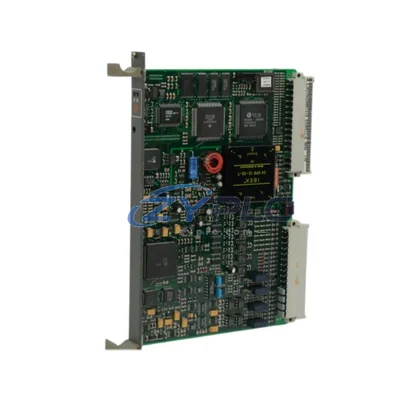
The GE IS420UCSCS2 is a high-performance industrial network interface module engineered for the GE Mark VI turbine control platform. Designed to serve as the critical communication backbone between field-level devices and upper-level supervisory systems, the IS420UCSCS2 enables seamless, real-time data exchange across complex industrial automation architectures. Whether deployed in power generation, oil & gas, or heavy process industries, this module delivers the protocol flexibility, network stability, and diagnostic transparency that modern smart factories demand.
In today’s industrial environments, the ability to bridge legacy field devices with contemporary SCADA and DCS platforms is no longer optional — it is a fundamental requirement for operational efficiency. The IS420UCSCS2 addresses this need directly, acting as a gateway node that connects turbine control signals, sensor feedback loops, and actuator command paths into a unified, monitored data stream accessible from the control room and beyond.
Compatibility & Integration Notes
| Parameter |
Specification |
| Compatible Platform |
GE Mark VI Turbine Control System |
| Communication Protocols |
Modbus RTU, Modbus TCP/IP, PROFIBUS DP, Ethernet/IP, DNP3 |
| Interface Types |
RS-232, RS-485, RJ-45 Ethernet, Fiber Optic (optional) |
| Data Transmission Rate |
Up to 100 Mbps (Ethernet); 12 Mbps (PROFIBUS DP) |
| Network Compatibility |
Industrial Ethernet, PROFIBUS, Serial Bus, TCP/IP LAN |
| System Applications |
SCADA, DCS, HMI, Remote I/O, Edge Gateway Integration |
| Operating Temperature |
0°C to +60°C (Industrial Grade) |
| Power Supply |
24 VDC (Mark VI Backplane Powered) |
| Mounting |
Mark VI VME Rack / Backplane Slot |
| Warranty |
Warranty and support terms confirmed before quote — Tested Before Shipment |
Connected Automation Data Flow
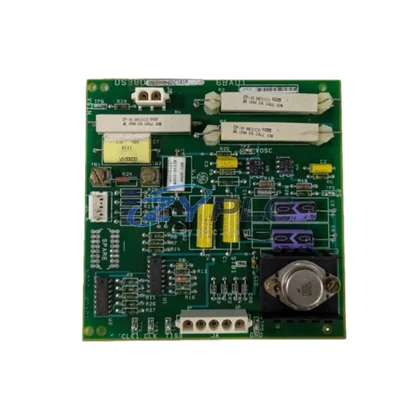
The IS420UCSCS2 sits at the intersection of field instrumentation and enterprise-level data systems, orchestrating a continuous, low-latency data pipeline that spans every layer of the automation hierarchy. At the field level, temperature transmitters, pressure sensors, and vibration probes feed raw analog and digital signals into the Mark VI I/O modules — such as the IS420YDOAS1A analog output module and the IS420YAICS1B analog input card — where they are conditioned and digitized before being passed to the IS420UCSCS2 for protocol encapsulation and network forwarding.
Within the Mark VI controller rack, the IS420UCSCS2 works in close coordination with the IS420UCSCH2 communication handler and the IS215UCVEH2A VME controller board, ensuring that turbine speed, exhaust temperature, fuel flow, and load data are continuously synchronized across redundant control paths. This redundancy is critical in gas turbine and steam turbine applications where a single point of communication failure can trigger costly unplanned shutdowns.
Moving up the network stack, the IS420UCSCS2 interfaces directly with plant-level SCADA servers via Modbus TCP/IP or DNP3, enabling operators to monitor real-time turbine parameters from GE’s ToolboxST engineering workstation or third-party HMI platforms such as Wonderware InTouch and Ignition SCADA. Alarm thresholds, trip setpoints, and performance KPIs are transmitted with millisecond-level latency, ensuring that control room operators receive actionable data without delay.
For remote I/O expansion, the IS420UCSCS2 supports integration with distributed I/O nodes connected via PROFIBUS DP, allowing field junction boxes and marshalling cabinets to be located hundreds of meters from the main control panel without signal degradation. This architecture is particularly valuable in large turbine halls and offshore platforms where cable routing is constrained. The module also supports integration with GE EX2100e excitation controllers and GE Speedtronic series protection relays, creating a unified communication fabric across the entire turbine train.
At the edge computing layer, the IS420UCSCS2 can feed structured data packets to industrial edge gateways — such as the Moxa MGate MB3480 or equivalent Ethernet-to-serial converters — enabling local data buffering, pre-processing, and forwarding to cloud-based asset performance management (APM) platforms. This edge-to-cloud pathway supports predictive maintenance algorithms that analyze vibration trends, bearing temperatures, and lube oil pressure to forecast component wear before failure occurs.
Variable frequency drives (VFDs) controlling auxiliary systems — cooling fans, lube oil pumps, and fuel gas compressors — are also integrated into the data flow via the IS420UCSCS2’s serial communication ports. Drive status, fault codes, output frequency, and motor current are polled at configurable intervals and forwarded to the SCADA historian, providing a complete operational picture of the turbine auxiliary train alongside the primary control data.
Solving Data Isolation in Industrial Sites
One of the most persistent challenges in industrial automation is the coexistence of multiple communication protocols across different generations of equipment. A typical power plant may operate GE Mark VI turbine controllers alongside legacy Modbus RTU field devices, PROFIBUS-connected instrumentation, and modern Ethernet/IP-based safety systems — each speaking a different protocol dialect with no native interoperability. The IS420UCSCS2 resolves this fragmentation by acting as a multi-protocol gateway, translating between serial, fieldbus, and Ethernet-based communication standards within a single, rack-mounted module.
Data silos — isolated pockets of operational data trapped within individual subsystems — are a direct consequence of protocol incompatibility. When turbine control data cannot flow freely to the SCADA historian, maintenance teams lose visibility into long-term performance trends, and process engineers are forced to rely on manual data collection methods that are both time-consuming and error-prone. The IS420UCSCS2 eliminates these silos by establishing a continuous, bidirectional data bridge between the Mark VI controller and the plant information network, ensuring that every measured parameter is available for real-time monitoring, historical trending, and advanced analytics.
Remote diagnostics capability is another key value delivered by the IS420UCSCS2. Through its Ethernet interface, maintenance engineers can access the Mark VI controller’s diagnostic registers remotely, reviewing fault logs, communication error counters, and module health status without requiring physical access to the control panel. This remote visibility dramatically reduces mean time to repair (MTTR) in geographically distributed installations such as pipeline compressor stations, wind farm substations, and remote power generation sites.
Production line transparency — the ability to see exactly what is happening at every point in the process in real time — is a foundational requirement of Industry 4.0 and smart factory initiatives. The IS420UCSCS2 contributes directly to this transparency by ensuring that turbine operational data is continuously available to MES (Manufacturing Execution System) and ERP platforms, enabling production managers to correlate energy consumption, output capacity, and equipment health in a single integrated dashboard. System scalability is preserved through the module’s support for network segmentation and VLAN configuration, allowing new devices and subsystems to be added to the communication network without disrupting existing data flows.
Industrial Connectivity FAQ
Q1: What communication protocols does the GE IS420UCSCS2 support, and is it compatible with third-party SCADA systems?
The IS420UCSCS2 supports Modbus RTU, Modbus TCP/IP, PROFIBUS DP, Ethernet/IP, and DNP3 protocols, making it compatible with a wide range of third-party SCADA platforms including Wonderware, Ignition, and OSIsoft PI. Protocol configuration is managed through GE’s ToolboxST software, allowing engineers to define communication parameters, polling rates, and data mapping without custom programming.
Q2: How does the IS420UCSCS2 ensure network stability in high-noise industrial environments?
The module is designed to operate in electrically noisy industrial environments, incorporating EMI shielding, optical isolation on serial interfaces, and watchdog timer functions that automatically restart communication processes in the event of a network fault. Redundant communication paths can be configured to ensure continuous data availability even if a primary network link fails.
Q3: Can the IS420UCSCS2 be integrated into an existing Mark VI system without replacing other modules?
Yes. The IS420UCSCS2 is designed for hot-swap installation within the Mark VI VME rack, allowing it to be added to an existing system without powering down the controller. Configuration changes are applied through ToolboxST and take effect without interrupting the turbine control loop, minimizing maintenance windows and production downtime.
Q4: What quality assurance and warranty coverage is provided with the IS420UCSCS2?
Every IS420UCSCS2 unit supplied by ZYPLC undergoes a comprehensive pre-shipment functional test that verifies communication port integrity, protocol handshaking, and backplane interface performance. A warranty and support terms confirmed before quote is provided from the date of shipment, covering manufacturing defects and communication failures under normal operating conditions. Expedited replacement support is available for critical applications requiring minimal downtime.