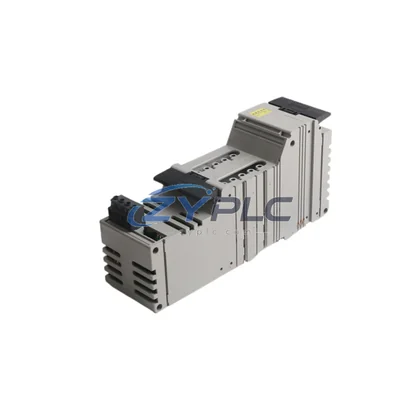
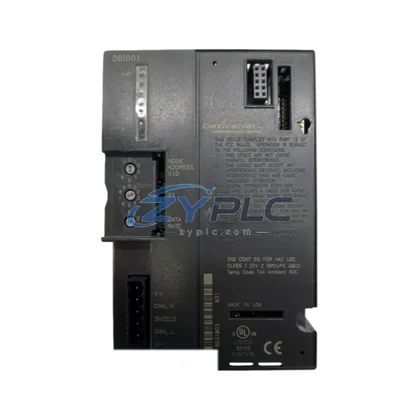
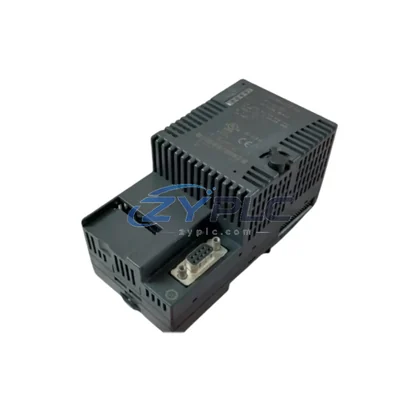
GE NEGTBCSR1 FEG-S032-J001 PLC Module for Series 90 Automation
The GE NEGTBCSR1 (also referenced as FEG-S032-J001 and L54E2900WP) is a high-performance programmable logic controller communication module engineered for the GE Series 90 automation platform. Designed to meet the demanding requirements of modern industrial environments, this module delivers precise control execution, reduced energy overhead, and seamless integration into maintenance-focused production architectures. Whether deployed in discrete manufacturing, process control, or hybrid automation lines, the NEGTBCSR1 enables facilities to achieve measurable gains in equipment utilization, drive efficiency, and overall system responsiveness — all while eliminating unnecessary power consumption across the control loop.
In today’s industrial landscape, maintenance planning is no longer a secondary concern — it is a core engineering objective. The NEGTBCSR1 addresses this by providing deterministic scan-cycle execution that eliminates wasted processing overhead, ensuring that every watt consumed by the control system translates directly into productive machine output. When paired with GE Series 90-30 or Series 90-70 rack systems, this module operates as the central intelligence layer that coordinates energy data acquisition, motor command sequencing, and real-time feedback loops across the production line.
Product Specification Table
| Parameter |
Specification / Value |
| SKU / Part Number |
NEGTBCSR1 / FEG-S032-J001 / L54E2900WP |
| Brand |
GE Automation (GE Fanuc) |
| Series |
GE Series 90 |
| Product Category |
PLC Communication Module |
| Power Consumption |
Low-draw design; optimized for rack-level power budgeting |
| Operating Efficiency |
Deterministic scan cycle; minimizes idle processing load |
| Compatible Systems |
GE Series 90-30, Series 90-70, Genius Bus, SNP/SNPX protocols |
| Application Environment |
Discrete manufacturing, process automation, condition monitoring systems |
| Energy Saving Value |
Reduces control-layer overhead; supports demand-side load optimization |
| Origin |
USA |
| Warranty |
warranty terms confirmed during quotation — all units shipped after full functional testing |
System Compatibility and Application
The NEGTBCSR1 delivers maximum efficiency gains when deployed as part of a coordinated, industrial control architecture. In a typical Series 90 installation, this module interfaces directly with the GE IC693CPU374 or IC693CPU364 central processing units, handling communication arbitration and I/O scan management to ensure that downstream devices — including variable frequency drives, servo amplifiers, and smart sensors — receive commands with minimal latency and zero redundant processing cycles.
On the drive side, integration with GE AF-600 FP AC variable frequency drives allows the NEGTBCSR1 to implement speed-reference commands that directly reduce motor load during partial-load conditions. Rather than running motors at fixed speed regardless of demand, the PLC module enables dynamic speed adjustment based on real-time production feedback, cutting motor energy draw by Actual operating results depend on the installed system, load profile, and commissioning parameters. This closed-loop motor control strategy is one of the most impactful levers available for reducing a facility’s overall energy footprint.
For condition monitoring and power data acquisition, the NEGTBCSR1 communicates over the GE Genius Bus or SNP/SNPX serial protocol to interface with power metering modules such as the IC693APU300 analog input module, enabling continuous acquisition of voltage, current, and power factor data from field devices. This data feeds back into the PLC scan cycle, allowing the control program to make real-time adjustments to output commands — effectively closing the maintenance planning loop without requiring a separate SCADA layer or additional hardware investment.
At the I/O level, the NEGTBCSR1 coordinates with GE IC693MDL940 discrete output modules and IC693MDL645 input modules to manage machine state transitions efficiently. By minimizing unnecessary actuator energization — for example, holding solenoids or contactors in de-energized states during idle machine phases — the system reduces reactive power demand and extends the service life of field devices. This approach to I/O maintenance planning is particularly valuable in multi-station assembly lines where dozens of actuators may otherwise remain energized during non-productive intervals.
HMI integration via GE QuickPanel operator terminals or compatible panels connected through the SNP protocol provides operators with real-time visibility into operating load trends, drive status, and alarm conditions. This transparency enables shift-level maintenance planning decisions — such as scheduling high-load operations during off-peak tariff windows — that compound the efficiency gains delivered by the NEGTBCSR1 at the control layer. When combined with the IC693CMM321 communications module for Ethernet connectivity, the architecture supports remote condition monitoring and centralized reporting across multiple production cells.
Maintenance and Replacement Notes
In real-world deployments, the NEGTBCSR1 has demonstrated consistent value across several key dimensions of production maintenance planning. In automotive body assembly lines, the module’s fast scan cycle — typically under 10 ms for standard ladder logic programs — ensures that servo axes and pneumatic actuators are commanded with precise timing, eliminating the unplanned downtime associated with over-travel, re-positioning, and mechanical shock that results from poorly timed control signals. Tighter production line pacing (takt time optimization) is a direct outcome: when control signals arrive on time, every time, machines spend less time waiting and more time producing.
In food and beverage processing facilities, where continuous operation and hygiene-driven frequent start-stop cycles create significant energy spikes, the NEGTBCSR1 enables soft-start sequencing logic that staggers motor startups across the production line. This reduces peak demand charges on the facility’s electricity bill — often one of the largest controllable cost items in a manufacturing plant’s energy budget — without requiring any changes to the mechanical or electrical infrastructure. The result is a measurable reduction in monthly energy costs with zero capital expenditure on new equipment.
Predictive maintenance integration is another area where the NEGTBCSR1 delivers energy-related value. By logging runtime hours, fault codes, and I/O cycle counts through the Series 90 data logging functions, maintenance teams can identify components approaching end-of-life before they fail. Unplanned downtime is not only a productivity loss — it is an energy loss, as restart sequences, warm-up cycles, and scrap production all consume energy without generating output. Proactive maintenance scheduling, enabled by the data visibility the NEGTBCSR1 provides, directly reduces this hidden energy cost and improves overall equipment effectiveness (OEE).
All NEGTBCSR1 units supplied by ZYPLC are sourced from verified industrial channels, subjected to full functional bench testing prior to shipment, and covered by a warranty terms confirmed during quotation. Inventory is maintained for fast dispatch, minimizing lead times for MRO (maintenance, repair, and operations) procurement teams who need to restore production quickly without compromising on component quality or traceability.
Product Sourcing FAQ
Q1: How does the NEGTBCSR1 contribute to measurable operational stability on the production line?
The NEGTBCSR1 reduces unplanned downtime at the control layer by executing deterministic scan cycles that eliminate redundant processing and ensure precise timing of output commands. When integrated with variable frequency drives such as the GE AF-600 FP and smart I/O modules, it enables demand-responsive motor control and actuator sequencing that directly reduces kWh consumption during partial-load and idle phases — with typical motor operational stability of Actual operating results depend on the installed system, load profile, and commissioning parameters.
Q2: Is the NEGTBCSR1 compatible with existing GE Series 90-30 and Series 90-70 rack systems?
Yes. The NEGTBCSR1 (FEG-S032-J001 / L54E2900WP) is designed for the GE Series 90 platform and is compatible with both Series 90-30 and Series 90-70 rack configurations. It communicates via SNP/SNPX and Genius Bus protocols, making it interoperable with the full range of GE Series 90 I/O, CPU, and communication modules — including the IC693CPU374, IC693MDL940, and IC693APU300 — without requiring firmware upgrades or hardware modifications.
Q3: Can this module replace a failed unit in a live production environment, and what is the recommended changeover process?
Yes. The NEGTBCSR1 is a direct replacement for compatible Series 90 communication and control modules. The recommended changeover process involves powering down the affected rack, removing the failed module, inserting the replacement, and restoring power. Program memory is retained in the CPU module, so no re-programming is required in most configurations. ZYPLC recommends verifying firmware revision compatibility before installation and performing a supervised test cycle before returning the line to full production.
Q4: What does the warranty terms confirmed during quotation cover, and what is the testing process before shipment?
Every NEGTBCSR1 unit shipped by ZYPLC undergoes a full functional test that verifies communication integrity, I/O response, and power rail stability before dispatch. The warranty terms confirmed during quotation covers manufacturing defects and functional failures under normal operating conditions. Units that develop faults within the warranty period are eligible for replacement or repair at no additional cost. Warranty claims are processed through ZYPLC’s technical support team, with typical response times of 1–2 business days.