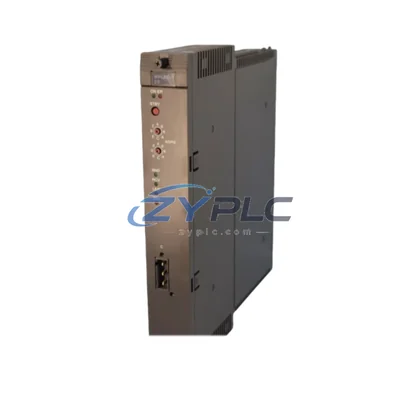
GE VME7671-42000A Processor for VME Bus: Compatibility and Replacement Notes
In modern industrial automation, the processor module is not merely a standalone computing unit — it is the architectural backbone that determines how every layer of a control system communicates, responds, and scales. The GE VME7671-42000A, manufactured under the GE Fanuc / Emerson automation platform, is a VME Bus-based processor module engineered to serve as the central intelligence node within multi-tier control architectures. Whether deployed in power generation, petrochemical processing, water treatment, or advanced manufacturing environments, this module delivers the processing consistency, bus integrity, and system integration capability that modern system engineers demand.
Understanding the VME7671-42000A requires viewing it not in isolation, but as a coordinating element within a layered automation hierarchy — one that bridges the control layer, I/O layer, network layer, power layer, HMI layer, and execution layer into a coherent, maintainable system.
Product Specification Table
| Parameter |
Specification |
| System Role |
VME Bus Central Processor Module — Control Layer |
| SKU / Part Number |
VME7671-42000A |
| Brand / Manufacturer |
GE Fanuc / Emerson Automation |
| Series |
VME Bus Processor Series |
| Product Type |
VME Processor Module |
| Bus Architecture |
VMEbus (Versa Module Europa) — IEEE 1014 Standard |
| Processor Function |
Central control execution, I/O scan coordination, ladder logic / function block processing |
| Communication Capability |
VME backplane bus; compatible with Ethernet, serial, and fieldbus gateway modules within the same rack |
| Installation Environment |
Industrial control cabinet; DIN rail or rack-mount chassis; operating temperature 0–60°C |
| Power Requirements |
Supplied via VME backplane power bus; compatible with standard VME power supply modules |
| system integration |
Supports system integration with upstream SCADA, DCS, and HMI platforms |
| Origin |
United States |
| Warranty |
warranty terms confirmed during quotation — Covered by ZYPLC quality assurance program |
System Compatibility Notes
The VME7671-42000A is designed to operate as the central processor within a VMEbus chassis, coordinating signal flow across all connected modules. In a typical system deployment, this processor module works in concert with a range of complementary components to form a complete, redundant, and scalable control architecture.
At the power layer, a dedicated VME power supply module — such as the GE Fanuc VME-series PSU — provides regulated DC power across the backplane, ensuring that the VME7671-42000A and all co-resident I/O modules receive stable, noise-filtered voltage. Power redundancy can be achieved by installing dual power supply modules within the same chassis, a configuration commonly specified in critical infrastructure applications.
At the I/O layer, the processor module interfaces directly with analog input modules (e.g., GE Fanuc VME analog I/O cards), digital input/output modules, and thermocouple or RTD input modules mounted in adjacent VME slots. The VME7671-42000A manages the I/O scan cycle, ensuring deterministic data acquisition from field instruments and timely command dispatch to actuators and drives.
At the network and communication layer, the system architecture typically incorporates a VME-compatible Ethernet communication module or a fieldbus gateway — supporting protocols such as Modbus TCP, PROFIBUS DP, or DeviceNet — enabling the VME7671-42000A to exchange real-time data with upstream SCADA servers, distributed control systems (DCS), and plant-level MES platforms. This system integration capability ensures that the processor does not operate as an isolated island but as a fully networked node within the enterprise automation hierarchy.
At the HMI layer, operator interface terminals — including GE Fanuc QuickPanel or third-party HMI panels — connect to the control network to provide real-time visualization of process variables managed by the VME7671-42000A. Alarm management, trend logging, and recipe control are all coordinated through the processor’s data table, making HMI responsiveness directly dependent on the processor’s scan rate and communication throughput.
At the execution layer, variable frequency drives (VFDs), servo controllers, pneumatic valve positioners, and motor control centers receive command signals originating from the VME7671-42000A’s output modules. The processor’s ability to execute PID control loops, motion sequencing, and interlock logic in real time ensures that the execution layer responds with the precision required in high-speed manufacturing or process-critical environments.
For redundancy architectures, the VME7671-42000A can be paired with a redundant processor module in a hot-standby configuration, supported by a VME redundancy synchronization module. This design eliminates single points of failure at the control layer, a requirement commonly mandated in power plant distributed control systems, oil and gas pipeline SCADA systems, and water treatment facility automation networks.
Industrial Application Notes
Manufacturing and Discrete Production Lines: In automotive assembly, electronics manufacturing, and packaging lines, the VME7671-42000A serves as the central controller managing conveyor sequencing, robotic cell coordination, and quality inspection interlocks. Its deterministic scan cycle ensures that production throughput targets are met without sacrificing safety interlock integrity.
Power Generation and Utilities: In thermal power plants, hydroelectric stations, and substation automation systems, the VME7671-42000A provides the processing backbone for turbine control, generator excitation management, and protection relay coordination. Its VMEbus architecture supports the high-speed data exchange required between protection systems and SCADA platforms.
Petrochemical and Refinery Process Control: In continuous process environments — including crude distillation units, reactor control systems, and compressor management — the VME7671-42000A manages complex PID control strategies, cascade loops, and feedforward compensation algorithms. Its compatibility with fieldbus communication modules enables seamless integration with HART-enabled field instruments and smart valve positioners.
Water and Wastewater Treatment: Municipal water treatment facilities rely on the VME7671-42000A for pump station automation, chemical dosing control, and effluent quality monitoring. The processor’s ability to manage multiple analog and digital I/O channels simultaneously makes it well-suited for the distributed, geographically dispersed nature of water infrastructure control systems.
Mining and Metallurgy: In ore processing plants, smelting operations, and conveyor belt management systems, the VME7671-42000A provides robust control in environments characterized by electrical noise, vibration, and wide temperature variation. Its industrial-grade VMEbus architecture ensures reliable operation under these demanding conditions.
Product Compatibility FAQ
Q1: Is the VME7671-42000A compatible with existing GE Fanuc VME chassis and backplane configurations?
Yes. The VME7671-42000A is designed to comply with the VMEbus IEEE 1014 standard and is compatible with standard GE Fanuc VME chassis configurations. It can be installed in any VME slot that supports the processor module form factor, and it interfaces with co-resident I/O, communication, and power supply modules via the standard VME backplane bus. For specific chassis compatibility — including slot addressing and power budget verification — we recommend consulting the GE Fanuc VME system configuration guide or contacting ZYPLC’s technical support team prior to installation.
Q2: Can the VME7671-42000A be integrated into a redundant control architecture, and what additional modules are required?
Yes. The VME7671-42000A supports hot-standby redundancy configurations when paired with a compatible VME redundancy synchronization module and a secondary processor module of the same type. In a redundant architecture, both processors share a synchronized data table, and the standby unit assumes control within milliseconds of a primary processor fault. This configuration is strongly recommended for applications in power generation, oil and gas, and critical infrastructure where unplanned downtime carries significant operational or safety consequences. ZYPLC can assist with redundancy architecture planning and component sourcing.
Q3: What warranty terms are confirmed during quotation, and how does ZYPLC support long-term maintenance and spare parts availability?
All VME7671-42000A units supplied by ZYPLC are covered by a warranty terms confirmed during quotation against manufacturing defects and functional failures under normal operating conditions. In the event of a warranty claim, ZYPLC provides replacement or repair services with priority handling to minimize system downtime. Beyond the warranty period, ZYPLC maintains an inventory of GE Fanuc VME-series modules to support long-term spare parts requirements — a critical consideration for facilities operating legacy VMEbus control systems where OEM supply chains may be limited. For maintenance planning, lifecycle management, and bulk procurement inquiries, contact ZYPLC directly.