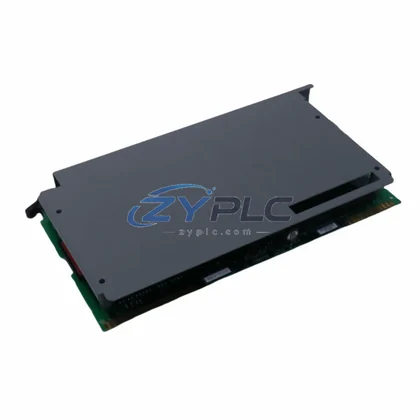
GE VMIVME-4140-000000 Analog Output for VMEbus: Control System and Upstream–Downstream Coordination
The GE VMIVME-4140-000000 is a high-precision analog output module engineered for deployment within VMEbus-based distributed control architectures. Manufactured by GE Intelligent Platforms, this module occupies a critical position in the signal output layer of industrial automation systems, converting digitally processed control commands into precise analog voltage or current signals that drive field-level actuators, positioners, and variable-speed drives. Its design philosophy centers on system consistency, long-term reliability, and seamless integration across multi-vendor control environments — making it an essential component for engineers building or maintaining layered automation platforms in demanding industrial sectors.
In a complete VMEbus control architecture, the VMIVME-4140-000000 does not operate in isolation. It functions as part of a coordinated signal chain that begins at the CPU or controller level, passes through I/O processing layers, and terminates at field devices. The module is designed to interface directly with VMEbus backplane systems, receiving digital output commands from the host processor and translating them into stable, low-noise analog signals. This tight integration with the VMEbus backplane ensures deterministic signal timing and eliminates the latency issues that can arise in loosely coupled I/O architectures. Engineers deploying this module benefit from reduced wiring complexity, improved signal integrity, and a standardized form factor that simplifies cabinet layout and future expansion.
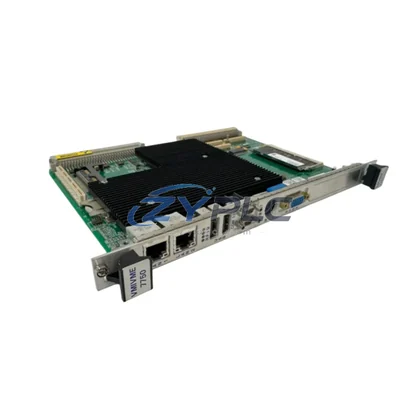
From a system architecture perspective, the VMIVME-4140-000000 is most effective when paired with complementary modules within the same VMEbus chassis. A typical deployment might include a GE VMIVME-7750 or VMIVME-7807 single-board computer serving as the system controller, coordinating all I/O operations across the backplane. Analog input data from field sensors is collected via modules such as the VMIVME-3113A or VMIVME-3122, processed by the CPU, and then output through the VMIVME-4140-000000 to close the control loop. Digital I/O operations are handled by companion modules like the VMIVME-2510 or VMIVME-2536, while communication with supervisory systems or remote SCADA platforms is managed through dedicated VMEbus communication cards supporting protocols such as Ethernet, PROFIBUS, or serial interfaces. Power distribution within the chassis is provided by a VMEbus-compatible power supply module, ensuring stable voltage rails across all installed cards and protecting sensitive analog circuitry from power-line disturbances.
The module’s analog output channels deliver precise, repeatable signals that are essential for closed-loop process control. In applications where valve positioning, flow regulation, or pressure control is required, the VMIVME-4140-000000 provides the resolution and stability needed to maintain tight process tolerances. Its compatibility with standard 4–20 mA and 0–10 V signal ranges ensures interoperability with a wide range of field instruments and actuators from multiple manufacturers, reducing integration risk and simplifying commissioning. For systems requiring redundancy, the module can be deployed in dual-redundant configurations where a standby output module mirrors the active channel, enabling bumpless transfer in the event of a primary module failure — a critical capability in continuous process industries where unplanned shutdowns carry significant operational and safety consequences.
Long-term maintainability is a core design consideration for the VMIVME-4140-000000. Its modular VMEbus form factor allows technicians to replace or upgrade individual cards without disturbing adjacent modules or requiring system-wide reconfiguration. Diagnostic capabilities built into the module support in-service testing and fault isolation, reducing mean time to repair and minimizing the impact of maintenance activities on production continuity. For facilities managing large installed bases of GE Intelligent Platforms equipment, maintaining a stock of VMIVME-4140-000000 modules as critical spares is a standard practice that supports both planned maintenance cycles and emergency replacement scenarios. ZYPLC maintains inventory of this module and provides a warranty terms confirmed during quotation on all supplied units, supporting procurement teams with reliable lead times and documented quality assurance.
Product Specification Table
| Parameter |
Specification |
| System Role |
Analog Output Module — VMEbus Signal Output Layer |
| Brand / Manufacturer |
GE Intelligent Platforms (General Electric) |
| Part Number / SKU |
VMIVME-4140-000000 |
| Series |
VMIVME Series — VMEbus Industrial I/O |
| Module Type |
Analog Output (DAC) |
| Output Signal Range |
0–10 V / 4–20 mA (industry standard) |
| Bus Interface |
VMEbus (IEEE 1014) Backplane |
| Communication Capability |
VMEbus backplane data transfer; compatible with supervisory Ethernet/serial gateways |
| Installation Environment |
Industrial control cabinet; DIN-rail or rack-mount VMEbus chassis |
| Operating Temperature |
0°C to +70°C (standard industrial range) |
| Power Supply |
VMEbus chassis power rail (±5 V / ±12 V) |
| Form Factor |
VMEbus single-width module (6U) |
| Country of Origin |
United States |
| Warranty |
warranty terms confirmed during quotation — supplied by ZYPLC |
System Compatibility Notes
The VMIVME-4140-000000 achieves its full potential when integrated into a coordinated VMEbus control system. In a typical architecture, the system controller — such as a GE VMIVME-7750 single-board computer or a VMIVME-7807 PowerPC-based CPU module — manages all backplane communications and executes the control algorithms that determine output setpoints. Analog process variables are acquired by input modules such as the VMIVME-3113A 16-channel analog input module or the VMIVME-3122 high-resolution ADC module, providing the feedback signals that the CPU uses to calculate corrective output commands.
These commands are then transmitted across the VMEbus backplane to the VMIVME-4140-000000, which converts them into precise analog output signals for field devices. Simultaneously, digital status signals and discrete control outputs are managed by modules such as the VMIVME-2510 digital I/O module or the VMIVME-2536 optically isolated digital output module, ensuring that the analog output layer operates in coordination with the broader discrete control logic. For systems requiring communication with plant-level SCADA or DCS platforms, a VMEbus Ethernet communication module or a dedicated PROFIBUS gateway card provides the network interface, enabling the VMIVME-4140-000000’s output status to be monitored and adjusted from supervisory workstations. Power integrity across the entire chassis is maintained by a VMEbus-compatible redundant power supply, protecting all installed modules — including the analog output card — from voltage transients and supply interruptions that could compromise output accuracy or cause spurious actuator movements.
Industrial Application Notes
The VMIVME-4140-000000 is deployed across a broad range of industrial sectors where precise analog output control is essential to process integrity and operational safety.
In power generation and electrical utilities, the module is used to control excitation systems, turbine governor actuators, and transformer tap changers, where output signal stability directly affects grid frequency regulation and voltage control. In petrochemical and refinery applications, it drives control valves, flow control loops, and pressure regulation systems in continuous process trains, where tight output tolerances are required to maintain product quality and prevent overpressure events. Water and wastewater treatment facilities rely on the module to control dosing pumps, aeration blowers, and sluice gate actuators, integrating with SCADA systems to enable remote supervisory control across geographically distributed treatment plants.
In mining and metallurgical operations, the VMIVME-4140-000000 is used in conveyor speed control, crusher feed rate regulation, and flotation cell level control, where robust analog output performance under harsh environmental conditions — including vibration, dust, and wide temperature swings — is a fundamental requirement. Packaging and discrete manufacturing lines use the module to control servo amplifiers, variable-frequency drives, and pneumatic positioning systems, enabling precise motion profiles and repeatable cycle times. In process control systems across the chemical and pharmaceutical industries, the module supports multi-loop PID control architectures where each output channel must maintain calibration accuracy over extended operating periods between scheduled maintenance intervals.
Product Compatibility FAQ
Q1: Is the VMIVME-4140-000000 compatible with third-party VMEbus chassis and backplanes from manufacturers other than GE Intelligent Platforms?
A: Yes. The VMIVME-4140-000000 conforms to the IEEE 1014 VMEbus standard, which defines the electrical and mechanical interface for all compliant VMEbus modules and chassis. This means the module can be installed in VMEbus chassis from other manufacturers — including Elma, Schroff, and Pixus Technologies — provided the chassis supplies the correct power rails and the backplane supports the VMEbus data transfer protocol. However, GE Intelligent Platforms recommends verifying slot compatibility and power budget calculations before deploying the module in a non-GE chassis, particularly in systems where multiple high-current I/O modules share the same backplane.
Q2: How should the VMIVME-4140-000000 be configured during system commissioning, and what tools are required for initial calibration?
A: During commissioning, the module is configured through the VMEbus host CPU using the GE Intelligent Platforms board support package (BSP) or compatible VMEbus driver software. Output channel parameters — including signal range selection (voltage or current), output scaling, and fault-state behavior — are set via software registers accessed over the VMEbus backplane. Physical calibration of output accuracy is performed using a calibrated reference meter connected to each output channel, with trimming adjustments made through the software interface. No hardware jumper changes are required for standard range configurations. ZYPLC recommends performing a full channel verification test after installation and before system handover to confirm that all output channels meet the specified accuracy tolerances.
Q3: What does the warranty terms confirmed during quotation cover, and what is the process for warranty claims on the VMIVME-4140-000000?
A: The warranty terms confirmed during quotation provided by ZYPLC covers manufacturing defects, component failures, and functional non-conformance identified under normal operating conditions within twelve months of the shipment date. It does not cover damage resulting from incorrect installation, overvoltage events, physical impact, or operation outside the module’s specified environmental limits. To initiate a warranty claim, customers should contact ZYPLC directly at plc.sales@zyplc.com or +86 19859288691, providing the order reference number, a description of the observed fault, and any available diagnostic data. ZYPLC will assess the claim and arrange for module replacement or repair, with the objective of minimizing system downtime for the customer.