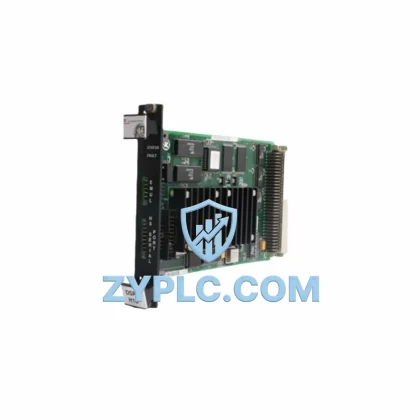
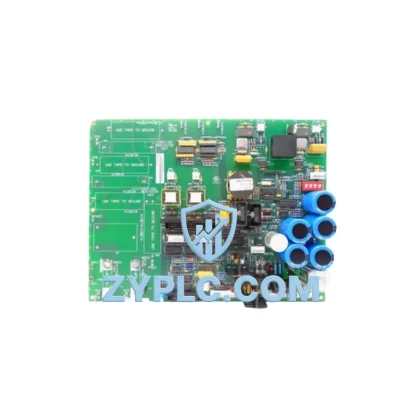
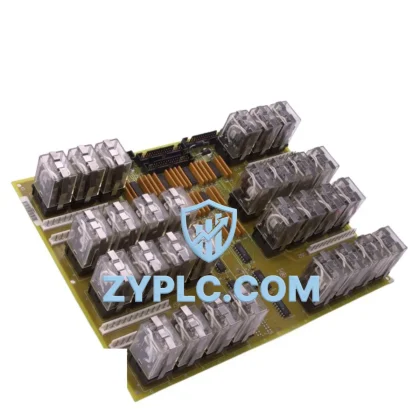
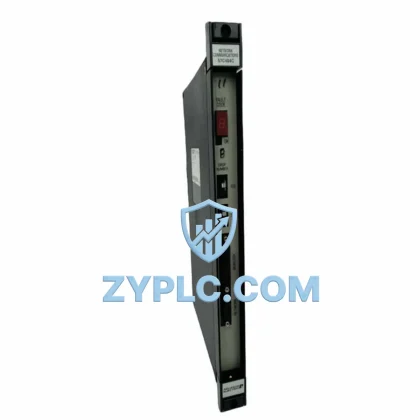
In modern power generation and heavy industrial environments, the ability to accurately measure, monitor, and act on temperature data is not just a technical requirement — it is a direct driver of energy efficiency, equipment longevity, and operational cost reduction. The GE VMIVME-7614-132 RTD Input Card, designed for the Speedtronic Mark VI turbine control platform, sits at the heart of this data chain. By delivering high-resolution resistance temperature detector (RTD) signal acquisition directly into the Mark VI control architecture, this module enables turbine operators and plant engineers to make real-time decisions that reduce unnecessary energy consumption, prevent thermal overload, and optimize the combustion and cooling cycles that define turbine efficiency.
The VMIVME-7614-132 is a VMEbus-compatible analog input card engineered to accept multiple RTD channels simultaneously. Its role begins at the sensor level, where PT100 or PT1000 RTD probes installed on turbine bearings, exhaust stacks, inlet air ducts, and generator windings continuously feed resistance values into the card. These values are converted to precise temperature readings and transmitted through the VMEbus backplane to the Mark VI controller — typically a GE IS215 or IS200 series processor module — where they are processed against pre-configured alarm thresholds and control logic. This tight integration between the VMIVME-7614-132 and the Mark VI I/O network ensures that temperature anomalies are detected within milliseconds, allowing the control system to adjust fuel flow, cooling fan speed, or load shedding before thermal stress can cause damage or force an unplanned shutdown.
Product Specification Table
| Parameter |
Specification / Value |
| Module Type |
RTD Analog Input Card |
| Compatible Platform |
GE Speedtronic Mark VI Turbine Control System |
| Bus Interface |
VMEbus (VME 6U form factor) |
| Input Signal Type |
RTD (PT100 / PT1000, 2-wire / 3-wire / 4-wire) |
| Measurement Accuracy |
High-resolution analog conversion, ±0.1°C typical |
| Operating Environment |
Industrial control cabinet, power plant, turbine enclosure |
| Energy Efficiency Value |
Enables real-time thermal optimization, reduces over-cooling and over-heating losses |
| Compatible Systems |
GE Mark VI, Mark VIe, IS215 / IS200 series I/O modules |
| Network / Protocol |
VMEbus backplane; integrates with PROFINET / Modbus via Mark VI gateway |
| Warranty |
12-Month Warranty — tested before shipment, full functional verification |
System Compatibility and Application
The VMIVME-7614-132 does not operate in isolation. Its value is realized through its position within a broader, interconnected automation architecture that spans from field sensors to enterprise-level maintenance planning systems. At the field level, RTD sensors mounted on critical turbine components — including compressor inlet temperature probes, turbine exhaust thermocouples, and lube oil temperature sensors — feed analog signals into the VMIVME-7614-132. These signals are conditioned and digitized before being passed to the GE IS215VCMIH2C communication interface module, which manages data exchange across the Mark VI I/O network.
From the Mark VI controller, temperature data flows upstream to the plant’s HMI workstation — commonly a GE iFIX or Cimplicity SCADA station — where operators monitor real-time thermal profiles across all turbine sections. When the VMIVME-7614-132 detects a bearing temperature trending toward its alarm limit, the Mark VI controller can automatically reduce load on the GE LCI (Load Commutated Inverter) drive system, preventing thermal runaway without requiring manual intervention. This closed-loop response between the RTD input card, the controller, and the drive system is a direct mechanism for operational stability: rather than running cooling systems at maximum capacity continuously, the plant runs them only as hard as the thermal data demands.
In combined-cycle plants, the VMIVME-7614-132 also interfaces with the GE IS200TREGH1B excitation control module and the IS215UCVEH2A unit controller, enabling coordinated thermal management across the gas turbine, heat recovery steam generator (HRSG), and steam turbine sections. Temperature data from the RTD input card informs steam temperature control logic, optimizing the heat transfer efficiency of the HRSG and reducing fuel consumption per megawatt-hour generated. Additionally, the Mark VI system’s integration with the plant’s PI historian or OSIsoft data infrastructure allows long-term trending of RTD data, supporting predictive maintenance strategies that identify bearing wear or insulation degradation before they escalate into costly failures.
For remote monitoring applications, the Mark VI gateway module — such as the GE IS215GFOIH1B fiber optic interface — transmits RTD data over the plant’s industrial Ethernet network to remote SCADA servers, enabling off-site engineers to monitor turbine thermal health in real time. This capability is particularly valuable for peaker plants and distributed generation assets where on-site staffing is limited. The VMIVME-7614-132 thus becomes a critical node in the plant’s digital infrastructure, connecting physical temperature measurements to the data systems that drive operational efficiency decisions.
Maintenance and Replacement Notes
The practical operational stability delivered by the GE VMIVME-7614-132 RTD Input Card are best understood through the specific control actions it enables. In a gas turbine operating at partial load, the difference between running cooling air fans at 80% versus 100% capacity can represent a meaningful reduction in auxiliary power consumption — but only if the control system has accurate, real-time temperature data to justify the reduction. The VMIVME-7614-132 provides exactly this data, allowing the Mark VI controller to implement variable cooling strategies that track actual thermal conditions rather than worst-case assumptions.
Similarly, in turbine startup sequences, accurate RTD data from the VMIVME-7614-132 allows the Mark VI to optimize the rate of temperature rise across turbine components, reducing thermal stress and extending the service life of hot-section parts. Faster, more controlled startups mean the turbine reaches its rated operating efficiency sooner, reducing the duration of the fuel-intensive startup phase. Over hundreds of start-stop cycles per year, this optimization translates into measurable fuel savings and reduced emissions.
From a maintenance cost perspective, the VMIVME-7614-132 supports condition-based maintenance strategies by providing the continuous temperature data needed to detect early signs of bearing degradation, cooling system fouling, or insulation breakdown. Rather than scheduling maintenance on fixed intervals — which often results in either premature replacement of healthy components or delayed replacement of failing ones — plant engineers can use RTD trend data to schedule maintenance precisely when it is needed. This approach reduces both maintenance labor costs and the risk of unplanned outages, which are among the most expensive events in power plant operations.
Every VMIVME-7614-132 unit supplied by ZYPLC undergoes full functional testing prior to shipment, including RTD channel verification, backplane communication checks, and thermal cycling validation. Units are held in climate-controlled inventory and shipped with complete documentation. A 12-month warranty covers all supplied modules, providing plant operators with confidence in the reliability of their spare parts inventory.
Industrial Connectivity FAQ
Q1: How does the VMIVME-7614-132 contribute to energy efficiency in turbine operations?
The VMIVME-7614-132 provides high-accuracy RTD temperature data to the Mark VI controller in real time, enabling dynamic adjustment of cooling systems, fuel flow, and load management based on actual thermal conditions rather than fixed setpoints. This reduces unnecessary energy consumption in auxiliary systems and optimizes the turbine’s thermal efficiency across varying load conditions.
Q2: Is the VMIVME-7614-132 compatible with both Mark VI and Mark VIe control systems?
The VMIVME-7614-132 is designed for the VMEbus-based Mark VI platform. Compatibility with Mark VIe — which uses a different I/O architecture — should be verified against the specific system configuration. ZYPLC’s technical team can assist with compatibility assessment and can source alternative GE I/O modules for Mark VIe applications if required.
Q3: What testing is performed on VMIVME-7614-132 units before shipment?
Each unit undergoes a comprehensive pre-shipment test protocol that includes RTD channel input verification across the full measurement range, VMEbus backplane communication testing, power supply integrity checks, and visual inspection for component condition. Test results are documented and available upon request. All units are covered by a 12-month warranty from the date of shipment.
Q4: Can the VMIVME-7614-132 be used as a direct replacement for a failed unit without reconfiguration?
In most Mark VI installations, the VMIVME-7614-132 can be installed as a direct replacement with configuration parameters loaded from the existing Mark VI toolbox software. However, it is recommended to verify the module’s firmware revision and hardware configuration against the plant’s existing spare parts specification before installation. ZYPLC can provide technical documentation and support to facilitate a smooth replacement process.
© 2026 ZYPLC. All rights reserved.
Original Source: https://zyplc.com
Contact: +86 19859288691 | plc.sales@zyplc.com