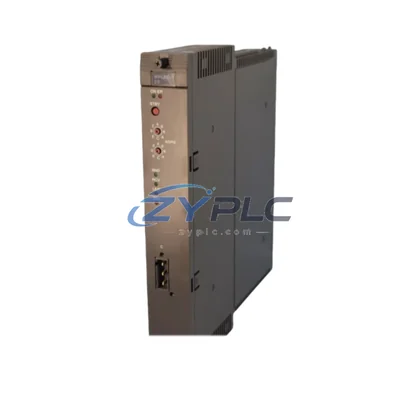
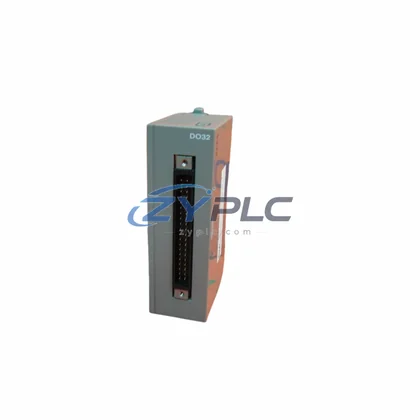
Hitachi LPD200A Output Module for LPD Series
The Hitachi LPD200A is a discrete output module purpose-built for deployment within the Hitachi LPD Series programmable logic controller platform. Rather than functioning as a standalone component, the LPD200A is designed to operate as an integral node within a layered industrial control architecture — coordinating signal flow between the CPU layer, the I/O expansion layer, the field device layer, and the supervisory network layer. Its role in the system is to translate logical control commands from the central processing unit into reliable switching actions at the field level, ensuring that actuators, contactors, solenoid valves, and motor starters receive precisely timed output signals consistent with the control program’s intent.
In modern industrial automation environments, output module selection is not merely a matter of channel count or voltage rating. It is a system-level decision that affects rack compatibility, backplane communication integrity, power budget allocation, and long-term maintainability. The LPD200A addresses all of these considerations by conforming to the mechanical and electrical standards of the Hitachi LPD Series rack system, allowing it to be installed alongside the LPD-CPU central processing unit, the LPD-PS power supply module, and LPD-series input modules without requiring additional interface hardware or signal conditioning.
Product Specification Table
| Parameter |
Specification |
| System Role |
Discrete Output Module — LPD Series Control Architecture |
| Compatible Platform |
Hitachi LPD Series PLC Rack System |
| Output Type |
Transistor / Relay (model-dependent) |
| Output Channels |
16 / 32 points (configuration-dependent) |
| Rated Output Voltage |
24V DC / 100–240V AC (load-side) |
| Max Load Current |
0.5A per point (transistor); 2A per point (relay) |
| Backplane Interface |
LPD Series parallel backplane bus |
| Communication Capability |
Backplane-integrated; compatible with LPD network gateway modules |
| Installation Environment |
Panel-mount, DIN rail rack; IP20 enclosure rating |
| Operating Temperature |
0°C to 55°C |
| Isolation |
Optical isolation between logic and field circuits |
| Warranty |
— covers manufacturing defects and functional failure |
| Origin |
Japan |
System Compatibility Notes
The LPD200A achieves its full performance potential when integrated within a complete Hitachi LPD Series control cabinet. A typical system architecture begins with the LPD-CPU central processing unit, which executes the ladder logic or function block program and manages all I/O data exchange across the backplane. The LPD-PS power supply module provides regulated 5V DC backplane power and 24V DC field power, ensuring that the LPD200A output circuits maintain stable switching characteristics even under variable load conditions.
On the input side, the LPD-X16D digital input module collects field signals from limit switches, proximity sensors, and pushbutton stations, feeding real-time process status back to the CPU. The LPD200A output module then acts on the CPU’s processed decisions, driving field devices through its optically isolated output channels. For applications requiring analog control — such as variable-speed drives or proportional valves — the LPD-AD analog output module operates in parallel within the same rack, sharing the backplane bus without interference.
Network connectivity is provided by the LPD-NET communication gateway module, which bridges the LPD backplane to upper-level SCADA systems or DCS networks via Modbus RTU, Modbus TCP, or proprietary Hitachi H-Link protocols. This system integration capability allows the LPD200A’s output status to be monitored and overridden from the supervisory layer, supporting remote diagnostics and centralized alarm management. For human-machine interface requirements, the system pairs naturally with Hitachi HMI panels from the DCP or OPH series, which display real-time output channel status and allow operators to perform manual output forcing during commissioning or maintenance.
In redundant architecture designs, the LPD200A can be deployed in dual-rack configurations alongside a redundant CPU module and LPD redundancy link module, ensuring that a single module failure does not interrupt production. Terminal block assemblies and LPD-series wiring base units simplify field wiring by providing pre-wired connector interfaces that reduce installation time and eliminate point-to-point wiring errors. Relay output variants of the LPD200A are commonly paired with interposing relay modules or solid-state relay banks when driving high-inrush loads such as motor contactors or heating elements.
Industrial Application Notes
The LPD200A is deployed across a broad range of industrial sectors where reliable discrete output control is essential to process integrity. In manufacturing and assembly lines, the module controls conveyor drive contactors, pneumatic cylinder solenoids, and part-presence indicator lamps, coordinating with upstream vision systems and downstream robotic cells through the LPD CPU’s high-speed I/O processing. In power generation and electrical substation applications, the LPD200A drives circuit breaker trip coils, alarm annunciators, and auxiliary relay panels, where its optical isolation and high noise immunity are critical to preventing spurious operations in high-EMI environments.
In petrochemical and refinery process control systems, the module is integrated into safety-instrumented system (SIS) architectures alongside dedicated safety PLCs, providing non-safety output functions such as status indication and auxiliary valve control while the primary safety logic is handled by certified SIL-rated controllers. Water and wastewater treatment plants use the LPD200A to control pump motor starters, chemical dosing solenoids, and UV disinfection system contactors, with the LPD network gateway providing remote monitoring capability to centralized SCADA systems over Ethernet.
In mining and mineral processing operations, the module’s wide operating temperature range and robust backplane design make it suitable for installation in field control panels subject to vibration, dust ingress, and thermal cycling. Metallurgical and steel mill applications leverage the LPD200A’s relay output variants to control high-current furnace contactors and cooling water valve actuators, where the module’s and guaranteed spare parts availability support the long maintenance intervals typical of heavy industry. Packaging and bottling lines rely on the module’s fast output response time to synchronize labeling heads, reject gates, and conveyor diverters at high production speeds.
Product Compatibility FAQ
Q1: Is the LPD200A compatible with all Hitachi LPD Series rack sizes, and can it be mixed with other LPD I/O modules in the same rack?
The LPD200A is designed to occupy any standard I/O slot within the Hitachi LPD Series rack system, including 4-slot, 8-slot, and 16-slot base units. It can be freely mixed with LPD digital input modules, analog I/O modules, and communication gateway modules within the same rack, subject to the total backplane power budget managed by the LPD-PS power supply module. No slot-specific restrictions apply to output module placement, allowing system architects to optimize I/O density and wiring layout according to cabinet design requirements.
Q2: How does the LPD200A support long-term maintenance and spare parts management in multi-site installations?
The LPD200A’s hot-swap capability (where supported by the CPU firmware version) allows field replacement without powering down the entire rack, minimizing production downtime during corrective maintenance. Its standardized form factor ensures backward compatibility with earlier LPD Series rack generations, allowing a single spare module to serve multiple system generations across a plant. The included covers manufacturing defects and functional failures, and ZYPLC maintains availability subject to RFQ confirmation of LPD200A units to support emergency replacement requirements with RFQ-confirmed dispatch.
Q3: What commissioning steps are required when adding an LPD200A to an existing LPD Series system, and how is system integration with the SCADA layer verified?
After physical installation into the rack, the LPD CPU automatically detects the LPD200A during its I/O configuration scan, provided the module address is correctly set via the slot position or DIP switch configuration. The programming software (Hitachi Ladder Editor or compatible IEC 61131-3 tool) must then be used to assign output addresses to the new module’s channels and download the updated I/O configuration to the CPU. system integration with the SCADA or DCS layer is verified by forcing individual output channels from the HMI or SCADA client and confirming that the corresponding field device responds correctly, while the network gateway module’s diagnostic LEDs confirm active data exchange between the LPD backplane and the supervisory network.