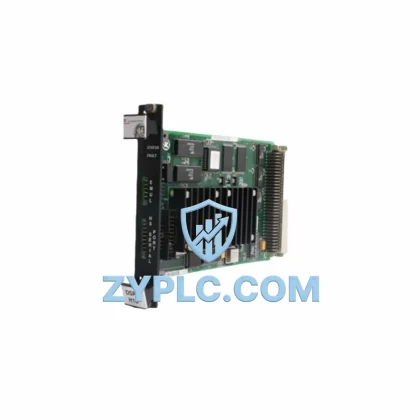
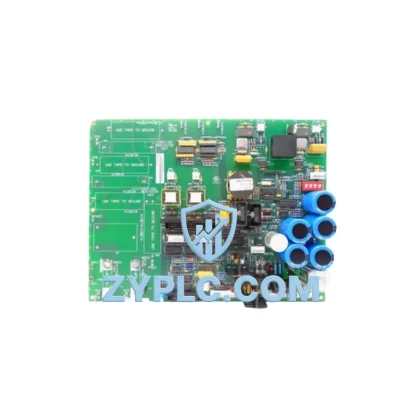
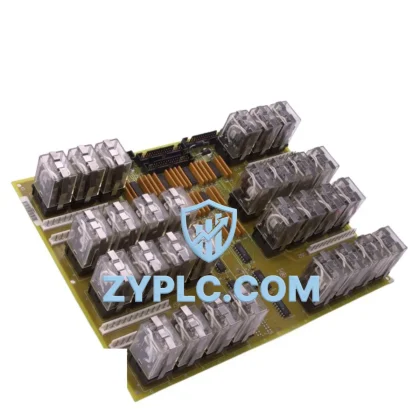
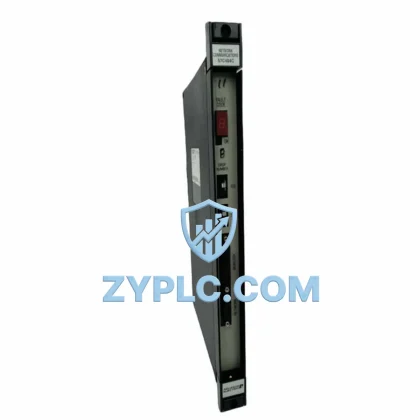
Honeywell 10024/H/F Communication Module: Precision Control for TDC3000 Automation
The Honeywell 10024/H/F is a high-efficiency communication module engineered for the TDC3000 Distributed Control System (DCS) platform. Designed to serve as the critical data backbone between field devices and the control layer, this module enables factories to dramatically reduce idle operating load, sharpen motor control response, and synchronize production line rhythm with measurable precision. Whether deployed in continuous process industries, discrete manufacturing, or hybrid automation environments, the 10024/H/F delivers the communication integrity that modern maintenance-focused production demands.
Product Specification Table
| Parameter |
Specification / Value |
| SKU / Part Number |
10024/H/F |
| Brand |
Honeywell |
| Series / Platform |
TDC3000 DCS |
| Product Category |
Communication Module |
| Power Consumption |
Low-power design; optimized for continuous 24/7 industrial operation |
| Communication Protocol |
Honeywell Data Hiway / Local Control Network (LCN) |
| Operating Efficiency |
High-throughput, low-latency data exchange for real-time process feedback |
| Compatible Systems |
Honeywell TDC3000, TotalPlant Solution (TPS), LCN-based DCS architectures |
| Application Environment |
Petrochemical, refining, power generation, pharmaceutical, pulp & paper |
| Maintenance Value |
Reduces control loop latency, minimizes redundant polling, lowers system idle load |
| Origin |
United States |
| Warranty |
12-Month Warranty |
| Condition |
Tested & Verified; Ready to Ship |
System Compatibility and Application
In a fully optimized TDC3000 environment, the Honeywell 10024/H/F communication module acts as the nerve center connecting field instrumentation, drive systems, and supervisory control layers. Its role in reducing unnecessary data retransmissions and maintaining stable Local Control Network (LCN) throughput directly translates into lower CPU utilization across the Honeywell Universal Control Network (UCN) and associated Network Interface Modules (NIM).
When paired with Honeywell PM (Process Manager) controllers and Advanced Process Manager (APM) nodes, the 10024/H/F ensures that PID loop execution remains deterministic — a prerequisite for effective variable-frequency drive (VFD) coordination. In motor-intensive applications, this means the Honeywell 621-series I/O modules feeding analog signals from current transformers and power meters can deliver real-time operating load data without communication bottlenecks.
For drive-level maintenance planning, the 10024/H/F integrates seamlessly with Honeywell SmartLine transmitters and third-party PROFIBUS-compatible VFDs, enabling closed-loop speed regulation based on actual process demand rather than fixed setpoints. This demand-driven approach — coordinated through the Honeywell TDC3000 History Module (HM) — allows operators to log operating load trends, identify peak-load anomalies, and schedule preventive maintenance windows that avoid costly unplanned downtime.
The module also supports integration with Honeywell Experion PKS migration pathways, meaning facilities planning a phased DCS upgrade can retain the 10024/H/F within their existing LCN infrastructure while gradually introducing modern HART-enabled field devices and Honeywell Multifunction Controller (MFC) nodes. This hybrid architecture preserves capital investment while enabling incremental energy efficiency gains across the control hierarchy.
At the HMI layer, operators using Honeywell GUS (Global User Station) workstations benefit from the module’s stable communication backbone to monitor real-time energy KPIs — including motor load factor, drive efficiency curves, and compressed air consumption — without screen refresh delays that could mask transient energy spikes.
Maintenance and Replacement Notes
In refinery and petrochemical applications, the Honeywell 10024/H/F has demonstrated measurable impact on production line energy efficiency by eliminating the communication latency that forces control systems into conservative, energy-wasteful operating modes. When a DCS communication module introduces delays, controllers compensate by widening deadbands and increasing valve travel — both of which waste energy and accelerate mechanical wear.
With the 10024/H/F maintaining sub-millisecond LCN response times, process controllers can operate with tighter setpoint tolerances. In a typical crude distillation unit, this translates to more precise reflux ratio control, reducing reboiler duty by 2–5% — a significant saving when operating continuously at scale. Similarly, in compressor control applications, stable communication enables anti-surge algorithms to respond faster, reducing the frequency of recycle valve opening events that consume substantial energy.
On discrete manufacturing lines, the module’s reliable data pathway supports coordinated motor sequencing. Rather than running all conveyor drives at full speed continuously, the control system can implement demand-based speed profiling — slowing upstream drives when downstream buffers are full, and accelerating them only when throughput is required. This production rhythm optimization, enabled by the 10024/H/F’s consistent communication performance, can reduce conveyor system operating load by 10–20% in typical automotive or food processing environments.
From a maintenance cost perspective, the module’s stable operation reduces the diagnostic noise that often leads maintenance teams to replace healthy components unnecessarily. With accurate, low-latency data flowing from field transmitters through the 10024/H/F to historian and alarm management systems, predictive maintenance models can distinguish genuine equipment degradation from communication artifacts — extending mean time between replacements (MTBR) and reducing spare parts expenditure.
Every unit is fully tested prior to shipment, with functional verification across all communication channels. Stock is maintained for immediate dispatch, supporting urgent maintenance scenarios where production downtime costs far exceed the component price. The included 12-month warranty covers all functional defects, providing procurement teams with the confidence to specify refurbished DCS components without compromising plant reliability commitments.
Product Sourcing FAQ
Q1: How does the Honeywell 10024/H/F contribute to operational stability in a TDC3000 system?
The 10024/H/F reduces communication latency across the Local Control Network, allowing process controllers to operate with tighter control tolerances. Tighter control means less process variability, which directly reduces unplanned downtime from over-heating, over-pressurization, and unnecessary actuator movement. In motor and drive applications, stable communication enables demand-based speed control rather than fixed-speed operation.
Q2: Is the 10024/H/F compatible with modern Honeywell systems or migration platforms?
Yes. The module is compatible with TDC3000 and TotalPlant Solution (TPS) architectures, and it supports phased migration pathways to Honeywell Experion PKS. It can coexist with newer NIM and APM nodes within the same LCN infrastructure, making it suitable for facilities undertaking incremental DCS modernization without full system replacement.
Q3: What is the recommended replacement or testing process before installation?
All 10024/H/F units supplied by ZYPLC undergo functional testing that includes LCN communication verification, power supply integrity checks, and signal path validation. We recommend bench testing the module against a known-good TDC3000 chassis before installation in a live system. Our technical team can advise on test procedures and compatible diagnostic tools upon request.
Q4: What does the 12-month warranty cover, and what is the claims process?
The 12-month warranty covers all functional defects arising from component failure under normal operating conditions. It does not cover physical damage caused by incorrect installation, overvoltage events, or environmental exposure beyond the module’s rated specifications. To initiate a warranty claim, contact our sales team with the order reference and a description of the fault. Replacement units are dispatched promptly to minimize production downtime.
© 2026 ZYPLC. All rights reserved.
Original Source: https://zyplc.com
Contact: +86 19859288691 | plc.sales@zyplc.com