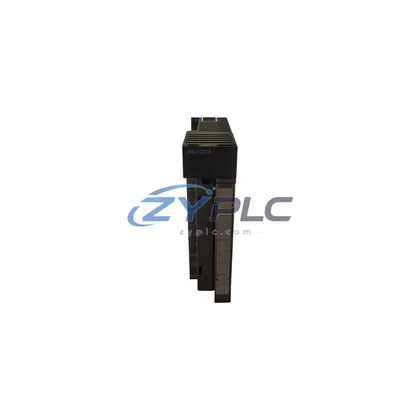
The Honeywell 2MLC-F201 is a high-efficiency synchronization cable module engineered for the Honeywell TDC 3000 Distributed Control System (DCS) platform. Designed for demanding industrial automation environments, the 2MLC-F201 plays a critical role in maintaining stable, low-latency communication between control nodes — directly contributing to reduced unplanned downtime, improved equipment utilization, and optimized production line throughput.
In modern process industries — including petrochemical, power generation, pulp and paper, and pharmaceutical manufacturing — the integrity of the synchronization bus is foundational to energy-efficient operation. A degraded or mismatched sync cable introduces signal jitter, forces redundant polling cycles, and increases CPU load on the Honeywell LCN (Local Control Network) nodes. The 2MLC-F201 eliminates these inefficiencies by providing a precisely impedance-matched, shielded connection that sustains clean data throughput across the 2MLC series backplane architecture.
Product Specification Table
| Parameter |
Specification / Value |
| SKU |
2MLC-F201 |
| Brand / Series |
Honeywell / 2MLC Series |
| Compatible Platform |
Honeywell TDC 3000 DCS, LCN Architecture |
| Module Function |
High-Speed Synchronization Cable Interface |
| Signal Integrity |
Impedance-matched, shielded, low-loss transmission |
| Operating Environment |
Industrial control cabinets, DCS enclosures, 0–55°C |
| Maintenance Value |
Reduces redundant polling load; lowers LCN node CPU overhead |
| Power Consumption |
Passive cable module — negligible self-consumption |
| Application Sectors |
Petrochemical, Power, Pharmaceutical, Pulp & Paper |
| Inventory Status |
RFQ Available — Ships After Outgoing Test |
| Quality Assurance |
warranty terms confirmed during quotation | Pre-shipment functional verification |
System Compatibility and Application
The 2MLC-F201 operates at the heart of the Honeywell TDC 3000 control architecture, where synchronization quality directly determines how efficiently the entire automation stack performs. When paired with the Honeywell PM (Process Manager) and HPM (High-Performance Process Manager) controllers, a clean sync signal ensures that control loop execution remains on schedule — preventing the energy-wasting condition of missed scan cycles that force actuators to hold last-known states longer than necessary.
Within the LCN data highway, the 2MLC-F201 interfaces with Honeywell NIM (Network Interface Module) cards to maintain deterministic communication timing. This is especially important when the control system is coordinating with Honeywell UDC 3500 loop controllers or Experion PKS supervisory nodes, where any synchronization drift can cascade into suboptimal PID tuning responses and increased valve cycling — both of which translate directly into wasted energy.
On the drive side, the TDC 3000 platform frequently integrates with variable frequency drives (VFDs) such as the Honeywell SmartVFD HVAC series or third-party drives communicating via Modbus RTU or PROFIBUS DP fieldbus protocols. The 2MLC-F201 ensures that speed reference commands from the DCS reach the drive controllers without timing errors, enabling precise motor speed regulation that eliminates over-speed unplanned downtime in pump and fan applications.
For power monitoring integration, the 2MLC-F201 supports architectures where Honeywell Enraf power measurement instruments or third-party energy meters feed real-time consumption data back through the LCN. This closed-loop energy feedback — from meter to DCS to drive — is only reliable when the synchronization layer is stable. The 2MLC-F201 is the enabling component that makes this feedback loop trustworthy.
I/O subsystems, including Honeywell FSC (Fail-Safe Controller) safety I/O modules and standard 2MLF series analog input cards, depend on the synchronization bus to timestamp process values accurately. Accurate timestamps are essential for energy audit trails and for the predictive maintenance algorithms that identify inefficient equipment before it causes unplanned downtime.
Maintenance and Replacement Notes
In a typical continuous process plant running a Honeywell TDC 3000 DCS, dozens of control loops govern compressors, heat exchangers, distillation columns, and rotating equipment. Each loop’s energy efficiency depends on the control system’s ability to execute scan cycles on time and deliver accurate setpoints to field devices. The 2MLC-F201 directly supports this by ensuring that the synchronization backbone of the 2MLC series modules remains free of signal degradation.
Consider a refinery crude distillation unit where the DCS manages 40+ PID loops controlling fired heater fuel flow, reflux ratios, and overhead condenser fan speeds. A faulty or substandard sync cable introduces microsecond-level timing errors that accumulate into control loop instability. The result is increased fuel consumption in the fired heater, excessive condenser fan cycling, and elevated maintenance frequency on control valves. Replacing a degraded sync cable with a verified 2MLC-F201 restores loop timing integrity and can measurably reduce fuel consumption by stabilizing the heater control response.
In pharmaceutical batch manufacturing, where the Honeywell TDC 3000 governs reactor temperature profiles and agitator speed ramps, synchronization accuracy directly affects batch cycle time. A stable sync bus means the DCS can execute temperature ramp sequences precisely, avoiding the energy-intensive overshoot-and-correct cycles that occur when control timing is unreliable. Shorter, more precise batch cycles reduce steam and chilled water consumption per batch — a direct energy saving attributable to communication infrastructure quality.
For predictive maintenance, the 2MLC-F201 enables the DCS historian — whether the native Honeywell PHD (Process Historian Database) or an integrated third-party SCADA — to collect accurately timestamped process data. This data feeds condition monitoring algorithms that detect early signs of motor bearing wear, pump cavitation, or heat exchanger fouling. Early detection allows maintenance to be scheduled during planned shutdowns rather than emergency stops, eliminating the unplanned downtime associated with unplanned restarts and equipment run-to-failure scenarios.
Every unit shipped undergoes pre-shipment functional verification to confirm signal continuity, shielding integrity, and connector seating. Combined with a warranty terms confirmed during quotation, this ensures that the 2MLC-F201 delivers reliable performance from day one of installation, with no hidden commissioning energy costs from repeated troubleshooting cycles.
Product Sourcing FAQ
Q1: How does the 2MLC-F201 contribute to measurable operational stability in a TDC 3000 system?
The 2MLC-F201 maintains synchronization bus integrity, which ensures all control loops execute on their designed scan intervals. Consistent scan timing prevents the control instability that causes actuators — valves, drives, and heaters — to hunt or overshoot, both of which consume excess energy. A stable sync layer is a prerequisite for energy-efficient closed-loop control.
Q2: Is the 2MLC-F201 compatible with both early and late revisions of the Honeywell TDC 3000 platform?
Yes. The 2MLC-F201 is designed for the 2MLC series backplane architecture used across multiple generations of the TDC 3000 platform. It is compatible with PM, HPM, and associated LCN node configurations. If you are integrating with an Experion PKS migration overlay, please confirm the specific backplane revision with our technical team before ordering.
Q3: What is the recommended replacement interval, and how do I know when the sync cable needs replacement?
In stable industrial environments, sync cables can operate reliably for many years. However, replacement is recommended when the DCS event log shows increasing synchronization fault alarms, when LCN diagnostic tools report elevated error rates on the affected node, or following any physical disturbance to the control cabinet. Proactive replacement during scheduled turnarounds is the most cost-effective approach.
Q4: What does the warranty terms confirmed during quotation cover, and what is the pre-shipment test process?
Every 2MLC-F201 unit undergoes functional verification prior to shipment, including signal continuity testing, shielding resistance measurement, and connector integrity inspection. The warranty terms confirmed during quotation covers defects in materials and workmanship under normal operating conditions. Units that fail within the warranty period are replaced or refunded. Contact our team at plc.sales@zyplc.com for warranty claims or technical support.