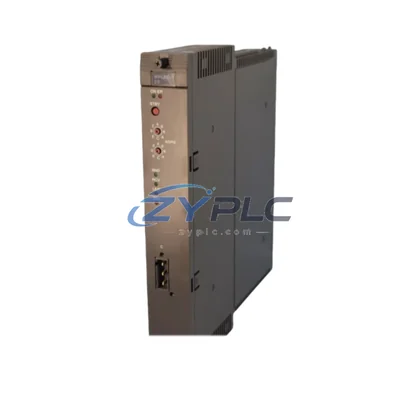
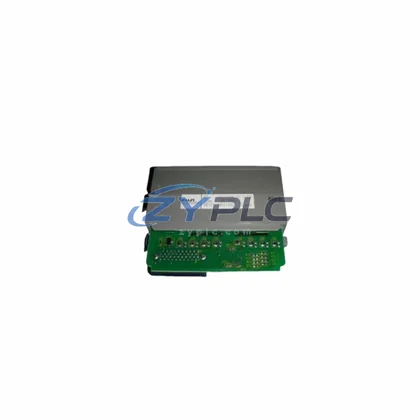
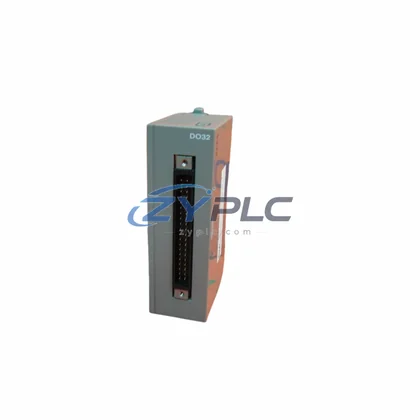
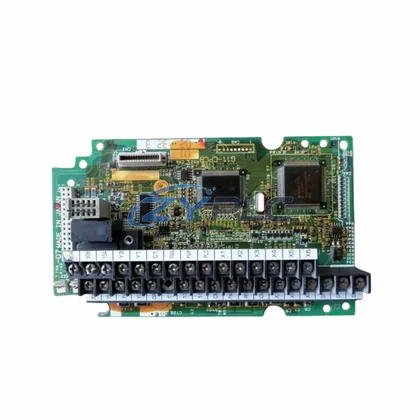
Honeywell 2MLI-CPUU CPU for MasterLogic Automation
The Honeywell 2MLI-CPUU is a high-performance CPU module engineered for the MasterLogic programmable automation controller platform. Designed to meet the demanding requirements of modern industrial facilities, this CPU module delivers precise, low-latency control execution while actively minimizing operating load across the entire control loop. Whether deployed in continuous process manufacturing, discrete assembly lines, or hybrid production environments, the 2MLI-CPUU enables plant engineers to achieve measurable improvements in equipment utilization, production throughput, and energy cost reduction — without compromising system reliability or control accuracy.
At its core, the 2MLI-CPUU functions as the central processing and coordination unit within the MasterLogic rack-based control architecture. It manages real-time scan cycles, handles inter-module communication, and executes ladder logic and function block programs with deterministic timing. This determinism is critical for maintenance-focused automation: when the CPU executes control tasks on schedule without jitter or delay, downstream actuators — including variable frequency drives, servo amplifiers, and proportional control valves — receive commands at precisely the right moment, eliminating the unplanned downtime associated with over-actuation, hunting, and unnecessary motor starts.
Product Specification Table
| Parameter |
Specification / Value |
| SKU |
2MLI-CPUU |
| Brand / Series |
Honeywell / MasterLogic |
| Module Type |
PLC CPU Module |
| Electrical / System Notes |
Low-power design; optimized for rack-level energy budgeting |
| Control Execution Efficiency |
Deterministic real-time scan cycle; minimizes idle processing overhead |
| Compatible Systems |
Honeywell MasterLogic PLC rack, compatible I/O modules, HMI, and SCADA |
| Communication Protocols |
Modbus, Profibus, Ethernet/IP (series-dependent configuration) |
| Application Environments |
Process manufacturing, discrete assembly, maintenance planning, utilities |
| Maintenance Value |
Reduces unnecessary actuator cycling; supports load-based motor control strategies |
| Origin |
United States |
| Warranty |
warranty terms confirmed during quotation — tested and verified before shipment |
| Stock Status |
RFQ Available — shipment arranged after confirmation |
System Compatibility and Application
The 2MLI-CPUU does not operate in isolation — its energy efficiency impact is realized through its tight integration with the broader MasterLogic automation ecosystem. In a typical energy-optimized plant layout, the CPU module coordinates with Honeywell MasterLogic digital input/output modules (such as the 2MLI-DI16A and 2MLI-DO16A) to collect real-time field signals from sensors, limit switches, and proximity detectors. These signals feed directly into the CPU’s control logic, enabling the system to make energy-conscious decisions — for example, shutting down conveyor segments when no product is detected, or reducing pump speed during low-demand periods.
On the drive side, the 2MLI-CPUU communicates with Honeywell variable frequency drives via fieldbus interfaces, enabling speed-reference commands to be issued dynamically based on actual production demand rather than fixed setpoints. This approach — often called load-following or demand-based drive control — can help restore stable operation when a compatible replacement is required. When paired with a Honeywell power monitoring module or a third-party energy meter integrated through the Modbus RTU interface, the CPU can log real-time kWh data per production zone, giving energy managers the granular visibility they need to identify waste and validate efficiency improvements.
For motion-intensive applications, the 2MLI-CPUU interfaces with Honeywell servo drive controllers and position feedback modules to execute coordinated multi-axis motion profiles. By optimizing acceleration and deceleration ramps within the CPU’s motion control blocks, the system reduces regenerative energy spikes and mechanical stress on gearboxes and couplings — directly lowering both energy costs and maintenance frequency. The MasterLogic analog output module (such as the 2MLI-AO8A) further extends this capability by providing smooth, high-resolution control signals to proportional valves and positioners, eliminating the unplanned downtime caused by on/off valve cycling in flow and pressure control loops.
At the supervisory level, the 2MLI-CPUU connects to Honeywell HMI panels and SCADA workstations via Ethernet, enabling operators to monitor energy KPIs in real time — including power factor, peak demand, and per-shift operating load. This data visibility is the foundation of any effective maintenance planning program, and the MasterLogic CPU’s communication stack makes it straightforward to integrate with plant-level MES and ERP systems for automated energy reporting. The MasterLogic communication module (e.g., 2MLI-COMM) expands protocol support to include Profibus DP and DeviceNet, ensuring compatibility with legacy field devices and third-party instrumentation already installed on the production floor.
Maintenance and Replacement Notes
In real-world production environments, the Honeywell 2MLI-CPUU delivers operational stability through several concrete mechanisms. First, its fast scan cycle — typically in the low millisecond range — ensures that control corrections are applied before process variables drift significantly from setpoint. This tight control reduces the frequency and magnitude of corrective actuator movements, which translates directly into lower operating load from motors, heaters, and compressors. In a bottling line, for example, precise conveyor speed control coordinated by the 2MLI-CPUU can eliminate the micro-stops and speed surges that waste energy and cause product jams.
Second, the CPU’s support for structured programming — including function block diagrams and sequential function charts — makes it straightforward to implement operational-efficiency routines such as automatic standby modes, time-of-use scheduling, and demand-response load shedding. A food processing plant using the MasterLogic platform can program the 2MLI-CPUU to automatically reduce refrigeration compressor load during peak electricity tariff hours, then restore full capacity during off-peak periods — all without operator intervention. These automated maintenance planning strategies are difficult to implement reliably with older relay-based or fixed-program controllers, but are native capabilities of the MasterLogic CPU architecture.
Third, the 2MLI-CPUU’s diagnostic and self-monitoring capabilities support predictive maintenance strategies that indirectly reduce operating load. By tracking module health, communication error rates, and I/O fault conditions, the CPU provides early warning of developing equipment problems — such as a failing motor bearing that causes increased current draw, or a partially blocked filter that forces a pump to work harder. Addressing these issues proactively, before they cause unplanned downtime or energy spikes, is one of the highest-value applications of a capable PLC CPU in an energy-conscious facility.
Every 2MLI-CPUU unit supplied by ZYPLC undergoes full functional testing prior to shipment, including power-on verification, communication port testing, and program execution validation. This pre-shipment testing protocol ensures that the module performs to specification from day one, eliminating the unplanned downtime and production disruption associated with infant-failure returns. Combined with our warranty terms confirmed during quotation and availability confirmed by RFQ availability, the 2MLI-CPUU represents a low-risk, high-value investment for any facility looking to modernize its control infrastructure and reduce its energy footprint.
Product Sourcing FAQ
Q1: How does the Honeywell 2MLI-CPUU contribute to measurable operational stability on the production floor?
The 2MLI-CPUU reduces unplanned downtime through deterministic control execution, which minimizes unnecessary actuator cycling and motor over-run. When integrated with variable frequency drives and power monitoring modules, it enables demand-based speed control and real-time energy logging — giving facilities the data and control authority needed to reduce kWh consumption per unit of output.
Q2: Is the 2MLI-CPUU compatible with existing MasterLogic racks and third-party field devices?
Yes. The 2MLI-CPUU is designed for the Honeywell MasterLogic rack architecture and is compatible with the full range of MasterLogic I/O, communication, and analog modules. For third-party devices, the CPU supports standard industrial protocols including Modbus RTU and Ethernet-based communication, enabling integration with most modern sensors, drives, and instrumentation.
Q3: What is the recommended replacement or upgrade path for aging MasterLogic CPU modules?
For facilities running older MasterLogic CPU variants, the 2MLI-CPUU is the recommended direct replacement, offering improved processing speed and communication capability within the same rack form factor. ZYPLC recommends verifying firmware compatibility with existing I/O modules before installation and can provide technical guidance on the upgrade process upon request.
Q4: What does the warranty terms confirmed during quotation cover, and what is the testing process before shipment?
Every 2MLI-CPUU unit is tested for power-on functionality, communication port integrity, and program execution before shipment. The warranty terms confirmed during quotation covers manufacturing defects and functional failures under normal operating conditions. Units that develop faults within the warranty period are replaced or repaired at no additional cost, minimizing production risk and total cost of ownership for the end user.