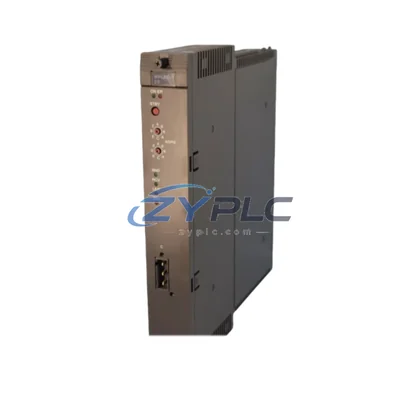
Honeywell 2MLK-CPUS-CC CPU for Safety Manager: Control System Coordination and Upstream-Downstream Synergy
The Honeywell 2MLK-CPUS-CC is a dedicated CPU module engineered for deployment within the Honeywell Safety Manager platform — a safety instrumented system (SIS) designed to meet IEC 61508 and IEC 61511 functional safety standards across SIL 1, SIL 2, and SIL 3 applications. Rather than functioning as a standalone processor, the 2MLK-CPUS-CC is conceived as the central intelligence node of a layered, redundant control architecture, coordinating signal acquisition, logic execution, diagnostic reporting, and inter-system communication across every tier of the automation hierarchy.
In modern industrial automation, the CPU module is not merely a computing unit — it is the architectural anchor that determines system scalability, fault tolerance, communication integrity, and long-term maintainability. The 2MLK-CPUS-CC fulfills this role within the Safety Manager chassis, interfacing directly with I/O modules, communication gateways, power supply units, and engineering workstations to deliver a coherent, validated safety function across the entire process loop.
Product Specification Table
| Parameter |
Specification |
| Part Number |
2MLK-CPUS-CC |
| Brand |
Honeywell |
| Series |
Safety Manager (SM) |
| System Role |
Safety Instrumented System (SIS) CPU / Central Processing Unit |
| Safety Integrity Level |
SIL 1 / SIL 2 / SIL 3 (IEC 61508, IEC 61511) |
| Architecture Type |
Redundant CPU architecture, hot-standby capable |
| Communication Capability |
Modbus, HART pass-through, Honeywell FTE (Fault Tolerant Ethernet), peer-to-peer safety bus |
| Chassis Compatibility |
Safety Manager backplane / chassis rack system |
| Electrical Interface |
Backplane bus powered; low-voltage DC logic supply |
| Diagnostic Coverage |
High diagnostic coverage (DC) per IEC 61508 Part 2 |
| Installation Environment |
Industrial control cabinet; DIN rail or rack-mount chassis |
| Operating Temperature |
0°C to +60°C (typical industrial range) |
| Certification |
TÜV-certified for functional safety applications |
| Warranty |
warranty terms confirmed during quotation — tested, verified, ready for deployment |
System Compatibility Notes
The 2MLK-CPUS-CC achieves its full architectural value when integrated within a complete Safety Manager system stack. At the control layer, the CPU module operates in conjunction with a redundant partner CPU — typically a second 2MLK-CPUS-CC unit — forming a hot-standby pair that ensures zero-interruption failover during processor faults. This redundancy architecture is fundamental to SIL 3 loop integrity and is a prerequisite for high-demand safety applications in petrochemical, power generation, and offshore environments.
At the power layer, the Safety Manager system relies on dedicated power supply modules such as the 2MLK-PSUP or equivalent SM-series power units, which provide isolated, regulated DC power to the CPU and I/O backplane. Dual power supply configurations are standard in redundant architectures, ensuring that a single power supply failure does not compromise the safety function.
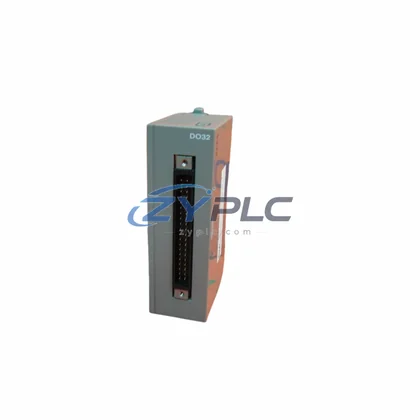
At the I/O layer, the 2MLK-CPUS-CC communicates with digital input modules (e.g., 2MLK-DIOM), digital output modules (e.g., 2MLK-DOOM), and analog input modules (e.g., 2MLK-AIOM) mounted on the same Safety Manager chassis. These modules handle field signal conditioning, galvanic isolation, and HART variable pass-through, feeding validated process data directly to the CPU for safety logic execution. The CPU’s scan cycle manages all I/O updates, ensuring deterministic response times critical to emergency shutdown (ESD) and fire-and-gas (F&G) system performance.
At the network and communication layer, the 2MLK-CPUS-CC supports Honeywell’s Fault Tolerant Ethernet (FTE) architecture, enabling high-availability peer-to-peer communication with the Experion PKS distributed control system (DCS) or other supervisory platforms. Communication modules such as the 2MLK-CNET gateway facilitate Modbus TCP/IP and OPC connectivity, allowing the Safety Manager to exchange status, alarm, and diagnostic data with the plant-wide SCADA or historian system without compromising the safety integrity of the SIS network.
At the human-machine interface layer, engineering workstations running Safety Builder software connect to the 2MLK-CPUS-CC for logic configuration, online diagnostics, and firmware management. Operator interface terminals integrated with the Experion PKS console provide real-time visibility into safety loop status, bypass conditions, and trip history — all driven by data originating from the CPU module’s execution environment.
At the execution layer, the safety outputs from the 2MLK-CPUS-CC drive final control elements including solenoid valve terminal blocks, relay output modules, and motor control interfaces. In many architectures, intermediate relay modules or smart marshalling panels are used to interface the Safety Manager outputs with field actuators, ensuring electrical isolation and signal integrity across the final element boundary.
Industrial Application Notes
Oil, Gas, and Petrochemical: In upstream and downstream hydrocarbon processing, the 2MLK-CPUS-CC serves as the SIS CPU for emergency shutdown (ESD) systems, high-integrity pressure protection systems (HIPPS), and fire-and-gas detection networks. Its SIL 3 capability and redundant architecture make it suitable for wellhead control panels, compressor protection systems, and LNG terminal safety loops where process uptime and personnel safety are equally critical.
Power Generation and Utilities: In thermal, nuclear, and combined-cycle power plants, the Safety Manager CPU coordinates turbine overspeed protection, boiler safety interlocks, and grid synchronization safety functions. The CPU’s deterministic scan cycle and high diagnostic coverage ensure that safety responses meet the sub-second actuation requirements of power plant protection systems.
Chemical and Pharmaceutical Manufacturing: Batch and continuous process plants deploy the 2MLK-CPUS-CC within reactor safety systems, pressure relief interlock loops, and toxic gas detection architectures. The module’s compatibility with HART-enabled analog I/O supports advanced diagnostics on field transmitters, reducing proof test intervals and lowering the overall probability of failure on demand (PFD) for the safety function.
Water and Wastewater Treatment: Municipal and industrial water treatment facilities use Safety Manager systems for chlorine dosing interlocks, pump protection, and overflow prevention. The 2MLK-CPUS-CC’s compact chassis integration and low maintenance overhead make it well-suited for unmanned remote stations where long-term reliability and minimal site visits are operational priorities.
Mining and Metals: In underground mining and surface smelting operations, the CPU module supports conveyor belt safety systems, ventilation interlock controls, and high-voltage switchgear protection. Its industrial temperature rating and robust backplane design ensure reliable operation in environments with high vibration, dust, and thermal cycling.
Product Compatibility FAQ
Q1: Is the 2MLK-CPUS-CC compatible with existing Safety Manager chassis and I/O modules already installed in my plant?
A: Yes. The 2MLK-CPUS-CC is designed for direct installation into the standard Safety Manager backplane chassis. It is compatible with the full range of SM-series I/O modules, communication cards, and power supply units. When replacing an existing CPU in a live system, it is recommended to follow Honeywell’s hot-swap or controlled shutdown procedure to maintain safety loop integrity during the exchange. Our supplied units are tested and verified prior to shipment, and the warranty terms confirmed during quotation covers functional performance from the date of delivery.
Q2: Can the 2MLK-CPUS-CC support a redundant CPU architecture, and what is required to configure it?
A: The Safety Manager platform supports redundant CPU configurations using two 2MLK-CPUS-CC modules operating in a hot-standby arrangement. Both CPUs share the same application logic and I/O data, with automatic bumpless transfer upon primary CPU failure. Configuration is performed through the Safety Builder engineering environment, where redundancy parameters, synchronization intervals, and failover behavior are defined. No additional hardware beyond the second CPU module and the standard chassis backplane is required to enable redundancy.
Q3: What does the warranty terms confirmed during quotation cover, and how does system integration support long-term system maintenance?
A: The warranty terms confirmed during quotation covers the 2MLK-CPUS-CC against manufacturing defects and functional failures under normal operating conditions. Each unit is tested prior to dispatch to confirm backplane communication, logic execution, and diagnostic self-test functionality. system integration refers to our commitment to supplying components that are verified for compatibility within your specific system architecture — not generic replacements. This means the module you receive has been assessed against the Safety Manager platform context, reducing integration risk and accelerating commissioning. For long-term maintenance planning, we recommend maintaining a spare CPU module on-site to minimize mean time to repair (MTTR) in the event of an unplanned failure.