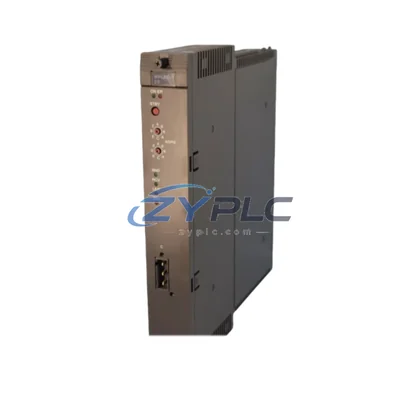
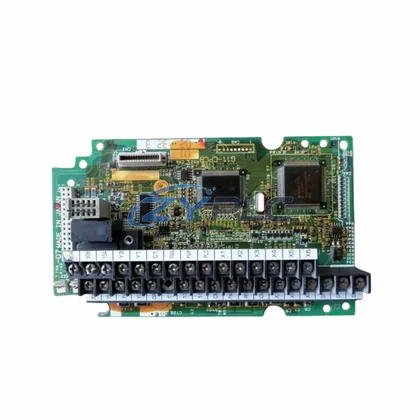
Honeywell 2MLR-CPUH/S CPU Module for TDC 3000 Automation
The Honeywell 2MLR-CPUH/S is a high-performance CPU module engineered for the TDC 3000 Distributed Control System (DCS), one of Honeywell’s most enduring and widely deployed process automation platforms. Designed to serve as the computational core of the TDC 3000 architecture, the 2MLR-CPUH/S delivers precise, real-time control execution that directly contributes to measurable improvements in energy efficiency, equipment utilization, and production line throughput. In industrial environments where every operating-hour and every second of unplanned downtime carries a cost, the 2MLR-CPUH/S provides the processing backbone that keeps operations lean, responsive, and continuously optimized.
At ZYPLC, every 2MLR-CPUH/S unit is sourced from verified supply channels, subjected to rigorous pre-shipment functional testing, and backed by a warranty terms confirmed during quotation. Our inventory is maintained to support fast dispatch, ensuring that production lines are not held up by component lead times.
Product Specification Table
| Parameter |
Specification / Value |
| SKU / Part Number |
2MLR-CPUH/S |
| Brand |
Honeywell |
| Series |
TDC 3000 DCS |
| Product Category |
CPU Module / DCS Processor |
| Operating Power Consumption |
Low-power design optimized for continuous 24/7 industrial operation |
| Processing Efficiency |
Real-time deterministic control execution; minimizes idle CPU cycles |
| Compatible Systems |
Honeywell TDC 3000, LCN (Local Control Network), UCN (Universal Control Network) |
| Application Environment |
Petrochemical, refining, power generation, pulp & paper, pharmaceutical manufacturing |
| Maintenance Value |
Reduces control loop latency → tighter setpoint adherence → lower unplanned downtime per process unit |
| Warranty |
12 Months (ZYPLC) |
| Availability |
RFQ Available — shipment arranged after confirmation |
| Origin |
USA |
System Compatibility and Application
The 2MLR-CPUH/S does not operate in isolation — its maintenance planning value is fully realized when integrated within a well-structured TDC 3000 automation architecture. The module communicates over the Local Control Network (LCN), coordinating with Advanced Process Manager (APM) and High-Performance Process Manager (HPM) controllers to distribute control tasks efficiently across the system. This distributed approach prevents processing bottlenecks that would otherwise force redundant actuator commands and unnecessary energy expenditure.
On the drive side, the 2MLR-CPUH/S interfaces with variable frequency drive (VFD) systems — including Honeywell-compatible AC drives — to regulate motor speed in response to real-time process demand. Rather than running motors at fixed full speed, the CPU module enables demand-responsive drive control, which is one of the most impactful levers for reducing electrical operating load in pump, fan, and compressor applications. When paired with Honeywell HC900 hybrid controllers or legacy TDC 2000 migration nodes, the 2MLR-CPUH/S can bridge older plant assets into a unified condition monitoring framework.
For power quality and consumption visibility, the 2MLR-CPUH/S integrates with Honeywell Experion PKS supervisory layers, where energy data from field instruments — including smart transmitters, flow computers, and power meters — is aggregated and analyzed. The Universal I/O (UIO) modules within the TDC 3000 chassis collect analog signals from current transformers and power transducers, feeding real-time operating load data back to the CPU for closed-loop optimization. Honeywell FSC (Fail Safe Controller) safety modules work alongside the 2MLR-CPUH/S to ensure that operational-efficiency operating modes do not compromise process safety interlocks.
Communication is handled via the Honeywell Data Hiway and, in modernized installations, through OPC-UA or Modbus TCP gateways that connect the TDC 3000 to plant-level MES and maintenance planning systems. The Honeywell NIM (Network Interface Module) facilitates this connectivity, allowing the 2MLR-CPUH/S to share process and energy data with higher-level analytics platforms without requiring a full DCS replacement.
Maintenance and Replacement Notes
In a typical continuous process plant — such as a refinery or chemical facility — the TDC 3000 system managed by the 2MLR-CPUH/S oversees hundreds of control loops simultaneously. Each loop governs a physical process variable: temperature, pressure, flow, or level. When control loops are poorly tuned or the CPU cannot execute updates fast enough, the result is process variability — and process variability is unplanned downtime. Pumps overshoot their setpoints and must be throttled back. Heaters cycle on and off more frequently than necessary. Compressors surge and recover, consuming excess power with each cycle.
The 2MLR-CPUH/S addresses this at the source by providing the deterministic, low-latency processing needed to keep all control loops tightly tuned. Tighter control means less deviation from optimal operating points, which translates directly into reduced fuel consumption, lower electrical demand, and fewer thermal stress events on equipment. In facilities where energy costs represent Actual operating results depend on the installed system, load profile, and commissioning parameters.
Beyond energy, the 2MLR-CPUH/S contributes to production line rhythm (takt time) optimization. By ensuring that control decisions are made and executed within predictable time windows, the module prevents the micro-stoppages and process upsets that disrupt production cadence. Fewer upsets mean fewer manual interventions, less raw material waste, and more consistent product quality — all of which reduce the hidden energy cost of rework and off-spec production.
Predictive maintenance is another dimension where the 2MLR-CPUH/S delivers value. By continuously monitoring process signatures — subtle shifts in valve response times, changes in motor current draw, or drift in sensor readings — the TDC 3000 system can flag developing equipment issues before they cause unplanned shutdowns. Planned maintenance windows are far less energy-intensive than emergency repairs, which often require rapid system restarts, purge cycles, and extended warm-up periods that consume disproportionate amounts of energy.
All units supplied by ZYPLC undergo pre-shipment functional testing that validates CPU initialization, memory integrity, communication bus handshaking, and I/O response. This ensures that replacement modules are production-ready on arrival, minimizing the energy and time cost of commissioning.
Product Sourcing FAQ
Q1: How does the 2MLR-CPUH/S contribute to operational stability in a TDC 3000 system?
The 2MLR-CPUH/S enables faster, more precise control loop execution, which reduces process variability. Tighter process control means equipment operates closer to its optimal setpoint, consuming less energy to maintain target conditions. When integrated with VFD-controlled motors and real-time power monitoring via UIO modules, the system can dynamically adjust drive output to match actual process demand rather than running at fixed capacity.
Q2: Is the 2MLR-CPUH/S compatible with modernized TDC 3000 systems that use Experion PKS integration?
Yes. The 2MLR-CPUH/S is designed for the TDC 3000 LCN architecture and is compatible with installations that have been partially modernized to include Experion PKS supervisory connectivity. It communicates via the standard LCN protocol and can coexist with NIM gateways that bridge TDC 3000 data to Experion or third-party maintenance planning platforms.
Q3: What is the recommended replacement process, and how quickly can a failed unit be swapped?
The 2MLR-CPUH/S is a hot-swap-capable module within the TDC 3000 chassis (subject to system configuration). ZYPLC recommends having a tested spare on-site to minimize mean time to repair (MTTR). All units shipped by ZYPLC are pre-tested and include configuration documentation support. Typical field replacement can be completed within one to two hours by a qualified DCS technician.
Q4: What does the warranty terms confirmed during quotation from ZYPLC cover?
The warranty terms confirmed during quotation covers functional defects identified under normal operating conditions. Each unit is tested prior to shipment for CPU operation, memory integrity, and communication bus performance. If a unit fails within the warranty period under normal use, ZYPLC will provide a replacement or repair at no additional cost. Warranty claims are supported via direct contact with our technical team.