Honeywell 2MLR-DMMA: Industrial Data Link and Smart Factory Connectivity for TDC 3000 Systems
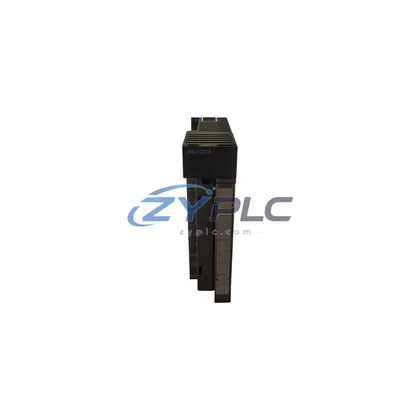
The Honeywell 2MLR-DMMA is a precision-engineered Dummy Module designed for seamless integration within the Honeywell TDC 3000 Distributed Control System (DCS) architecture. In modern smart factory environments, maintaining the structural and electrical integrity of every slot in a DCS chassis is not merely a mechanical requirement — it is a foundational element of network stability, signal integrity, and system-wide communication reliability. The 2MLR-DMMA fulfills this role by occupying unused card slots, shielding the backplane from electromagnetic interference, and ensuring that the TDC 3000 platform continues to operate within its validated communication parameters.
As industrial facilities transition toward fully connected automation ecosystems, every component in the control architecture — from field-level sensors and remote I/O modules to SCADA servers and HMI workstations — depends on a stable, noise-free backplane environment. The 2MLR-DMMA directly supports this requirement by maintaining consistent slot impedance and preventing signal degradation across the TDC 3000 High-Level Manager (HLM) and Local Control Network (LCN) communication layers. This makes it an indispensable component for any facility running Honeywell’s legacy or hybrid DCS infrastructure alongside modern Ethernet-based supervisory systems.
Compatibility & Integration Notes
| Attribute |
Specification |
| SKU / Part Number |
2MLR-DMMA |
| Brand |
Honeywell |
| Series |
TDC 3000 DCS |
| Product Type |
Dummy Module / Slot Filler |
| Protocol Support |
TDC 3000 LCN (Local Control Network), UCN (Universal Control Network), Backplane Bus |
| Interface Type |
Card Slot / Backplane Interface |
| Communication Role |
Slot integrity maintenance, EMI shielding, backplane signal isolation |
| Network Compatibility |
Honeywell TDC 3000, TPS (TotalPlant Solution), Experion PKS (hybrid integration) |
| System Application |
DCS chassis slot management, SCADA/HMI infrastructure support, PLC-DCS hybrid architectures |
| Origin |
United States |
| Warranty |
warranty terms confirmed during quotation |
| Stock Status |
Verified Availability confirmed by RFQ | shipment arranged after confirmation |
| Shipping |
Global DHL / FedEx Express |
Connected Automation Data Flow
In a fully integrated smart factory, the Honeywell 2MLR-DMMA plays a quiet but critical role in sustaining the data flow that connects every layer of the automation hierarchy. Consider a typical process plant where Honeywell HC900 hybrid controllers manage local PID loops while feeding real-time process values upstream to the TDC 3000 DCS via the Universal Control Network (UCN). Any slot left unoccupied in the TDC 3000 chassis introduces backplane noise that can corrupt the high-speed data packets traveling between Honeywell AM (Application Module) cards and the History Module (HM) responsible for long-term data archiving and SCADA trend feeds.
When the 2MLR-DMMA is correctly installed in all unused slots, the backplane maintains its designed electrical characteristics, allowing the Honeywell NIM (Network Interface Module) to sustain reliable communication between the DCS and upstream Experion PKS servers. This clean data path is essential for Honeywell PHD (Process Historian Database) to receive uninterrupted tag data from field instruments — including pressure transmitters, flow meters, and temperature sensors connected via HART protocol through Honeywell STT350 smart transmitters and Honeywell 621-series analog input modules.
Further up the automation stack, Honeywell Uniformance Process Studio and third-party SCADA platforms rely on OPC DA/UA gateways to pull live and historical data from the TDC 3000 environment. Any instability in the DCS backplane — caused by empty, unshielded slots — can introduce latency spikes or communication timeouts that disrupt OPC server polling cycles. The 2MLR-DMMA eliminates this risk, ensuring that Honeywell GUS (Global User Station) operator consoles and remote HMI terminals receive consistent, low-latency process data for real-time monitoring, alarm management, and remote diagnostics.
In hybrid architectures where the TDC 3000 coexists with modern Profibus DP or Modbus TCP/IP field networks — connecting variable frequency drives (VFDs), motor control centers, and intelligent field devices — the backplane integrity maintained by the 2MLR-DMMA becomes even more critical. Gateway modules translating between legacy TDC 3000 protocols and modern Ethernet-based fieldbus standards depend on a noise-free backplane environment to sustain deterministic communication cycles required by safety instrumented systems (SIS) and advanced process control (APC) applications.
Solving Data Isolation in Industrial Sites
One of the most persistent challenges in aging DCS environments is data isolation — the inability to surface real-time process data from legacy control systems into modern SCADA, MES, or cloud-based analytics platforms. The Honeywell TDC 3000, while a proven and highly reliable platform, was designed in an era before Ethernet-native communication was standard. As a result, many facilities struggle with protocol fragmentation: the TDC 3000 speaks LCN and UCN internally, while the plant’s upper-level systems demand OPC UA, MQTT, or REST API data feeds.
The 2MLR-DMMA addresses the hardware foundation of this problem. By ensuring every unused chassis slot is properly terminated, it eliminates the backplane noise that causes intermittent communication failures in the NIM and gateway modules responsible for protocol translation. This directly improves the reliability of data bridges connecting the TDC 3000 to modern integration layers, reducing the frequency of OPC server reconnections, historian data gaps, and SCADA alarm floods caused by spurious communication errors.
For facilities pursuing production line transparency and digital twin initiatives, maintaining a stable TDC 3000 backplane is a prerequisite for accurate, continuous data streaming. Remote monitoring teams relying on cloud dashboards or mobile HMI applications need confidence that the data they see reflects actual plant conditions — not artifacts of a noisy backplane. The 2MLR-DMMA provides that confidence, supporting the long-term scalability of the DCS infrastructure without requiring costly platform migrations.
Every Honeywell 2MLR-DMMA supplied by ZYPLC undergoes pre-shipment functional verification, ensuring physical integrity and correct slot fit before dispatch. With verified availability confirmed by RFQ availability, global DHL/FedEx express shipping, and a warranty terms confirmed during quotation, ZYPLC provides the supply chain reliability that maintenance teams and procurement engineers depend on for both planned shutdowns and emergency replacements.
Industrial Connectivity FAQ
Q1: Does the Honeywell 2MLR-DMMA affect communication latency in the TDC 3000 system?
The 2MLR-DMMA is a passive slot filler and does not introduce any active processing or communication overhead. Its primary function is to maintain backplane electrical integrity, which indirectly reduces communication latency by eliminating the EMI-induced noise that can cause retransmissions and timeout errors in the LCN and UCN communication layers.
Q2: Is the 2MLR-DMMA compatible with both TDC 3000 and Honeywell TPS (TotalPlant Solution) chassis?
Yes. The 2MLR-DMMA is designed for use across the Honeywell TDC 3000 and TPS platform chassis families. It is compatible with standard card slot dimensions used in these systems. For Experion PKS hybrid environments, compatibility should be verified against the specific chassis model and firmware revision in use.
Q3: How does ZYPLC ensure network stability and product quality before shipment?
All units undergo pre-shipment inspection covering physical condition, connector integrity, and slot fit verification. ZYPLC maintains availability subject to RFQ confirmation sourced from authorized channels, and every 2MLR-DMMA is covered by a warranty terms confirmed during quotation against manufacturing defects. Expedited global shipping via DHL and FedEx ensures minimal lead time for both planned maintenance and emergency procurement.
Q4: Can the 2MLR-DMMA support system expansion in a growing smart factory environment?
Absolutely. As facilities expand their TDC 3000 or TPS installations — adding new I/O modules, communication cards, or gateway interfaces — the 2MLR-DMMA ensures that all newly populated chassis maintain backplane integrity from day one. This makes it a standard component in any TDC 3000 system expansion project, supporting scalable growth without compromising existing network stability or communication performance.