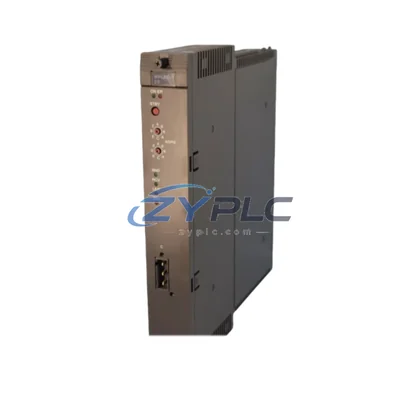
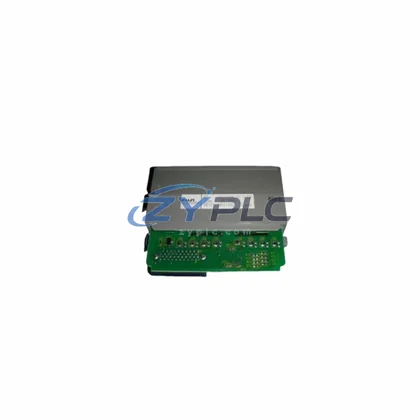
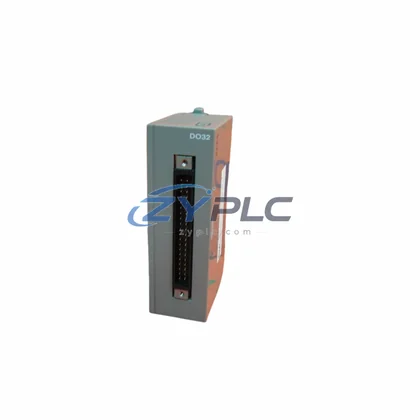
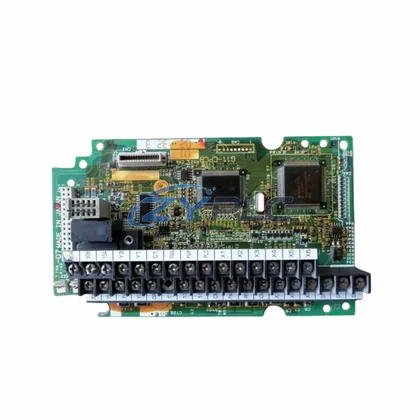
Honeywell 620-0076 Industrial Network Interface for Series 6000 Systems: Bridging the Industrial Data Link
In modern smart factory environments, seamless data flow between field devices and supervisory systems is no longer optional — it is the foundation of operational efficiency. The Honeywell 620-0076 Loop Processor Module is engineered to serve as a critical node in the industrial data chain, enabling reliable signal acquisition, protocol-level communication, and real-time data exchange across the full automation hierarchy of a Series 6000 Distributed Control System (DCS).
From the moment a field transmitter sends a 4–20 mA analog signal into the process loop, the 620-0076 captures, conditions, and processes that signal with precision. It acts as the intelligence layer between raw sensor data and the higher-level control logic executed by the Series 6000 controller platform. Whether the upstream device is a pressure transmitter, thermocouple input card, or a flow measurement unit, the 620-0076 ensures that every data point is accurately represented in the control network — with no loss of resolution and no communication latency that could compromise process stability.
Compatibility & Integration Notes
| Parameter |
Specification |
| SKU / Part Number |
620-0076 |
| Brand |
Honeywell |
| Series |
Series 6000 DCS |
| Module Type |
Loop Processor Module |
| Communication Protocol |
Proprietary Honeywell Series 6000 backplane bus; analog loop interface (4–20 mA) |
| Interface Type |
Backplane-mounted, loop I/O interface |
| Network Compatibility |
Honeywell Series 6000 DCS architecture; compatible with 620-series I/O and controller modules |
| System Application |
Process control, DCS loop management, SCADA integration, HMI data acquisition |
| Transmission Capability |
Real-time analog loop data processing and digital conversion for DCS network |
| Warranty |
warranty terms confirmed during quotation |
| Condition |
New / Refurbished / Tested |
| Origin |
United States |
Connected Automation Data Flow
The 620-0076 does not operate in isolation. Its true value emerges when viewed as part of an integrated automation architecture. In a typical Series 6000 DCS installation, the 620-0076 Loop Processor Module sits at the heart of the I/O subsystem, working in concert with companion modules such as the 620-0024 Analog Input Module and the 620-0036 Analog Output Module to form a complete signal conditioning and distribution layer. These modules share the same backplane bus, allowing the loop processor to coordinate data handoffs without introducing additional network hops or protocol translation overhead.
Moving upstream in the data chain, the processed loop values are passed to the 620-0056 Controller Module, which executes the PID control algorithms and generates setpoint commands that flow back down to field actuators. This bidirectional data path — from sensor to loop processor to controller and back to the final control element — is what gives the Series 6000 its reputation for deterministic, low-latency process control.
For facilities that require integration with modern SCADA platforms or MES systems, the Series 6000 architecture supports gateway modules such as the 621-9940 Communication Interface Module, which bridges the proprietary DCS backplane to Ethernet-based supervisory networks. This allows operators at an HMI workstation running Honeywell’s process visualization software to monitor live loop values from the 620-0076 in real time, set alarm thresholds, and acknowledge process deviations — all without interrupting the underlying control loop execution.
In multi-drop loop configurations, the 620-0076 also interacts with remote I/O marshalling panels equipped with modules like the 620-0080 Digital Input Module and 620-0090 Digital Output Module, extending the reach of the DCS to field junction boxes located hundreds of meters from the control room. The loop processor’s ability to maintain signal integrity over these distances is critical in large-scale process plants such as refineries, chemical facilities, and power generation stations.
For edge computing and remote diagnostics scenarios, the 620-0076 data stream can be aggregated by an industrial edge gateway — such as those compatible with the 621-6550R Remote I/O Module — and forwarded to cloud-based analytics platforms or on-premise historians. This enables predictive maintenance workflows where loop performance trends are analyzed over time to detect early signs of sensor drift, valve stiction, or loop instability before they escalate into unplanned shutdowns.
In drive and motor control integration scenarios, the loop processor’s analog output data can be consumed by variable frequency drives (VFDs) via the DCS analog output chain, enabling closed-loop speed regulation based on process feedback. Similarly, safety instrumented systems (SIS) that monitor critical process variables can receive validated data from the 620-0076 loop, supporting SIL-rated interlock logic without requiring a separate field wiring infrastructure.
Solving Data Isolation in Industrial Sites
One of the most persistent challenges in legacy process plants is data isolation — the condition where field instruments, DCS controllers, SCADA servers, and enterprise systems each hold fragments of the operational picture but cannot share it efficiently. The Honeywell 620-0076 addresses this challenge at the loop level by ensuring that every analog signal entering the Series 6000 system is immediately digitized, validated, and made available to the full control and monitoring hierarchy.
Protocol fragmentation is another common pain point. Older installations may mix Honeywell Series 6000 hardware with third-party PLCs, HART-enabled field devices, or Modbus RTU instruments. By positioning the 620-0076 as the primary loop interface within the DCS, engineers can consolidate signal management at a single, well-understood hardware layer, reducing the number of protocol conversion points and the associated risk of data corruption or timing mismatches.
Remote monitoring is increasingly demanded by plant operators who need visibility into process performance from control rooms, remote operations centers, or mobile devices. The 620-0076, as part of the Series 6000 network, supports this requirement by feeding real-time loop data into the DCS historian and SCADA layer, where it becomes accessible to authorized users regardless of their physical location. Alarm management systems can be configured to trigger notifications based on loop deviation thresholds, ensuring that abnormal process conditions are flagged within seconds of occurrence.
Production line transparency — the ability to trace every process variable from raw material input to finished product output — is a core requirement of Industry 4.0 initiatives. The 620-0076 contributes to this transparency by providing a reliable, timestamped data record for every loop it manages, supporting quality audits, regulatory compliance reporting, and continuous improvement programs.
System scalability is also a key consideration for growing facilities. The modular architecture of the Series 6000 platform means that additional 620-0076 Loop Processor Modules can be added to the backplane as new process loops are commissioned, without requiring changes to the existing control network topology or SCADA configuration. This plug-and-expand capability significantly reduces the engineering effort and downtime associated with capacity expansions.
Industrial Connectivity FAQ
Q1: What communication protocols does the Honeywell 620-0076 support, and is it compatible with modern SCADA systems?
The 620-0076 operates on the Honeywell Series 6000 proprietary backplane bus and interfaces with analog process loops (4–20 mA). Integration with modern SCADA systems is achieved through Series 6000 communication gateway modules such as the 621-9940, which bridge the DCS backplane to Ethernet-based supervisory networks. This architecture supports OPC-compatible data servers, enabling connectivity to leading SCADA platforms including Honeywell Experion, Wonderware, and iFIX.
Q2: How does the 620-0076 ensure network stability and minimize communication latency in critical process control applications?
The 620-0076 is designed for deterministic loop processing, with scan cycle times optimized for the Series 6000 backplane architecture. By processing loop data locally within the DCS I/O subsystem — rather than relying on external network hops — the module minimizes end-to-end latency between field signal acquisition and controller response. This is essential for tight PID control loops where millisecond-level timing directly impacts process stability and product quality.
Q3: Can the 620-0076 be integrated into an expanded or upgraded DCS architecture without replacing existing field wiring?
Yes. The 620-0076 is designed to slot into the existing Series 6000 backplane infrastructure, preserving existing field wiring and loop terminations. System expansions can be accomplished by adding modules to available backplane slots, and the DCS configuration software can be updated to recognize new loop processor instances without requiring a full system restart. This makes the 620-0076 an ideal choice for phased modernization projects where minimizing production disruption is a priority.
Q4: What quality assurance and warranty coverage is provided with the Honeywell 620-0076?
Every 620-0076 unit supplied by ZYPLC undergoes pre-shipment functional testing to verify loop processing performance, backplane communication integrity, and I/O signal accuracy. All units are covered by a warranty terms confirmed during quotation from the date of shipment, providing assurance against manufacturing defects and operational failures. Availability is confirmed via RFQ for shipment arranged after confirmation, with expedited shipping options to support urgent maintenance and replacement requirements.