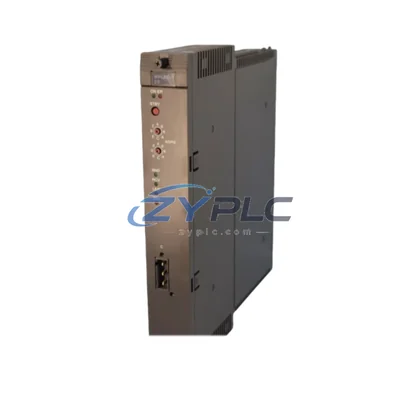
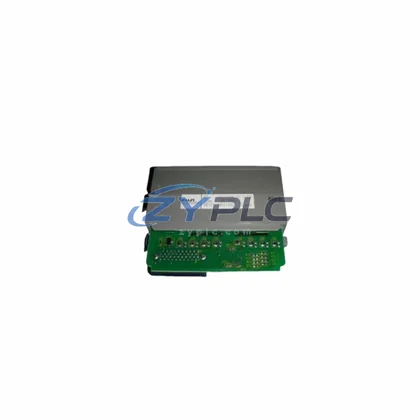
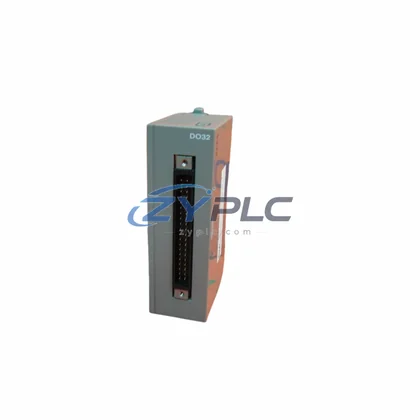
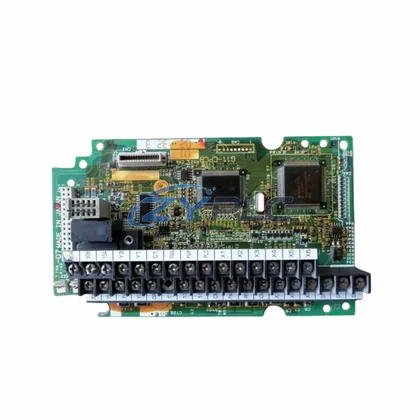
Honeywell 621-2100R Output Module for 621 Series
The Honeywell 621-2100R is a discrete output module purpose-built for the Honeywell 621 Series programmable controller platform. Within a layered industrial control architecture, this module occupies a critical position at the I/O layer, translating CPU-generated control signals into reliable field-level switching actions that drive actuators, solenoids, motor starters, and relay-based loads. Its design philosophy centers on system consistency — ensuring that every output command issued by the 621 Series CPU is executed with precision, minimal latency, and full electrical isolation from the field wiring environment.
In modern industrial automation, no module operates in isolation. The 621-2100R is engineered to function as an integral component within a coordinated control system, where signal integrity, rack-level communication, and cross-layer synchronization define overall system performance. Whether deployed in a single-rack configuration or distributed across multiple I/O chassis connected via the 621 Series backplane bus, this output module maintains consistent electrical behavior across the full operating temperature and load range specified for the platform.
Product Specification Table
| Parameter |
Specification |
| Model |
Honeywell 621-2100R |
| Module Type |
Discrete Output Module |
| Platform Series |
Honeywell 621 Series PLC |
| System Role |
I/O Layer — Field Output Interface |
| Output Type |
Relay / Discrete Solid-State Output |
| Output Channels |
16 Points (typical for 621 Series output modules) |
| Electrical Isolation |
Optically isolated outputs, field-side isolation from backplane logic |
| Operating Voltage |
24 VDC / 120 VAC / 240 VAC (field-side, load dependent) |
| Communication Interface |
621 Series Backplane Bus (parallel rack I/O) |
| Installation Environment |
DIN rail / rack-mount within 621 Series chassis |
| Operating Temperature |
0°C to 60°C (32°F to 140°F) |
| Relative Humidity |
5% to 95% non-condensing |
| Certifications |
UL Listed, CE Marked (per Honeywell 621 Series platform standards) |
| Warranty |
warranty terms confirmed during quotation — Covered from date of shipment |
System Compatibility Notes
The 621-2100R achieves its full operational value when integrated within a complete Honeywell 621 Series control system. At the control layer, the Honeywell 621-0020 or 621-0024 CPU module executes the ladder logic program and issues output commands via the backplane bus. These commands are received by the 621-2100R, which then drives field devices without introducing signal degradation or timing jitter that could compromise process synchronization.
Power distribution within the rack is managed by the Honeywell 621-9940 or 621-9942 power supply module, which provides regulated 5 VDC backplane logic power and supports the 621-2100R’s internal circuitry. For applications requiring field-side 24 VDC sourcing, an external DIN-rail mounted power supply is typically installed within the same control cabinet, ensuring clean separation between logic and field power domains.
On the input side, the Honeywell 621-2080 or 621-2082 discrete input module captures field sensor signals — limit switches, proximity sensors, pushbuttons — and feeds them into the CPU scan cycle. The 621-2100R then closes the control loop by actuating the corresponding field output devices based on the CPU’s evaluated logic. This input-to-output signal flow is the backbone of any discrete control application built on the 621 Series platform.
For analog process control integration, the Honeywell 621-3580 analog input module and 621-3680 analog output module can coexist within the same rack or expansion chassis, allowing the 621-2100R to handle discrete switching functions while analog modules manage PID loop control for temperature, pressure, or flow variables. This mixed I/O architecture is common in chemical dosing, HVAC, and water treatment applications.
Network connectivity and remote monitoring are facilitated by the Honeywell 621-6550 communication module, which bridges the 621 Series backplane to Modbus RTU or other serial communication networks. This allows SCADA systems and HMI terminals — such as the Honeywell HC900 operator interface or third-party panels — to read output status registers from the 621-2100R in real time, enabling operators to monitor field device states without physical access to the control cabinet.
In redundancy-critical applications, a secondary 621 Series rack can be configured in a hot-standby or warm-standby topology, with the primary CPU continuously synchronizing output states to the standby rack. The 621-2100R’s relay-based output design supports this architecture by providing deterministic switching behavior that the redundancy management firmware can reliably track and mirror.
Terminal block wiring for the 621-2100R follows the standard 621 Series field wiring convention, compatible with Honeywell 621-series I/O terminal assemblies and standard 0.5–2.5 mm² field wiring. Proper labeling and cable segregation within the control cabinet — separating 24 VDC signal wiring from 120/240 VAC load wiring — is essential for maintaining EMC compliance and simplifying future maintenance access.
Industrial Application Notes
Manufacturing & Discrete Production Lines: In automotive assembly, electronics manufacturing, and general discrete production, the 621-2100R controls conveyor motor starters, pneumatic valve solenoids, indicator lamps, and safety interlock relays. Its 16-point output density allows a single module to manage an entire production cell’s actuator set, reducing rack slot consumption and simplifying wiring harness design.
Power Generation & Electrical Utilities: Substation automation and power plant auxiliary systems rely on the 621-2100R for breaker control, alarm annunciation, and protection relay trip outputs. The module’s optical isolation ensures that high-voltage transients on the field side do not propagate into the 621 Series backplane, protecting the CPU and communication modules from surge damage.
Petrochemical & Refinery Process Control: In hazardous area applications, the 621-2100R interfaces with intrinsically safe barriers and Zener diode isolators to drive solenoid valves on process pipelines. Its relay output variant supports both normally-open and normally-closed field wiring configurations, accommodating fail-safe valve designs that must de-energize to close in the event of a power loss.
Water & Wastewater Treatment: Municipal water treatment plants use the 621-2100R to control pump motor contactors, UV disinfection system enables, chemical dosing pump starts, and level-based valve sequencing. The module’s compatibility with the 621 Series platform’s built-in diagnostics allows operators to detect output channel faults before they result in process upsets or regulatory compliance violations.
Mining & Metallurgical Processing: Conveyor belt control, crusher motor sequencing, and ore processing valve automation in mining environments demand output modules that can withstand vibration, dust ingress, and wide temperature swings. The 621-2100R, housed within a sealed 621 Series rack enclosure, meets these environmental demands while maintaining the output switching reliability required for continuous 24/7 mining operations.
Packaging & Material Handling: High-speed packaging lines require output modules with fast scan-to-output response times. The 621-2100R’s direct backplane connection to the 621 CPU minimizes output latency, ensuring that reject mechanisms, diverter gates, and labeling actuators respond within the CPU scan cycle time — typically under 10 milliseconds for standard 621 Series configurations.
Product Compatibility FAQ
Q1: Is the Honeywell 621-2100R compatible with all 621 Series CPU modules and chassis configurations?
The 621-2100R is designed for use within the Honeywell 621 Series PLC platform and is compatible with the standard 621 Series I/O chassis and backplane bus. It can be installed in any available I/O slot within a 621 Series rack alongside other 621 Series I/O modules, including discrete input, analog input, and analog output modules. Compatibility with specific CPU firmware revisions should be verified against the Honeywell 621 Series hardware compatibility matrix, which is available through Honeywell Process Solutions technical documentation. For mixed-generation rack configurations, confirm that the backplane bus revision supports the 621-2100R’s I/O addressing scheme.
Q2: Can the 621-2100R be used in a redundant control architecture, and what are the configuration requirements?
Yes. The 621-2100R can be deployed in redundant 621 Series architectures where a primary and standby CPU rack are configured for hot-standby or warm-standby operation. In this topology, the primary CPU manages active output switching while the standby CPU maintains a synchronized copy of the output image table. Upon primary CPU failure, the standby assumes control and the 621-2100R in the standby rack begins driving field outputs within the switchover time defined by the redundancy module configuration. Proper redundancy implementation requires matching I/O module types and slot assignments across both racks, and the use of a compatible 621 Series redundancy communication module to synchronize CPU state data.
Q3: What does the warranty terms confirmed during quotation cover for the 621-2100R, and what is the recommended maintenance approach for long-term system reliability?
The 621-2100R supplied by ZYPLC carries a warranty terms confirmed during quotation covering manufacturing defects, component failures, and functional non-conformance under normal operating conditions. The warranty period begins from the date of shipment. For long-term system reliability, it is recommended to maintain a spare 621-2100R module in the control room inventory, as relay output modules in high-cycle applications may experience contact wear over multi-year operational periods. Periodic inspection of field wiring terminal connections, verification of output channel status via the 621 Series diagnostic registers, and annual thermal imaging of the control cabinet are best-practice maintenance activities that extend the operational life of the module and the overall 621 Series control system.