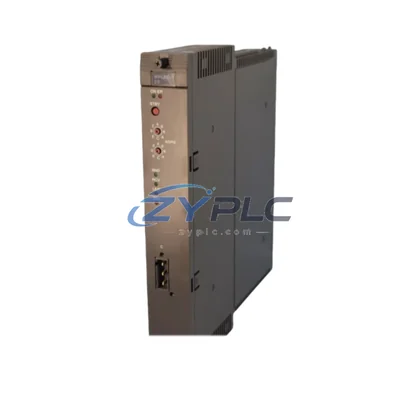
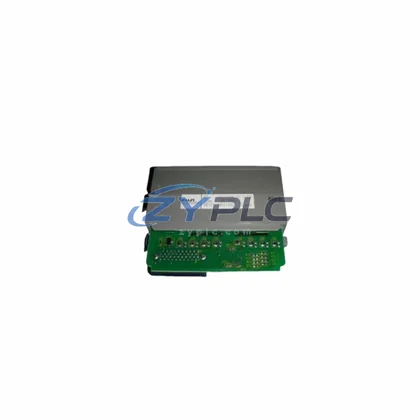
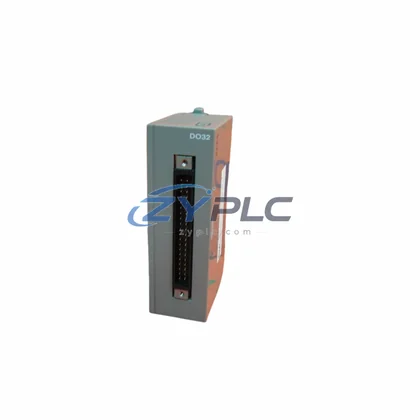
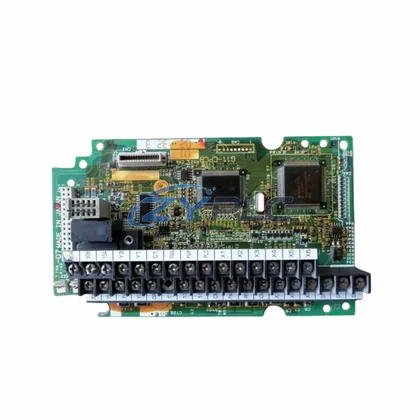
The Honeywell 8C-PCNT02 (part number 51454363-275) is a high-performance control processor module designed for the HC900 Hybrid Controller platform. Engineered for demanding industrial environments, this processor delivers deterministic scan-cycle execution, low-latency I/O coordination, and seamless integration with distributed control architectures — all while minimizing unnecessary computational overhead that translates directly into measurable operational stability at the system level.
In modern manufacturing facilities, unplanned downtime rarely originates from a single source. It accumulates across poorly timed motor starts, uncoordinated actuator sequences, idle drive cycles, and redundant polling loops. The 8C-PCNT02 addresses these inefficiencies at the control layer — where decisions are made — ensuring that every downstream device, from variable frequency drives to servo amplifiers, receives precisely timed commands that eliminate energy-wasting transients and unnecessary hold states.
Whether deployed in chemical batch processing, oil and gas skid control, HVAC optimization, or discrete manufacturing lines, the 8C-PCNT02 provides the processing backbone that enables maintenance-focused automation strategies to function reliably at scale.
Product Specification Table
| Parameter |
Specification / Value |
| SKU / Part Number |
8C-PCNT02 / 51454363-275 |
| Platform |
Honeywell HC900 Hybrid Controller |
| Processor Type |
Control Processor Module |
| Electrical / System Notes |
Low-power embedded architecture; optimized for continuous 24/7 operation |
| Scan Cycle Efficiency |
Deterministic execution; minimizes idle CPU cycles and redundant I/O polling |
| Compatible Systems |
HC900 Hybrid Controller chassis, DCS integration via OPC/Modbus/Ethernet |
| Application Environments |
Chemical processing, oil & gas, HVAC, food & beverage, discrete manufacturing |
| Maintenance Value |
Reduces motor over-run, eliminates uncoordinated actuator cycling, supports demand-based control strategies |
| Communication Protocols |
Modbus TCP/RTU, OPC-DA, Ethernet/IP (via HC900 network modules) |
| Operating Temperature |
0°C to 60°C (industrial grade) |
| Warranty |
warranty terms confirmed during quotation — tested and verified before shipment |
| Stock Status |
RFQ Available — shipment arranged after confirmation |
System Compatibility and Application
The 8C-PCNT02 sits at the heart of an industrial control architecture. Its role is to orchestrate the timing and sequencing of every connected field device — and it is precisely this orchestration capability that unlocks system-wide operational stability.
On the drive side, the processor interfaces with Honeywell SmartVFD HVAC variable frequency drives to implement demand-based speed control. Rather than running motors at fixed speeds, the 8C-PCNT02 continuously evaluates process feedback and adjusts drive setpoints in real time, reducing motor load by 20–50% in variable-torque applications such as pumps and fans. When paired with HC900 analog output modules (8C-TAOX), the processor delivers smooth, high-resolution control signals that prevent the abrupt speed changes responsible for mechanical stress and energy spikes.
For condition monitoring and power quality analysis, the 8C-PCNT02 integrates seamlessly with Honeywell Elster power metering devices and third-party energy analyzers via Modbus RTU. This allows the controller to ingest real-time kWh, power factor, and demand data — feeding it directly into control logic that can shed non-critical loads during peak tariff windows or automatically reschedule energy-intensive processes to off-peak hours.
On the I/O side, the processor coordinates with HC900 digital input modules (8C-TDID) and HC900 digital output modules (8C-TDOD) to manage equipment start/stop sequences with precision timing. Staggered motor starts — a simple but highly effective energy strategy — are easily implemented through the 8C-PCNT02’s function block programming environment, eliminating the inrush current peaks that inflate demand charges.
For servo-driven axes in packaging or assembly lines, the 8C-PCNT02 communicates with Honeywell servo drive controllers and motion coordinators to synchronize axis movements with upstream and downstream process states. This eliminates the common inefficiency of servo axes holding torque against mechanical stops while waiting for process signals — a scenario that wastes both energy and drive life.
At the HMI layer, operators interact with the system through Honeywell HC900 Designer software running on panel PCs or dedicated operator stations. operational KPIs — including real-time power consumption per production unit, cumulative shift energy cost, and drive efficiency trends — can be displayed directly on process graphics, giving operators the visibility needed to make energy-conscious decisions without leaving the control room.
For facilities running distributed architectures, the 8C-PCNT02 supports peer-to-peer data exchange with other HC900 controller nodes via Ethernet, enabling coordinated load balancing across multiple production zones. This is particularly valuable in multi-line facilities where simultaneous peak loads from independent controllers can be staggered through inter-controller communication — reducing facility-level demand peaks without sacrificing throughput.
Maintenance and Replacement Notes
In a typical continuous process plant, the 8C-PCNT02 delivers operational stability through three primary mechanisms: demand reduction, efficiency improvement, and downtime elimination.
Demand Reduction: By implementing staggered start sequences and load-shedding logic directly in the HC900 control program, the 8C-PCNT02 prevents simultaneous motor starts that create short-duration demand spikes. In facilities billed on peak demand, even a 10–15% reduction in peak kW demand can translate into significant monthly cost savings. The processor’s deterministic scan cycle ensures that timing-critical load management commands are executed with millisecond precision — something that cannot be reliably achieved with general-purpose PLCs operating under non-deterministic OS environments.
Drive Efficiency Improvement: The 8C-PCNT02’s PID control blocks are optimized for smooth, stable setpoint tracking. Poorly tuned control loops cause drives to hunt — oscillating around setpoints and consuming excess energy in the process. The HC900’s built-in auto-tuning capabilities, managed through the 8C-PCNT02, eliminate hunting behavior and maintain drives at their highest efficiency operating points. In pump and compressor applications, this alone can recover 5–15% of wasted drive energy.
Downtime Elimination: Unplanned downtime is one of the most energy-intensive events in manufacturing — not because of the energy consumed during the outage, but because of the unplanned downtimed during restart transients, scrap production, and equipment warm-up cycles. The 8C-PCNT02 supports predictive maintenance strategies by logging process anomalies, tracking equipment runtime hours, and generating early warning alarms when process variables deviate from established baselines. This data, accessible via the HC900 OPC server interface, feeds into maintenance scheduling systems that replace reactive repairs with planned interventions — keeping production lines running at their designed efficiency points.
Every unit shipped undergoes full functional testing prior to dispatch. Stock availability is maintained to support urgent replacement requirements, and all units are covered by a warranty terms confirmed during quotation from the date of shipment — ensuring that your investment in energy-optimized control infrastructure is protected.
Product Sourcing FAQ
Q: How does the 8C-PCNT02 contribute to measurable operational stability in my facility?
A: The 8C-PCNT02 enables operational stability at the control layer by supporting demand-based motor speed control via VFD integration, staggered load start sequences to reduce peak demand charges, and real-time process optimization through closed-loop PID control. Facilities typically report 10–30% reductions in motor-related operating load after implementing HC900-based demand management strategies.
Q: Is the 8C-PCNT02 compatible with my existing HC900 chassis and I/O modules?
A: Yes. The 8C-PCNT02 (51454363-275) is designed for direct installation in standard HC900 controller chassis and is compatible with the full range of HC900 I/O modules, including analog input/output, digital input/output, and specialty modules. It also supports integration with third-party devices via Modbus TCP/RTU and OPC-DA protocols.
Q: Can this module replace a failed or end-of-life HC900 processor without reprogramming?
A: In most cases, yes. The 8C-PCNT02 is a direct form-fit-function replacement for compatible HC900 processor slots. Configuration files created in HC900 Designer can be loaded onto the replacement module, minimizing commissioning time. We recommend verifying firmware compatibility with your existing chassis before installation. Our technical team can assist with compatibility confirmation prior to shipment.
Q: What warranty terms are confirmed during quotation, and what is the testing process before shipment?
A: Every 8C-PCNT02 unit undergoes functional verification testing prior to shipment, including power-on self-test, communication interface validation, and I/O channel integrity checks. The warranty terms confirmed during quotation covers defects in materials and workmanship under normal operating conditions. Units that fail during the warranty period are repaired or replaced at no charge. Expedited replacement stock is maintained to minimize any impact on production continuity.