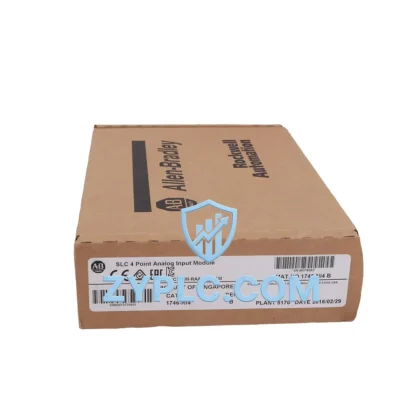
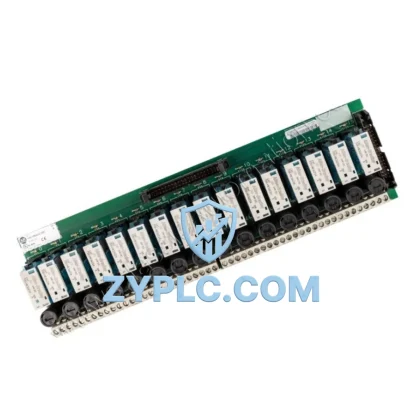
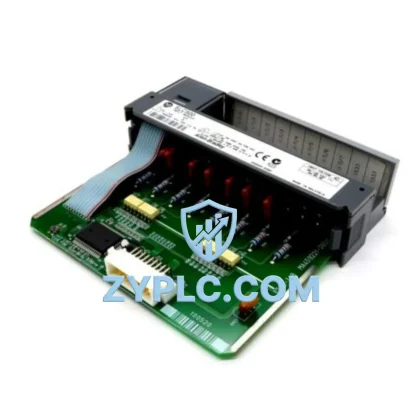
Honeywell 900S50-0460 Energy-Saving I/O Scanner for Optimized HC900 Automation
The Honeywell 900S50-0460 I/O Scanner Module is a precision-engineered component within the HC900 Hybrid Controller platform, purpose-built to maximize device utilization, minimize idle energy consumption, and deliver deterministic I/O scanning across distributed process control architectures. In modern industrial facilities where energy accountability is no longer optional, the 900S50-0460 serves as the backbone of a lean, responsive automation loop — connecting field instruments, actuators, and drive systems to the central control logic with minimal latency and maximum signal integrity.
Unlike generic I/O expansion modules, the 900S50-0460 is designed to operate within Honeywell’s tightly integrated HC900 ecosystem, where every scan cycle is synchronized with the controller’s execution engine. This synchronization eliminates redundant polling, reduces bus contention, and ensures that energy-intensive actuators — such as variable frequency drives and motorized control valves — receive commands only when process conditions genuinely demand a response. The result is a measurable reduction in unnecessary actuator cycling, which directly translates to lower wear rates and reduced energy draw across the production line.
Efficiency Performance Table
| Parameter |
Specification / Value |
| Module Type |
I/O Scanner Module |
| Series |
HC900 Hybrid Controller |
| SKU / Part Number |
900S50-0460 |
| Power Consumption |
Low-power backplane design, optimized for continuous 24/7 operation |
| Scan Efficiency |
Deterministic I/O scanning synchronized with HC900 controller execution |
| Compatible Systems |
Honeywell HC900 Hybrid Controller platform, Experion PKS integration |
| Application Environment |
Process manufacturing, energy management, chemical, oil & gas, utilities |
| Energy Optimization Value |
Reduces unnecessary actuator cycling; supports demand-driven control strategies |
| Origin |
United States |
| Warranty |
12-Month Warranty — all units shipped after full functional and load testing |
Energy-Aware Automation Architecture
The 900S50-0460 does not operate in isolation. Its energy optimization value is fully realized when deployed alongside complementary HC900 platform components that together form a closed-loop, energy-aware control architecture. At the controller level, the Honeywell 900C32-0243 CPU module orchestrates the overall process strategy, executing PID loops and logic sequences that govern when and how field devices are energized. The 900S50-0460 feeds real-time I/O data into this execution engine, ensuring that control decisions are based on current process states rather than stale scan data.
On the power supply side, the Honeywell 900P01-0301 power supply module provides stable, regulated backplane power to the scanner and associated I/O modules, maintaining consistent voltage levels that protect sensitive analog inputs from noise-induced measurement errors — errors that, if uncorrected, can cause unnecessary control corrections and wasted actuator energy. Redundant power configurations using dual 900P01-0301 units further eliminate unplanned downtime, which is itself a significant source of energy waste during restart and re-stabilization sequences.
For analog process variables — temperature, pressure, flow — the Honeywell 900G32-0101 analog input module works in tandem with the 900S50-0460 to deliver high-resolution measurements that enable precise, energy-efficient setpoint control. When paired with the Honeywell 900H32-0101 analog output module, the system can modulate control valve positions and variable speed drive references with fine granularity, avoiding the energy-intensive on/off cycling that characterizes less sophisticated control strategies.
Digital I/O is handled by modules such as the Honeywell 900G03-0102 digital input module and the Honeywell 900A01-0102 digital output module, which interface directly with motor starters, solenoid valves, and relay-controlled loads. The 900S50-0460 scanner ensures that the status of these discrete devices is continuously and accurately reflected in the controller’s data table, enabling logic-driven energy management strategies such as load shedding during peak demand periods and sequenced motor starting to limit inrush current.
For remote I/O expansion across larger plant footprints, the Honeywell 900S75-0360 remote I/O scanner extends the HC900’s reach without introducing additional controller overhead, allowing energy monitoring points to be distributed across the facility while maintaining a single, unified control namespace. Communication with higher-level systems — including energy management platforms and MES layers — is facilitated through the Honeywell 900C53-0243 communication module, which supports Modbus TCP and OPC connectivity for real-time energy data export.
Relay output modules such as the Honeywell 900R08-0202 provide hardwired interlock capability for safety-critical loads, ensuring that energy-intensive equipment is de-energized under fault conditions without relying solely on software logic. Rounding out the architecture, the Honeywell 900B08-0001 bus interface module enables seamless integration with fieldbus-connected instruments, further expanding the system’s ability to collect granular energy consumption data from distributed field devices.
Power Optimization in Real Production Lines
In a typical continuous process plant — a chemical reactor, a water treatment facility, or a food and beverage production line — the 900S50-0460 contributes to energy optimization through several interconnected mechanisms. First, by providing the HC900 controller with accurate, low-latency I/O data, it enables tighter process control bands. Tighter control means less deviation from setpoint, which means heating and cooling systems, pumps, and compressors spend less time correcting for drift — and less time running at elevated loads to recover from large process excursions.
Second, the module’s deterministic scan architecture supports predictive maintenance strategies. When vibration sensors, temperature transmitters, and motor current monitors are wired through the 900S50-0460 and their data is trended in the HC900’s historian or exported via the 900C53-0243 communication module, maintenance teams gain early visibility into developing equipment faults. Addressing a bearing wear issue before it causes a motor failure eliminates not only the energy cost of an unplanned restart but also the production losses and waste associated with an uncontrolled process shutdown.
Third, the 900S50-0460 supports demand-responsive control strategies. By integrating real-time energy pricing signals — delivered via the Modbus TCP interface — into the HC900’s control logic, plant operators can automatically shift non-critical loads to off-peak periods, reducing energy costs without sacrificing throughput. Variable frequency drives connected through analog output modules receive optimized speed references that balance production rate against energy consumption, improving overall equipment effectiveness (OEE) while reducing the facility’s energy intensity per unit of output.
All units are shipped only after completing full functional testing and load verification under simulated operating conditions. In-stock availability ensures rapid deployment, minimizing the downtime window between a module failure and full system restoration. Every 900S50-0460 is backed by a 12-month warranty, providing assurance that the module will perform to specification throughout its initial service period.
Energy Optimization FAQ
Q1: How does the 900S50-0460 contribute to measurable energy savings in an HC900-based system?
The 900S50-0460 enables deterministic, synchronized I/O scanning that eliminates stale data-driven control corrections. By ensuring the HC900 controller always acts on current process states, it reduces unnecessary actuator cycling — a primary source of wasted energy in process control systems. When combined with analog output modules driving variable frequency drives, the energy savings from optimized motor speed control alone can be substantial.
Q2: Is the 900S50-0460 compatible with existing HC900 installations, and can it replace older scanner modules?
Yes. The 900S50-0460 is designed for direct integration into the HC900 Hybrid Controller platform and is compatible with existing HC900 chassis, power supplies, and I/O modules. It can serve as a drop-in replacement for earlier-generation HC900 scanner modules, provided the firmware version of the 900C32-0243 CPU module meets the minimum compatibility requirement. We recommend verifying the controller firmware revision before installation.
Q3: What testing procedures are applied before shipment, and what does the 12-month warranty cover?
Every 900S50-0460 unit undergoes full functional testing, including I/O scan verification, backplane communication checks, and load testing under simulated operating conditions. The 12-month warranty covers manufacturing defects and functional failures under normal operating conditions. Units that fail during the warranty period are replaced or repaired at no charge, with priority handling to minimize production impact.
Q4: Can the 900S50-0460 support energy monitoring and data export to higher-level systems?
Yes. When used in conjunction with the 900C53-0243 communication module, the HC900 system can export real-time process and energy data via Modbus TCP or OPC to energy management systems, MES platforms, and historian databases. This enables facility-wide energy dashboards, consumption trending, and demand response automation — all driven by the accurate, low-latency I/O data provided by the 900S50-0460 scanner.
© 2026 ZYPLC. All rights reserved.
Original Source: https://zyplc.com
Contact: +86 19859288691 | [email protected]