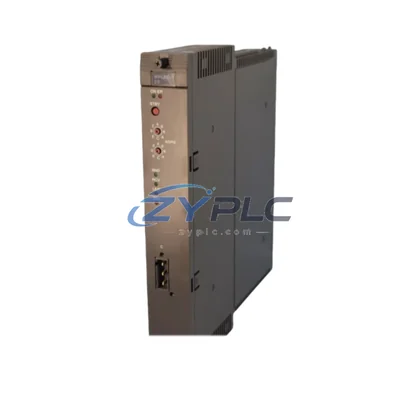
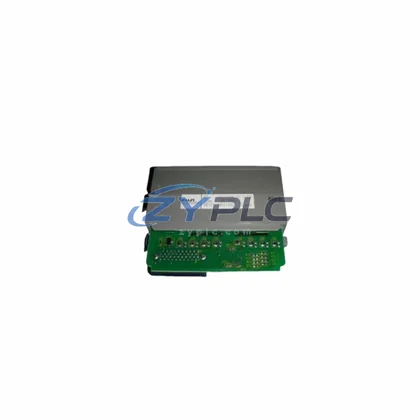
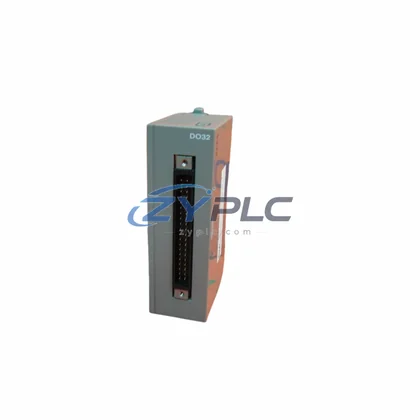
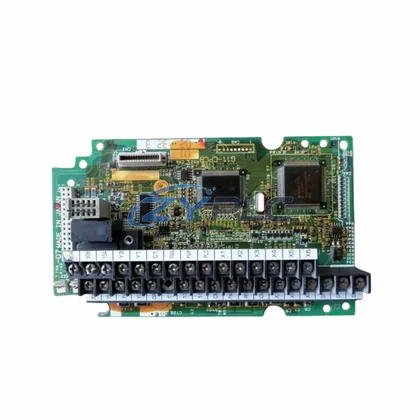
Honeywell CIS-CPU 82114833-002: Processor for CIS
The Honeywell CIS-CPU 82114833-002 is a high-performance central processing unit module engineered for deployment within Honeywell’s CIS (Control Instrumentation System) distributed control architecture. As the computational core of the CIS control platform, this processor module governs real-time data acquisition, logic execution, and inter-module communication across all system layers — from field-level I/O to supervisory SCADA interfaces. Its role in the control hierarchy makes it a foundational component for engineers designing or maintaining process automation systems in demanding industrial environments.
In a fully integrated CIS architecture, the CIS-CPU 82114833-002 operates in close coordination with upstream and downstream system layers. At the control layer, it interfaces directly with redundant power supply modules such as the Honeywell CIS-PWR series, ensuring uninterrupted processing even during power transition events. At the I/O layer, it communicates with analog input modules (e.g., CIS-AIM), digital output modules (e.g., CIS-DOM), and thermocouple input modules to aggregate field signals and execute control algorithms with deterministic scan cycles. The processor’s communication architecture supports integration with Honeywell’s FTE (Fault Tolerant Ethernet) network backbone, enabling high-speed, redundant data exchange with peer controllers, historian servers, and operator workstations running Honeywell Experion PKS or TPS platforms.
System architects integrating the CIS-CPU 82114833-002 benefit from its compatibility with the CIS backplane chassis, which supports modular slot expansion for I/O, communication, and specialty function cards. This slot-based architecture allows engineering teams to scale the control node without replacing the processor, reducing capital expenditure during system upgrades. The module’s firmware supports online configuration changes, enabling maintenance teams to modify control strategies without process shutdown — a critical capability in continuous production environments such as petrochemical refining, power generation, and water treatment facilities.
From a redundancy design perspective, the CIS-CPU 82114833-002 supports hot-standby CPU redundancy configurations when paired with a secondary processor module and the appropriate redundancy synchronization hardware. In this configuration, the primary and standby CPUs maintain synchronized memory states, allowing bumpless transfer of control authority in the event of a primary processor fault. This architecture is particularly valued in safety-instrumented system (SIS) adjacent applications and high-availability process loops where unplanned downtime carries significant operational or safety consequences.
Signal flow within the CIS architecture begins at the field device level, where sensors and actuators connect to marshalling panels and terminal modules before routing to the I/O layer. The CIS-CPU 82114833-002 processes these signals through its internal scan engine, applies configured control logic, and issues output commands to final control elements such as control valves, variable frequency drives (VFDs), and motor control centers (MCCs). Communication gateways within the architecture — including Modbus RTU/TCP, PROFIBUS DP, and HART protocol bridges — allow the processor to exchange data with third-party field devices and legacy subsystems, preserving investment in existing instrumentation infrastructure.
For HMI integration, the CIS-CPU 82114833-002 connects to operator interface terminals and engineering workstations via the system’s Ethernet backbone, supporting real-time process visualization, alarm management, and trend logging. This connectivity layer ensures that operators maintain full situational awareness of process conditions, while engineers can perform remote diagnostics, firmware updates, and control strategy modifications from centralized workstations without physical access to the control cabinet.
Long-term maintainability is a core design consideration for the CIS-CPU 82114833-002. Its modular form factor allows field replacement without specialized tooling, and its diagnostic LED indicators provide immediate visual feedback on processor health, communication status, and fault conditions. Maintenance teams can leverage the module’s built-in self-test routines to verify processor integrity during scheduled outages, reducing mean time to repair (MTTR) and supporting predictive maintenance programs. All units supplied by ZYPLC undergo functional testing prior to shipment and are covered by a warranty terms confirmed during quotation, providing procurement teams with confidence in component reliability and supply chain continuity.
Product Specification Table
| Parameter |
Specification |
| System Role |
Central Processing Unit — CIS Distributed Control Architecture |
| Part Number |
82114833-002 |
| SKU |
CIS-CPU 82114833-002 |
| Brand |
Honeywell |
| Series |
CIS (Control Instrumentation System) |
| Module Type |
DCS Processor Module |
| Backplane Compatibility |
CIS Series Chassis / Backplane |
| Communication Protocols |
FTE (Fault Tolerant Ethernet), Modbus TCP/RTU, PROFIBUS DP, HART |
| Redundancy Support |
Hot-Standby CPU Redundancy (with redundancy sync module) |
| Power Supply Compatibility |
Honeywell CIS-PWR Series |
| Operating Voltage |
24 VDC (via backplane) |
| Operating Temperature |
0°C to 60°C |
| Relative Humidity |
5% to 95% non-condensing |
| Installation Environment |
Control Cabinet / DIN Rail Chassis Mount |
| Certifications |
CE, UL (refer to Honeywell product documentation) |
| Warranty |
warranty terms confirmed during quotation (ZYPLC) |
| Condition |
New / Refurbished — Tested & Verified |
| Origin |
United States |
System Compatibility Notes
The CIS-CPU 82114833-002 achieves its full operational potential when deployed as part of a coordinated, multi-layer control system. A typical CIS architecture built around this processor module incorporates the following components working in concert:
At the power layer, the Honeywell CIS-PWR Power Supply Module provides regulated DC power to the backplane, ensuring stable voltage delivery to the CPU and all co-resident I/O modules. Redundant power supply configurations eliminate single points of failure at the power distribution level. The CIS Series Backplane Chassis serves as the physical and electrical backbone of the control node, providing the slot infrastructure through which the CPU communicates with I/O and communication modules via the internal system bus.
At the I/O layer, Honeywell CIS-AIM Analog Input Modules collect 4–20 mA and voltage signals from field transmitters, while CIS-DOM Digital Output Modules drive discrete actuators, solenoid valves, and relay coils. CIS Thermocouple Input Modules handle temperature measurement from Type K, J, and T thermocouples across process heating and reaction zones. These I/O modules communicate with the CIS-CPU 82114833-002 through the backplane bus, with scan times configurable to match process dynamics.
At the network layer, Honeywell FTE Network Switches provide the redundant Ethernet infrastructure over which the CIS-CPU exchanges data with peer controllers, historian servers, and remote I/O nodes. For legacy field device integration, PROFIBUS DP Gateway Modules and Modbus RTU Communication Cards extend the processor’s reach to third-party instrumentation and motor drives. At the human-machine interface layer, Honeywell Experion PKS Operator Workstations consume real-time process data published by the CIS-CPU, enabling operators to monitor, control, and respond to process events from centralized console positions.
Industrial Application Notes
The Honeywell CIS-CPU 82114833-002 is deployed across a broad spectrum of industrial automation applications where process reliability, system scalability, and long-term maintainability are primary engineering objectives.
In petrochemical and refining facilities, the module manages continuous process control loops for distillation columns, heat exchangers, and reactor systems, where precise temperature, pressure, and flow regulation directly impacts product quality and operational safety. Its redundancy capabilities align with the high-availability requirements of these environments.
In power generation plants — including thermal, combined-cycle, and cogeneration facilities — the CIS-CPU coordinates boiler control, turbine sequencing, and auxiliary system management. Its FTE network integration supports plant-wide data aggregation to maintenance planning systems and regulatory reporting platforms.
In water and wastewater treatment facilities, the processor module governs pump sequencing, chemical dosing, filtration control, and effluent monitoring across distributed treatment stages. Its modular I/O expansion capability accommodates the geographically dispersed instrumentation typical of water infrastructure projects.
In mining and metallurgical operations, the CIS-CPU 82114833-002 controls conveyor systems, crusher sequencing, flotation cell management, and smelter process loops, where harsh environmental conditions demand robust hardware with proven field reliability. In packaging and discrete manufacturing lines, the module supports high-speed I/O scanning and deterministic control execution for coordinated machine sequencing, vision system integration, and production data reporting.
Product Compatibility FAQ
Q1: Is the CIS-CPU 82114833-002 compatible with existing Honeywell CIS chassis and I/O modules already installed in my facility?
The CIS-CPU 82114833-002 is designed for the Honeywell CIS Series backplane architecture and is compatible with CIS chassis and co-resident I/O modules within the same platform generation. Before installation, engineers should verify firmware revision compatibility between the replacement CPU and existing I/O modules using Honeywell’s compatibility matrix. ZYPLC’s technical team can assist with compatibility verification based on your existing system configuration and installed base documentation.
Q2: Can this processor module be installed in a hot-standby redundant configuration without a full system shutdown?
Hot-standby CPU redundancy in the CIS architecture requires both the primary and standby processor modules to be configured and synchronized prior to entering redundant operation. Initial redundancy commissioning typically requires a controlled maintenance window; however, once the redundant pair is operational, individual module replacement can be performed online using the system’s bumpless transfer capability. Detailed commissioning procedures are available in Honeywell’s CIS system engineering documentation, and ZYPLC can provide application support for redundancy configuration projects.
Q3: What does the warranty terms confirmed during quotation cover, and what is the process for warranty claims?
All Honeywell CIS-CPU 82114833-002 units supplied by ZYPLC are covered by a warranty terms confirmed during quotation from the date of shipment. The warranty covers manufacturing defects and functional failures under normal operating conditions. Units that exhibit failure within the warranty period are eligible for replacement or repair at ZYPLC’s discretion. To initiate a warranty claim, contact ZYPLC at plc.sales@zyplc.com or +86 19859288691 with your order reference, a description of the observed fault, and any available diagnostic data. ZYPLC’s technical team will coordinate return logistics and expedite replacement to minimize system downtime.