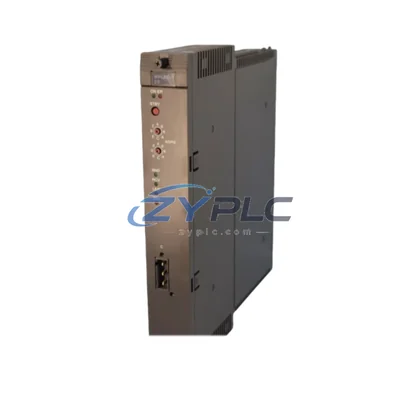
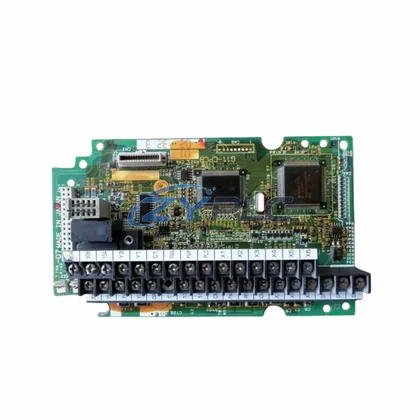
Honeywell DC-TCNT01 51307591-175 DCS Controller for TDC 3000 Automation
The Honeywell DC-TCNT01 (part number 51307591-175) is a high-performance controller module engineered for the TDC 3000 Distributed Control System platform. Designed to serve as the central coordination node within complex process automation architectures, this module enables precise loop control, real-time data acquisition, and deterministic command execution — all of which are foundational to reducing unnecessary energy consumption across continuous manufacturing and process industries.
In modern industrial facilities, unplanned downtime rarely originates from a single source. It accumulates through inefficient motor ramp cycles, poorly timed actuator responses, uncoordinated PID loop interactions, and delayed feedback from field instruments. The DC-TCNT01 addresses these inefficiencies at the control layer, where the greatest leverage exists. By maintaining tight scan cycle integrity and reliable communication with I/O subsystems such as the Honeywell PM I/O modules and HPM (High-Performance Process Manager) nodes, this controller ensures that every control decision is made with current, accurate process data — eliminating the energy penalties associated with stale setpoints and control lag.
Product Specification Table
| Parameter |
Specification / Value |
| Part Number |
DC-TCNT01 / 51307591-175 |
| Platform |
Honeywell TDC 3000 DCS |
| Module Type |
DCS Controller / Communication Node |
| Operating Voltage |
24 VDC (typical TDC 3000 backplane supply) |
| Control Loop Efficiency |
Deterministic scan cycle; minimizes control overshoot and unplanned downtime |
| Compatible Systems |
TDC 3000, HPM, UCN (Universal Control Network), LCN (Local Control Network) |
| Application Environment |
Refining, Petrochemical, Power Generation, Pulp & Paper, Pharmaceuticals |
| Maintenance Value |
Reduces motor over-cycling, actuator hunting, and idle energy draw via precise loop control |
| Condition |
Tested, fully functional, shipment arranged after confirmation |
| Warranty |
warranty terms confirmed during quotation |
| Stock Status |
RFQ Available — ships within 1–3 business days |
System Compatibility and Application
The DC-TCNT01 does not operate in isolation — its maintenance planning value is realized through its integration within a broader TDC 3000 control architecture. At the network layer, it communicates over the UCN (Universal Control Network) with peer HPM modules, enabling coordinated multi-loop strategies that prevent conflicting actuator commands from driving unnecessary energy consumption. When paired with the Honeywell NIM (Network Interface Module), the controller gains access to plant-wide data highways, allowing condition monitoring signals from field transmitters to reach the control layer with minimal latency.
On the drive side, the DC-TCNT01 interfaces with variable frequency drive (VFD) systems through analog output signals, enabling speed-referenced motor control that eliminates the unplanned downtime of fixed-speed operation. In pump and fan applications — which account for a significant share of industrial electricity consumption — this capability alone can reduce motor energy draw by 20–50% compared to throttle-valve-based flow control. The controller’s analog output cards, such as the Honeywell MC-TAOX12 or equivalent TDC 3000 I/O modules, provide the signal conditioning necessary for clean, noise-free drive references.
For energy metering and power quality monitoring, the DC-TCNT01 integrates with Honeywell’s PM I/O subsystem, which can accept 4–20 mA signals from power transducers and energy meters installed at motor control centers (MCCs). This allows the DCS to log real-time kWh consumption per process unit, enabling operators to identify energy-intensive equipment and schedule maintenance before efficiency degrades further. The Honeywell GUS (Global User Station) or equivalent HMI workstation can then display energy KPIs alongside process variables, giving operators a unified view of both production and energy performance.
In multi-drive systems, the DC-TCNT01 coordinates with servo amplifiers and motion controllers through structured analog and digital I/O, ensuring that acceleration and deceleration profiles are synchronized with process demand rather than running at fixed rates. This coordination reduces reactive power draw during motor start sequences — a common source of peak demand charges in industrial electricity billing. The Honeywell LM (Logic Manager) modules within the same TDC 3000 cabinet can handle interlock logic that prevents simultaneous motor starts, further flattening the facility’s demand curve.
Maintenance and Replacement Notes
In a refinery crude distillation unit, the DC-TCNT01 manages dozens of PID loops simultaneously — controlling column temperatures, reflux ratios, and feed flow rates. Without tight controller coordination, these loops can interact destructively, causing oscillations that force heaters and coolers to work against each other. The DC-TCNT01’s deterministic scan cycle and robust communication with HPM nodes eliminates this interaction, reducing furnace fuel consumption and cooling water pump load simultaneously.
In a pharmaceutical batch reactor, the same controller manages jacket temperature control with precision that prevents overshoot — a critical factor because thermal overshoot not only risks product quality but also forces the chiller system to work harder to recover setpoint. By maintaining ±0.5°C control accuracy through well-tuned PID parameters executed reliably by the DC-TCNT01, facilities report measurable reductions in chiller runtime and associated electrical consumption.
Predictive maintenance is another dimension of maintenance planning enabled by this controller. By continuously logging process variable trends — pump differential pressures, heat exchanger outlet temperatures, compressor suction conditions — the DC-TCNT01 provides the data foundation for condition-based maintenance programs. Equipment that is allowed to degrade before maintenance consumes progressively more energy; a centrifugal pump operating with worn impellers may draw 15–25% more power than a well-maintained unit. Early detection through DCS trend data prevents this energy creep.
All units supplied by ZYPLC undergo functional testing prior to shipment, including communication verification on the UCN network and I/O channel validation. Each DC-TCNT01 is backed by a warranty terms confirmed during quotation, ensuring that your production line investment is protected from day one of installation.
Product Sourcing FAQ
Q1: How does the DC-TCNT01 contribute to measurable operational stability in a TDC 3000 system?
The DC-TCNT01 improves energy efficiency by maintaining tight, deterministic control loop execution that prevents actuator hunting, motor over-cycling, and setpoint overshoot. These control-layer inefficiencies are among the most common sources of hidden unplanned downtime in process plants. By ensuring that every control output is based on current, accurate process data, the module reduces the energy penalties associated with poor control performance.
Q2: Is the DC-TCNT01 51307591-175 compatible with my existing TDC 3000 infrastructure?
Yes. The DC-TCNT01 with part number 51307591-175 is a standard TDC 3000 platform module designed for direct installation into compatible TDC 3000 cabinets. It communicates over the UCN network and is compatible with HPM, NIM, and associated I/O subsystems. If you are unsure about compatibility with your specific cabinet revision or firmware version, our technical team can assist with verification before shipment.
Q3: What is the recommended replacement or upgrade path if my current controller module is degraded?
The DC-TCNT01 is a direct replacement for failed or degraded TDC 3000 controller nodes. Before replacement, we recommend documenting all configuration parameters from the existing module. ZYPLC supplies tested units with verified communication functionality, and our team can advise on configuration migration if needed. In cases where the TDC 3000 platform is being modernized, the DC-TCNT01 can serve as a bridge controller while phased migration to newer Honeywell Experion PKS systems is planned.
Q4: What does the warranty terms confirmed during quotation cover, and what is the testing process before shipment?
Every DC-TCNT01 supplied by ZYPLC is tested for power-on functionality, UCN communication integrity, and I/O channel response prior to shipment. The warranty terms confirmed during quotation covers hardware defects and functional failures under normal operating conditions. Warranty claims are processed with priority support, and replacement units are dispatched from stock to minimize your production downtime.